That slight sagging line across your kitchen soon becomes obvious: one cupboard door is lower than the next, the gap at the top is tighter on one side, or the doors are clipping each other when you shut them. In most modern UK kitchens this is rarely a warped door or a failing carcass. It is almost always the hinges drifting out of line, and the very first screw to check is the big mounting screws that fix the hinge plate to the cabinet, not the tiny adjustment screws everyone fiddles with first.
Tightening those plate screws on the sagging side will often pull the door back up and square again in under a minute, as long as the screw holes are not already chewed out or damp-swollen.
Why cupboard doors start to hang unevenly
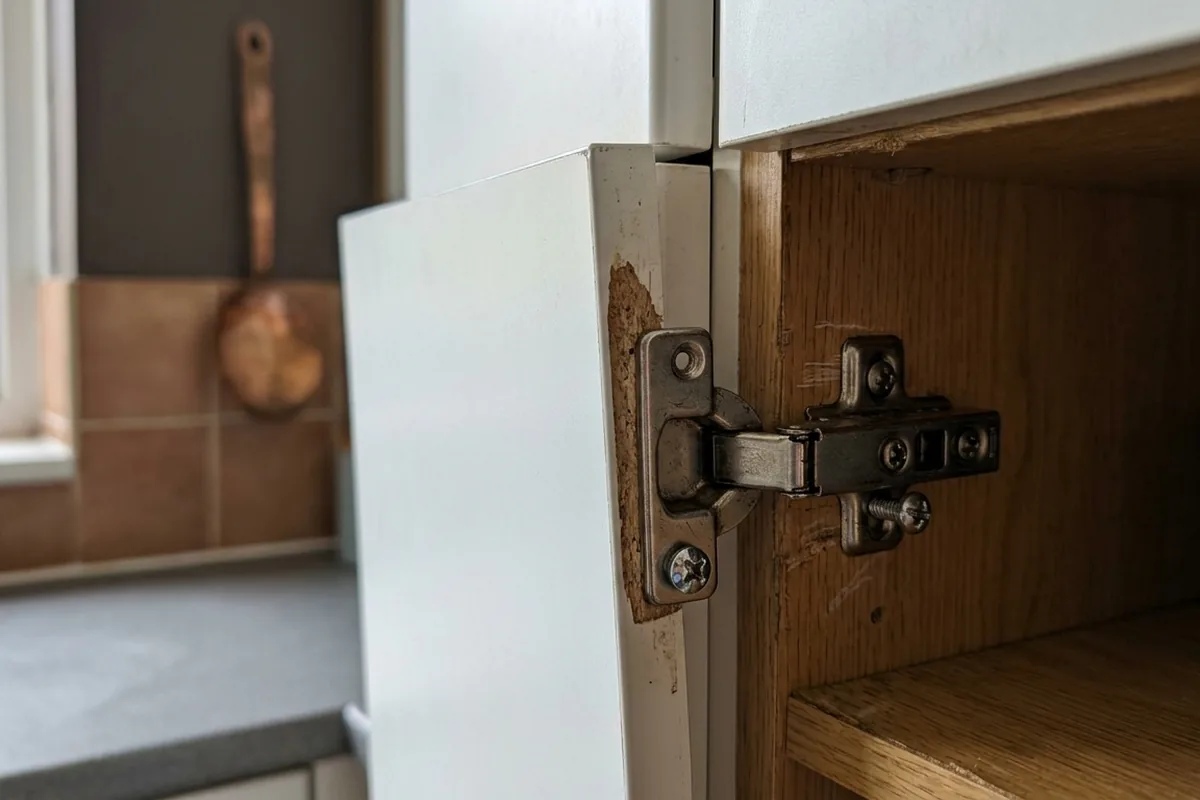
Most fitted kitchens use concealed “Euro” or “cup” hinges, the sort you see when you open the door: a round metal cup sunk into the door edge and an arm that clips to a plate on the inside of the cabinet.
Over time, several things make doors slip out of line:
- Weight and daily use: heavy chipboard doors, loaded spice racks and constant opening all put the hinge under stress. The hinge plate can creep a millimetre at a time.
- Loose mounting screws: the two main screws that hold the hinge plate to the cupboard side can slowly work loose, especially if they were never fully tightened or the installer relied on soft chipboard.
- Slight carcass movement: in a terraced house or flat, floors can settle and units can rack a touch, which shows up as uneven gaps between doors.
- Moisture and steam: cupboards by the hob or kettle can take on a bit of moisture. Chipboard swells, grip reduces and screws can lose their bite.
The first sign is usually uneven gaps: tighter at the top on the hinge side, or a door that just kisses the worktop when you swing it open. That is your cue to check screws, not to slam the door harder.
The first screw to check on a sagging door
On a standard concealed hinge, you will see several screws when you open the cupboard. Only one set should be your first move.
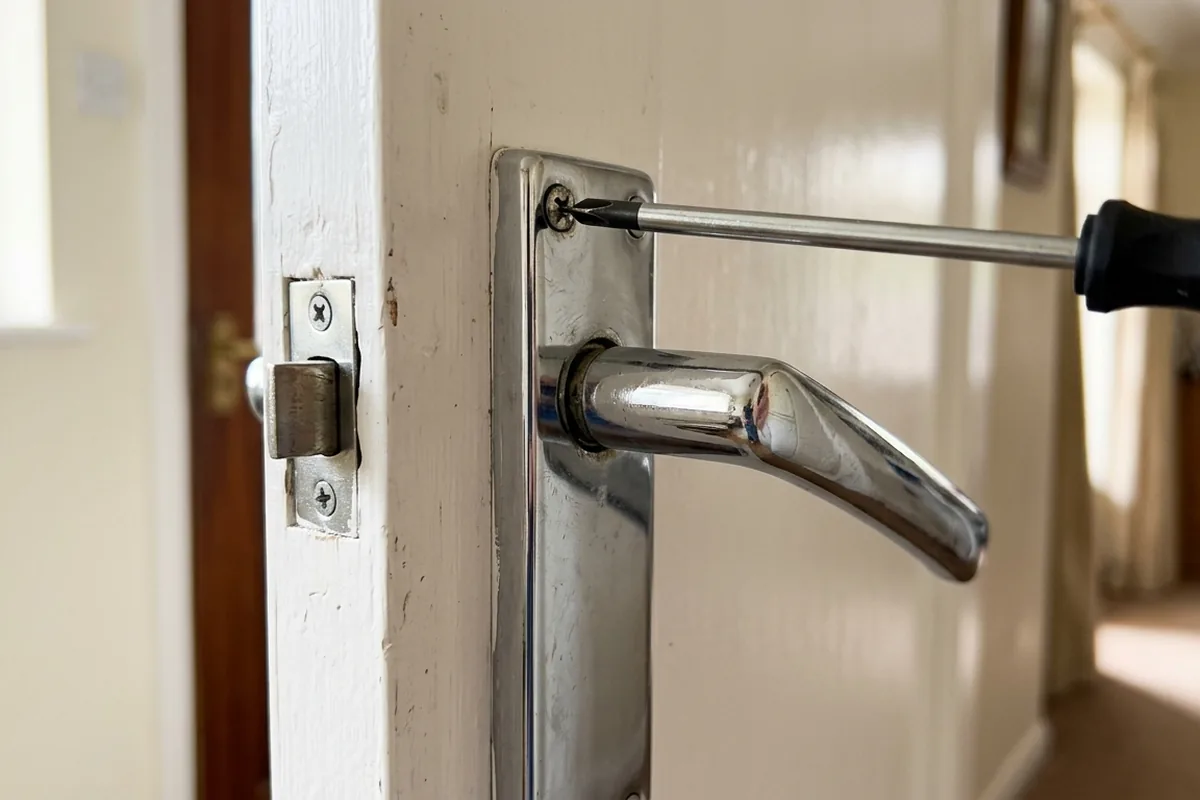
The priority is the two larger screws that fix the hinge plate to the cabinet side. These go straight into the chipboard and actually carry the weight of the door.
1. Open the cupboard door fully so you can see the hinge clearly.
2. Find the plate on the cabinet side and locate the two bigger screws going straight into the carcass (usually one above the other).
3. Gently tighten each by a quarter turn with a proper screwdriver, not a tiny precision driver. Do not overtighten to the point the screw spins.
4. Close the door and check the gap against the neighbouring door or cabinet edge. Often, that is enough to lift a dropped corner.
Only once those are firm should you touch the smaller adjustment screws that sit on the hinge arm itself. Those are there to fine-tune:
- One usually moves the door left/right.
- Another moves it in/out from the cabinet.
- Some hinges also have a height slot at the plate, but the weight is still carried by those main mounting screws.
If tightening the plate screws does nothing and the door still droops, look closely at the screw holes. If the screws spin without biting, the chipboard may be stripped or swollen, and you will need a slightly bigger fix than a simple tweak.
When tightening is not enough and what to do then
Once you have checked and snugged up the plate screws, a few different problems can still show up. The quick checks below help you decide if it is a simple home fix or edging into “get a joiner/handyperson” territory.
| Problem | First safe check | Likely next step |
|---|---|---|
| Door still sags after tightening | Do screws bite firmly? | Pack or repair screw holes |
| Door straight, but gaps uneven | Try small adjustment screws | Fine-tune left/right and in/out |
| Multiple doors out of line | Check if carcass is racked | Adjust unit legs or call for help |
| Swollen, crumbly chipboard | Look for signs of damp | Fix moisture source before rehanging |
If the screw holes are stripped, a common DIY repair is to pack them gently: remove the screw, push in a little sliver of wooden cocktail stick or match (no head, no striking surface), add a dab of wood glue if you have it, then refit the screw. For light kitchen doors this can restore enough grip to hold the hinge plate firm again.
If there is obvious damp in the cupboard, such as under the sink with a slow-dripping trap or a leaking washing machine hose, deal with that first. Screws will not hold in soaked chipboard. Turn off the water if needed, dry the area thoroughly and only then look at rehanging or even replacing the damaged panel.
Where several doors in a run have suddenly gone out of line, sight along the top of the units. In some older kitchens, especially in houses with bouncy floors, the whole carcass can twist slightly. You may be able to tweak the adjustable legs behind the plinth, but if the units themselves look out of square, it is sensible to stop before forcing anything and get a professional to assess it.
Once the weight-bearing screws are sound and any damp sorted, a minute or two with the smaller adjustment screws is usually all that is needed to line the doors up neatly again so they clear each other and sit flush against the cabinet.
If the door keeps slipping over a few days even after these checks, that is your sign that something more fundamental is moving, and it is worth getting a joiner or experienced handyperson in rather than chewing up the fixings.