The first sign is usually subtle: you push a plug in and it feels wobbly, or you have to wiggle it to get the lamp or kettle to work. A plug socket should grip the plug firmly. If it feels loose, something is worn, damaged or loose inside and that can mean heat, arcing and a real fire risk. The safe rule is simple: if a socket is noticeably loose, stop using it and switch it off at the wall. Do not keep jiggling the plug to “make it work”.
Why a plug socket feels loose – and when to walk away
A plug can feel loose for a few different reasons, but they all come down to poor contact or movement where there shouldn’t be any.
Common causes include:
- Worn internal contacts: the springy metal clips inside a socket can weaken with age or heavy use, so they no longer grip the plug pins properly.
- Cracked or heat-damaged plastic: if a plug has overheated (often from a high‑load appliance like a heater), the socket face or internals can distort and stop holding the plug tightly.
- Loose mounting box or screws: the whole socket might move on the wall because the screws have worked loose or the back box in the plasterboard or brick is no longer solid.
- Poor or damaged wiring connections inside: especially on older or DIY‑altered circuits, terminals can loosen over time, causing heat and intermittent contact.
You should stop touching the socket immediately and avoid using it if you notice any of the following:
- The plug falls out on its own or feels very floppy.
- You hear crackling, buzzing or faint sizzling when something is plugged in or switched on.
- The socket or plug feels hot or very warm, not just slightly warm under heavy load.
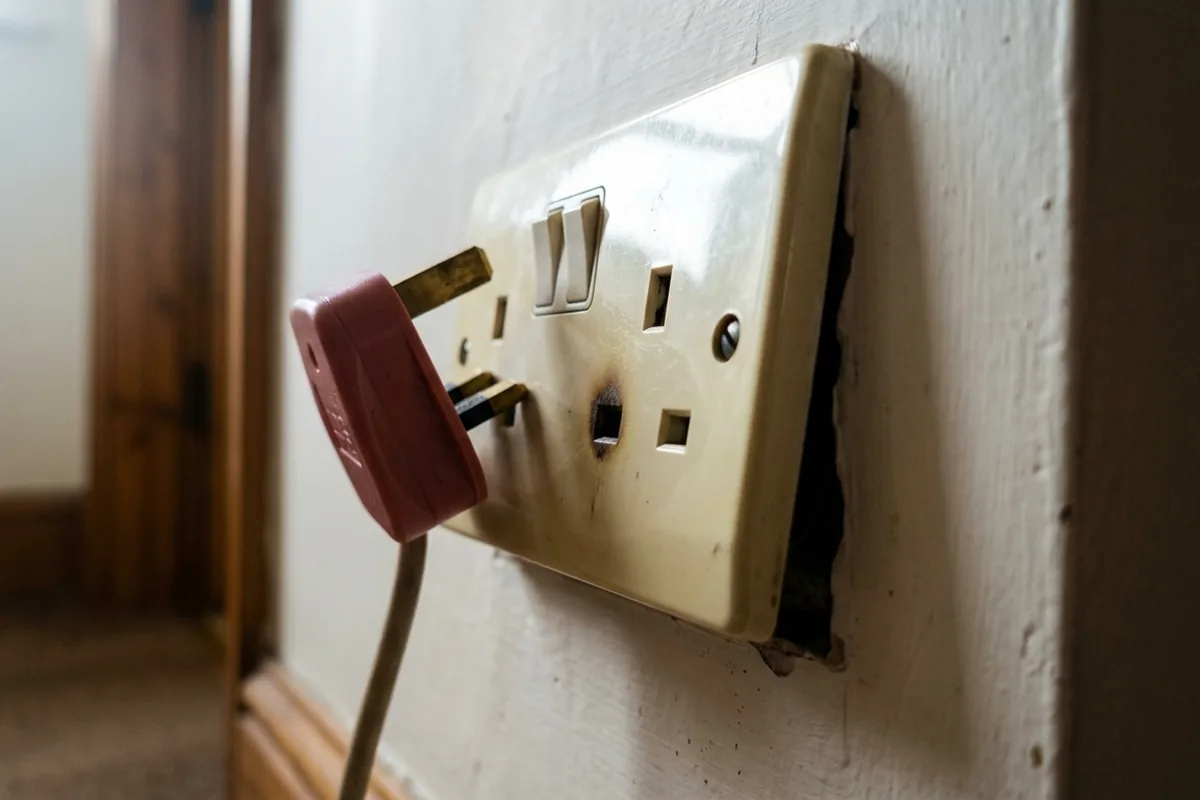
- You see brown marks, melting, cracks or discolouration around the socket.
- The front of the socket moves away from the wall when you push a plug in.
At that point, switch the socket off at the wall, turn the circuit off at the consumer unit if you can identify it safely, and arrange a qualified electrician to inspect or replace it. Do not take the front off the socket yourself unless you are competent and understand UK wiring and isolation.
Simple checks you can safely make from the outside
You can do a couple of low‑risk checks without opening anything up, just to understand how urgent the problem might be.
Stand back and look at the socket in good light. You are checking for heat damage, movement and overloading, not trying to fix it yourself.
| Sign at home | What it may mean | First safe action |
|---|---|---|
| Socket front wobbles on wall | Loose screws or back box movement | Stop using, switch off, get electrician to refix or replace |
| Plug only loose in one socket on a double | Worn or damaged contacts in that outlet | Avoid that side completely, label it, have it replaced |
| Brown marks or melted plastic | Past overheating or arcing | Do not use at all, isolate circuit if possible, call electrician urgently |
| Extension lead always in same loose socket | High load and mechanical strain | Unplug, reduce loads, use a different safe socket until repaired |
If the socket is in a busy area, such as behind the TV unit or by the kettle in a small kitchen, think about how much strain it has had: multiple adaptors, heavy plugs hanging off it, furniture pushing on cables. All of that can loosen things over time.
What you should not do:
- Do not pack anything (card, foil, tape) into the socket to “tighten” it.
- Do not bend plug pins to try to improve the grip.
- Do not keep resetting a tripping breaker without having the loose socket checked.
These bodges can make poor contact worse and increase the chance of overheating.
When a loose socket is a sign of a bigger problem
A single loose socket in an otherwise tidy room is often just a worn outlet that needs replacing. But sometimes it hints at wider issues in the wiring or how the circuit is used.
Be especially cautious if:
- You are in an older terraced house or rented flat with a small number of sockets, so everything runs off adaptors and long extension leads.
- Sockets in one area (for example, the living room TV corner) are all warm to the touch after normal use.
- You notice lights dimming slightly when you plug something into that loose socket.
- The consumer unit breakers or fuses related to that circuit trip repeatedly.
These can point to overloaded circuits or poor connections elsewhere, not just a single tired socket front.
In the UK, fixed electrical work is safety‑critical. It is usually safer and, in many cases, required to have work done by a competent, registered electrician (such as NICEIC‑registered). Replacing a faceplate is a simple job for them and typically quick, but they can also check that the wiring behind is sound and that the back box is secure in the wall.
If you are ever unsure which breaker controls a suspect socket, treat the circuit as live and do not attempt any dismantling. Leave the socket switched off, keep children away, and use a different outlet until it has been inspected.
Once the socket has been replaced or refixed, plugs should go in smoothly with a firm, even resistance and no wobble. If it still feels loose or gets warm again, that is a sign to stop using it and have the electrician back, as the underlying issue may not be the front plate at all.