That faint rattle in the spare-room door handle, or the loo door that buzzes every time someone walks past, is usually the first sign the latch and handle are working loose. If you deal with it now, you can normally fix it with nothing more than a screwdriver and a tiny tweak, before the latch starts catching or the door stops closing cleanly. In most UK homes the cure is to tighten the through‑bolts or faceplate screws, check the spindle is snug and, if needed, add a touch of lubricant to the latch.
Once those are sorted, a rattling handle nearly always quietens down and the latch will keep engaging properly instead of wearing itself oval and starting to stick.
The quick fix for a rattling door handle
A rattling handle usually means something is loose in the handle set, not that the whole door is warped or the latch is ruined. Work methodically from the visible screws inwards and stop if anything feels like it is about to strip.
For a standard internal door in a typical UK house:
1. Tighten the handle screws on both sides
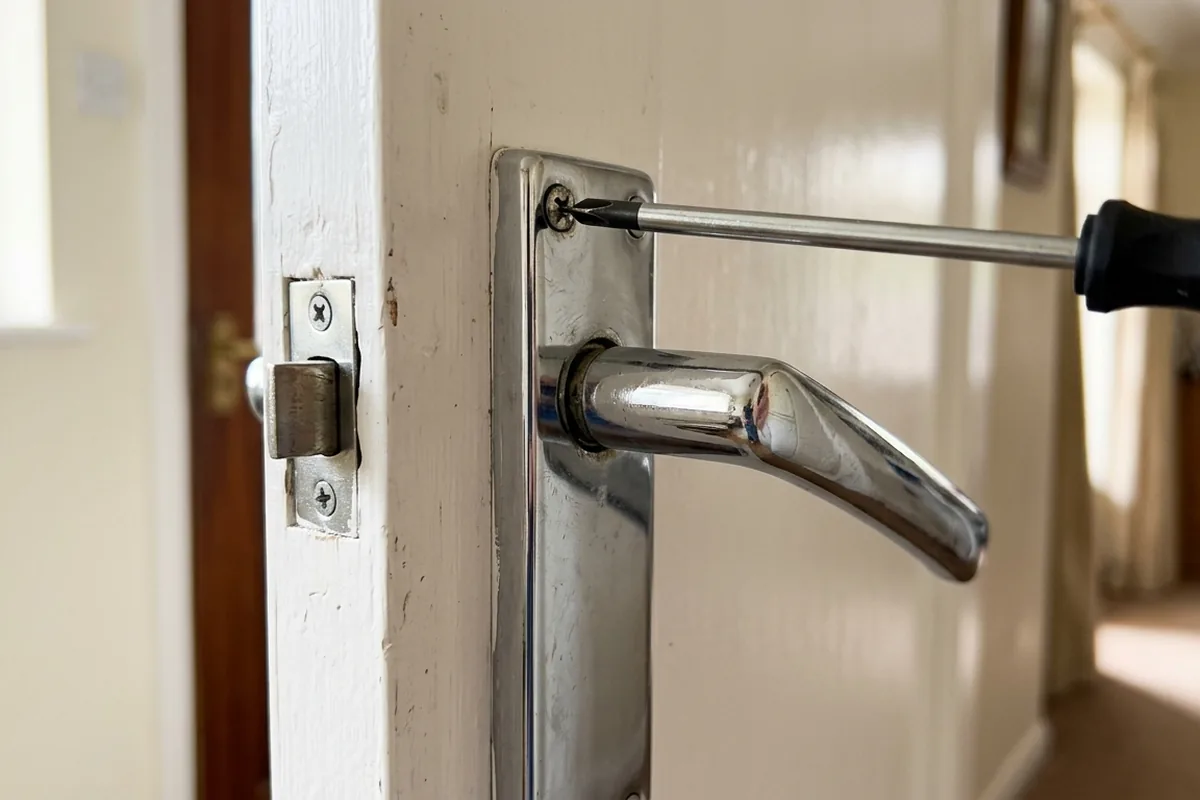
Look for the two small screws on the handle backplate or rose. Use the correct screwdriver so you do not chew the heads. Tighten them a little at a time, alternating between sides so the handle pulls evenly to the door.
2. Check the spindle fit
Press the handle down and let it spring back. If the handle still rattles, look between the handle and the door edge. The square bar (spindle) that runs through the latch should be a snug fit.
- If you can see the handle moving on the spindle, gently tighten the small grub screw (often underneath the lever or on the neck of the handle).
- If the spindle is obviously too thin or rounded, replacing it is cheap and can transform the feel.
3. Secure the latch faceplate in the door edge
Open the door and look at the metal plate on the edge. If you can wiggle it with a fingernail, the latch body may be moving inside the door, which makes both the handle and latch feel rattly. Tighten those two screws until the plate sits flat against the timber, but do not overtighten into soft or crumbly wood.
4. Check the strike plate on the frame
On a rattly, draughty door you may also find the strike plate on the frame is loose. Tighten those screws as well so the latch tongue meets solid metal, not a wobbly plate.
If the handle now feels firm and the latch tongue moves smoothly without buzzing or scraping, you have caught the problem early enough.
Small adjustments that stop the latch catching later
Once the obvious looseness is sorted, a few tiny adjustments can stop today’s rattle turning into tomorrow’s door that will not close without a shove.
A latch usually starts catching because alignment drifts: the door sags slightly on its hinges, screws loosen into soft wood, or the strike plate has worn a groove. You do not need to start rehanging the door at the first sign of rattle, but you can do a couple of light‑touch checks.
- Watch the latch as the door closes
Close the door slowly and watch where the latch tongue meets the strike plate hole. It should slide neatly into the opening.
- If it is hitting high or low, lightly tightening or loosening the top and bottom hinge screws can nudge the door back into line.
- If it is scraping on one side, you can sometimes move the strike plate a millimetre by slightly loosening its screws, nudging it, then retightening.
- Deal with minor play in the catch
If the door closes but feels loose in the frame and rattles when a lorry goes past, stick-on felt pads or thin draught seals on the frame can take up that slack so the latch is not doing all the work. This reduces vibration and slows wear on the latch.
- Lubricate the latch, but sparingly
A dry latch can chatter and feel notchy, which makes people slam or jiggle the handle more, loosening screws again. A tiny puff of graphite powder or a light spray of silicone into the latch (wipe off any excess with a microfibre cloth) is usually enough.
Avoid thick oils that can attract dust and turn into sticky grime inside the mechanism.
If, even after tightening and minor alignment tweaks, the latch tongue is visibly chewed, bent or sticking half out, it is better to replace the latch rather than keep forcing it and risk it jamming shut.
When the rattle points to a bigger issue
Most rattling handles in a terraced house bedroom or a rented flat hallway are simple loose‑screw jobs. Sometimes, though, the noise is your early warning of something else going on in the door or frame.
Look out for:
- Screws that will not tighten
If the handle or latch screws just spin, the timber may be worn or crumbled, especially on old softwood doors. You can often pack out the screw holes with wooden matchsticks and wood glue, then refit the screws once dry. If the wood around the latch is split, stop there and consider a new door or a joiner’s help.
- A floppy handle that does not spring back
If the handle droops or needs lifting back to horizontal, the internal spring cassette in the handle or latch may be failing. No amount of tightening will fix that for long. Replacing the handle set, latch, or both is usually the cleanest answer.
- Movement in the whole door
If the door moves in the frame, or the top corner rubs the lining, the hinges may be loose or undersized. Gently tightening hinge screws is fine, but if the hinge screws are pulling out or the frame is out of square, that is beyond a quick handle fix.
- Fire doors and front doors
For a flat entrance door or any fire door, be cautious. These doors often have specified latches and closers. If the handle is rattling or the latch is not engaging properly, it can affect fire and security performance. In a rented place, report it to your landlord or managing agent rather than swapping parts yourself.
Once the handle feels firm, the latch moves smoothly and the door closes without wobble, listen over the next day or two. If the rattle starts to creep back quickly, something deeper is shifting and it is worth looking at hinges and timber condition before the latch begins catching properly.