The first sign is often inside: a brown stain creeping across a bedroom ceiling, a damp patch above the window board or a musty smell near an outside wall when it rains. Very often the cause is outside, not in the plaster, and blocked gutters are high on the list. The quickest protection is simple: keep gutters clear so rainwater can flow freely away from the house, and do it safely from the ground or from very stable access only. If you cannot reach comfortably, it is usually safer to pay for a gutter clean than to risk a fall trying to save a few pounds.
How to clean gutters safely without risking a fall
Cleaning gutters is not complicated, but the access is the risky part, especially on a wet British day or with mossy paving underfoot. Before you touch anything, look calmly at the height and where you would need to stand.
If you can reach the gutter from a short, sturdy ladder on firm, level ground, and you feel steady at that height, it may be reasonable DIY. If you would need to lean over a conservatory roof, reach across a sloping extension, or climb higher than a standard two-storey, treat it as a job for a professional.
For safe DIY cleaning:
- Choose the right conditions: dry day, no strong wind, ground not slippery with algae or frost.
- Use a good ladder, preferably with a stabiliser bar and someone at the bottom to foot it.
- Avoid standing on the very top rungs or leaning sideways to “just reach that last bit”.
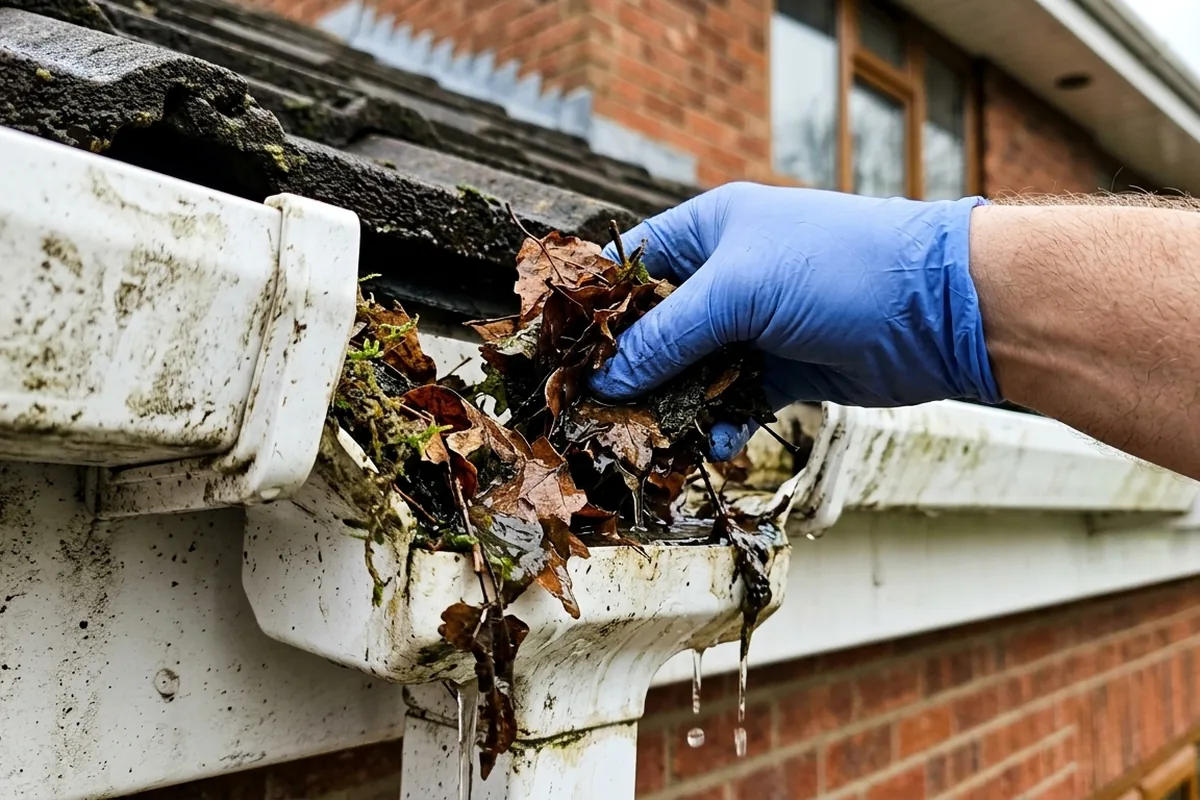
- Wear gloves and eye protection; gutter debris can include sharp grit, screws, bird mess and insects.
- Keep tools simple: a small plastic scoop or trowel, a bucket hooked to the ladder, and a garden hose with a spray nozzle if you can reach safely.
Work in short sections, coming down regularly to move the ladder rather than stretching. Never climb onto the roof or stand on a wet flat roof unless you are fully confident it is safe and designed to be walked on.
What to remove from the gutter and what to watch for
Once you are up at gutter level, you are mainly dealing with leaves, moss, small twigs and silt that have built up over time. This creates a dam so water spills over the edge and can soak the wall, window boards and even the cavity.
Scoop debris into your bucket rather than dropping it onto the patio or driveway, where it can stain or block drains. A plastic scoop or even a cut-down old milk bottle works well because it will not damage the gutter.
As you clean, pay attention to:
- Standing water: if water sits in the gutter even after cleaning, it may not be sloped correctly.
- Cracks or splits in plastic sections.
- Loose brackets pulling away from the fascia board.
- Blocked outlets where the gutter feeds into the downpipe.
If you have safe access, a light flush with a hose helps check the flow. Start near the downpipe and work away from it so you do not push a big lump of debris straight into the pipe. If water backs up immediately, the downpipe may be blocked lower down, which is usually best left to someone with proper rods or a pressure jet, especially if it disappears underground.
How clean gutters help prevent damp indoors
Blocked gutters often show up indoors as mysterious damp that does not respond to dehumidifiers or “just leaving the window open”. When rainwater cannot escape, it spills over the gutter edge and runs down the outside wall or behind the gutter, soaking brickwork and sometimes getting into the cavity.
Common indoor clues that point towards gutter issues include:
| Sign at home | What it may mean | First check outside |
|---|---|---|
| Damp patch high on external wall | Rainwater overflowing near eaves | Look at gutter directly above in heavy rain |
| Peeling paint by window head | Water tracking from blocked gutter or joint | Check for drips at gutter joints |
| Green staining on brick below gutter | Regular overflow keeping wall wet | Look for moss and debris in that gutter run |
| Musty smell near outside corner | Downpipe or corner joint leaking | Check corner fittings and downpipe connection |
If you can, watch the gutters during a proper downpour from a safe window or doorway. You are looking for water pouring over the front, gushing from joints or running behind the gutter onto the fascia. That tells you more than any dry-weather inspection.
Clearing the gutters will not fix:
- Rising damp from ground level.
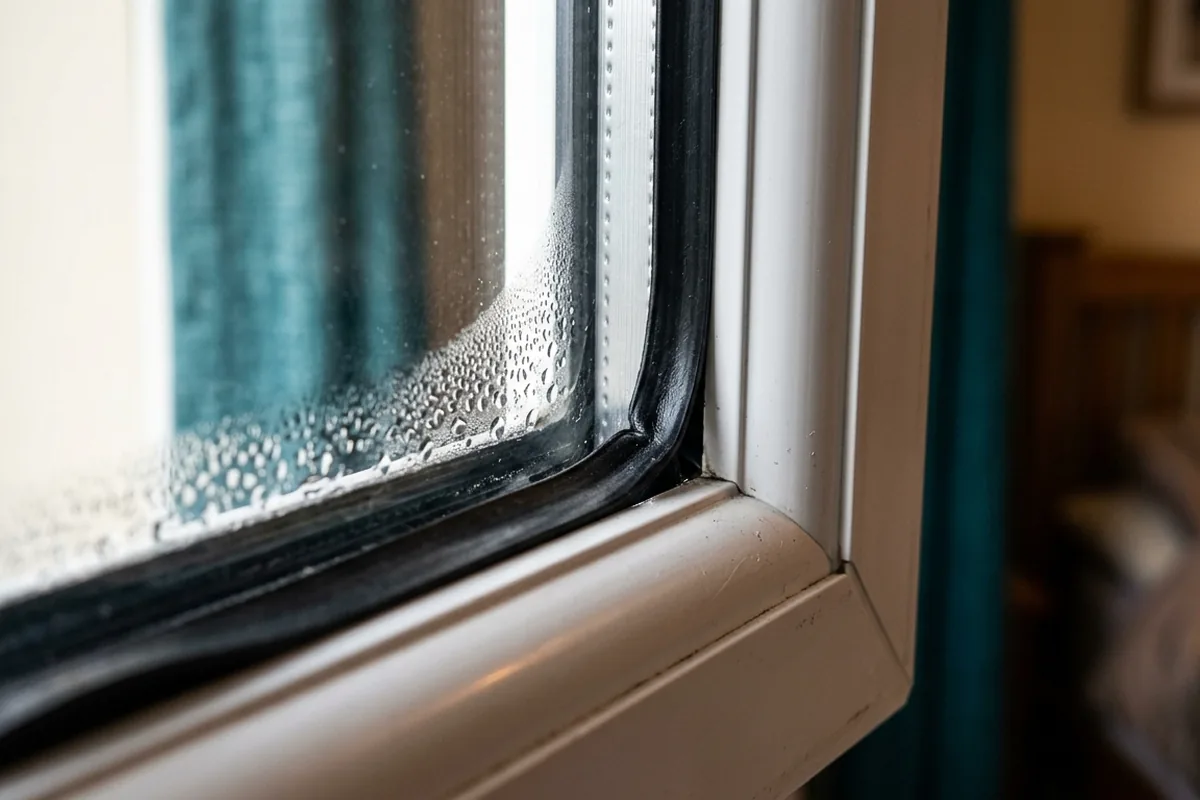
- Condensation on bedroom windows caused by indoor humidity.
- Long‑term structural damp where brickwork or pointing has failed.
But it removes one of the simplest and most common causes of fresh damp patches and keeps rainwater where it belongs: in the gutter, then down the pipe and away from the house.
If you have cleared the gutters safely, checked them in heavy rain and damp patches still spread or stay wet for weeks, that is the point to talk to a surveyor or damp specialist rather than keep climbing ladders.
A quick seasonal habit that helps is to give your gutters a once‑over in late autumn after the leaves have mostly fallen, and again in spring if you have a mossy roof. The aim is modest: clear channels, no obvious overflows, and a house that stays dry inside even when the weather does its worst.