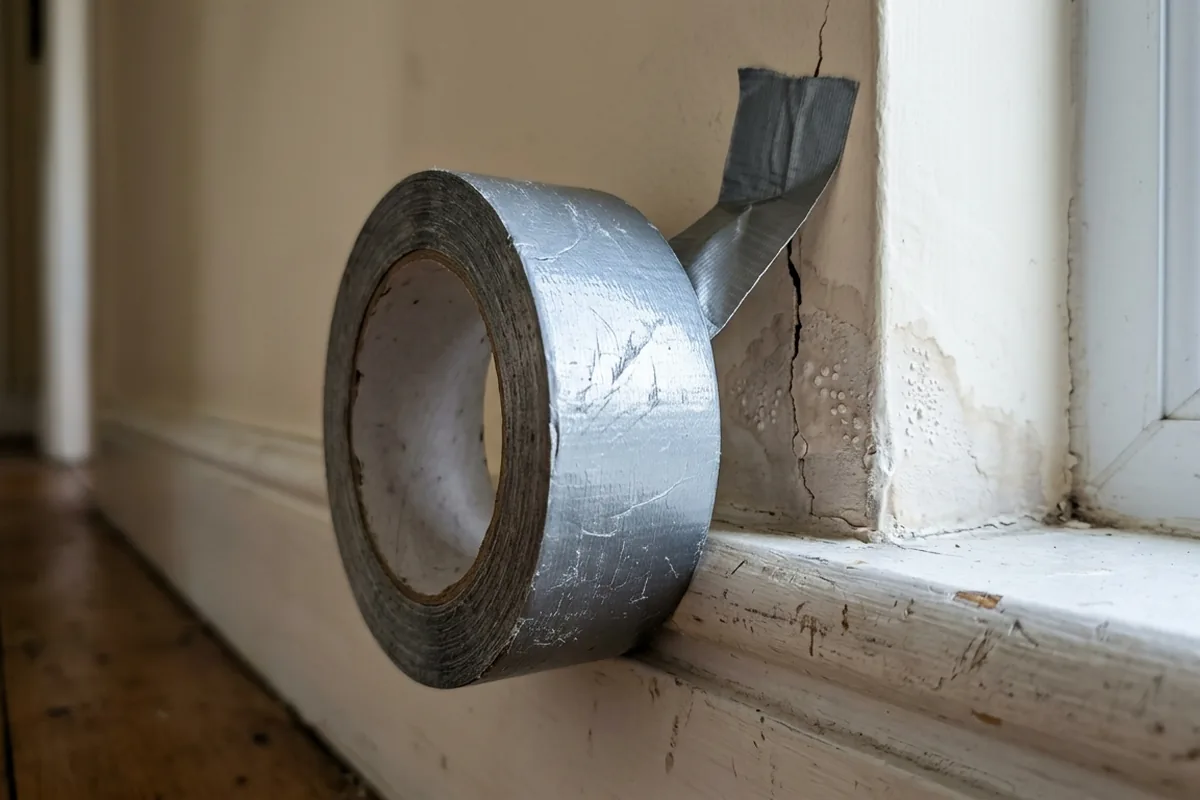
That silver roll in the drawer feels like the answer to everything: a split Hoover hose, a dripping under-sink pipe, a flapping bit of gutter, a loose bit of laminate edging. In reality, duct tape is a temporary hold-together, not a proper repair for most household problems. It peels, hardens, lets water creep behind and can even make the real fix harder or more expensive.
The short version: use duct tape for short-term, low‑risk bodges indoors, and avoid it completely on anything wet, hot, structural, pressurised or safety‑critical. If water, steam, electrics, gas, weight or weather are involved, you need a different approach.
Where duct tape quietly makes things worse
Duct tape is basically a fabric mesh with rubber-based adhesive. It grips well at first, but it is not waterproof, not heat-proof and not designed as a building or plumbing material.
A few common places people reach for it, and why it is the wrong choice:
- Leaking pipes under the sink or behind the washing machine
Duct tape cannot cope with water pressure or constant damp. The adhesive softens, water tracks underneath and you can end up with swollen chipboard units, damp skirting boards and mouldy flooring. For any plumbing leak, the safe move is: isolate the water, catch drips in a tray, and use a proper push-fit repair, compression fitting or call a plumber. Duct tape here is only for a few minutes while you turn the stop tap off.
- Cracked waste pipes and traps
The plastic under a kitchen or bathroom sink flexes slightly as water flows. Duct tape stiffens, then cracks away, leaving a sticky mess. A new trap or short length of pipe is usually cheap and far more reliable.
- Around hot pipes, radiators or boiler casings
Heat softens the adhesive. Tape can slip, curl and leave residue. On anything near a boiler, flue or electrical heater, using tape instead of the correct clip, seal or cover can be unsafe. Do not use duct tape on gas appliances or flues at all.
- On roofs, gutters and outdoor joints
British wet weather and UV light from the sun break duct tape down quickly. It goes brittle, the edges lift and water is funnelled exactly where you do not want it, such as behind fascias or into a shed roof. For gutters and downpipes, clips, rubber couplers or a proper sealant are the answer, not tape.
- Sealing draughty windows and doors
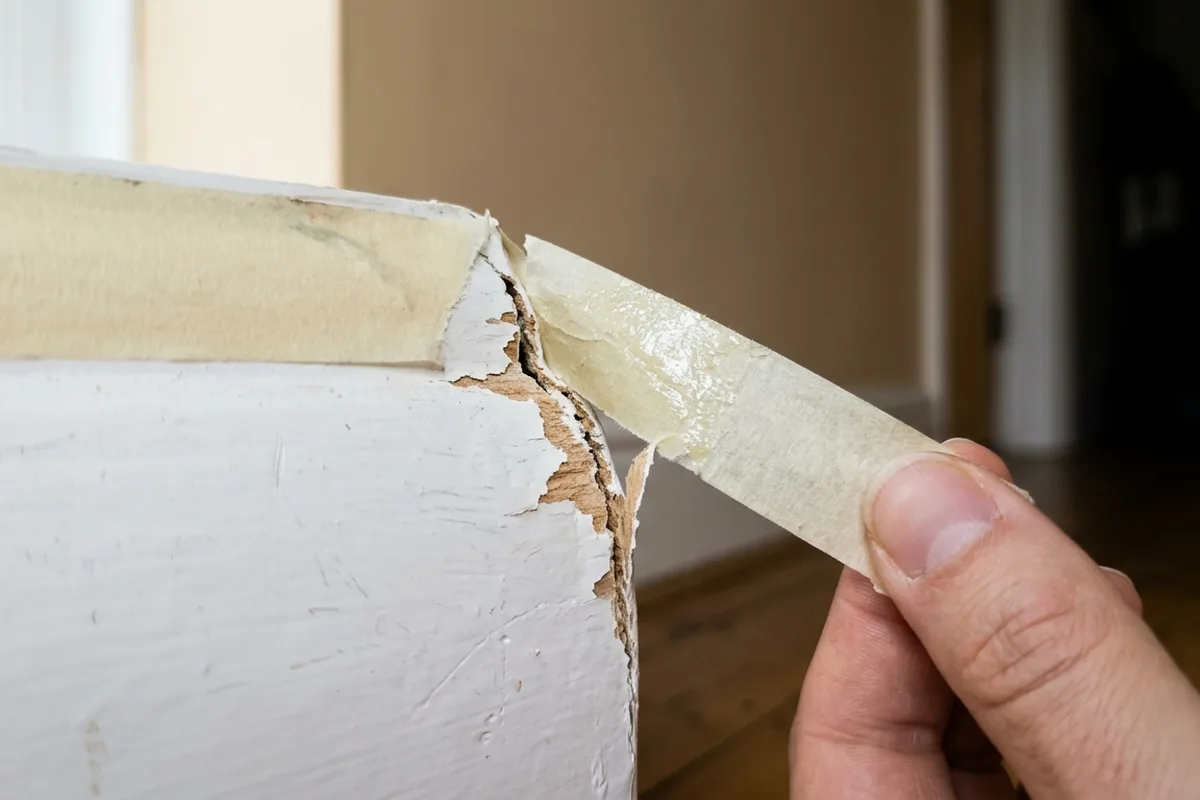
It can pull paint off frames, leave sticky marks on uPVC and trap condensation, which can lead to mould around window boards. Use proper draught‑excluder tape or brush strips instead.
In all of these, the problem is the same: duct tape hides the symptom for a short time while the cause carries on quietly.
What duct tape is actually good for at home
Duct tape does have its place, but it is more of a workshop helper than a repair material.
Indoors, it is usually fine for:
- Temporary bundling or holding: keeping a loose Hoover hose together until you can replace it, taping dust sheets to skirting boards while you paint, holding a cardboard box closed in the loft.
- Short-term protection: covering a sharp metal edge in the shed, wrapping the handle of a garden fork that is starting to splinter, or masking off an area you are sanding.
- Non-structural, non-wet fixes: patching a torn plastic storage box lid, securing a loose bit of cable trunking until you can refix it properly with screws.
Think of it as a strong sticky bandage, not a new piece of skin. It is there to get you through a weekend, not the next five years.
If you catch yourself using duct tape on anything that carries water, weight, heat or electricity, it is a good sign you need a different product.
Better alternatives to duct tape for common problems
For many of the jobs duct tape gets thrown at, there is a simple material that does the job properly and lasts.
| Problem | Better option | Why duct tape fails |
|---|---|---|
| Leaking pipe joint | Push-fit or compression fitting | Not pressure-proof, peels when wet |
| Cracked plastic waste pipe | Replacement section or rubber repair coupling | Moves and flexes, tape splits |
| Draughty window or door | Foam or rubber draught seal | Leaves residue, traps moisture |
| Loose skirting or trim | Grab adhesive or proper fixings | Adhesive creeps, looks messy |
| Outdoor gutter joint drip | Clean joint, new seal or connector | UV and rain break tape down |
A few material swaps that work better
- For leaks and plumbing: pipe repair clamps, self‑fusing silicone repair tape (rated for plumbing), proper fittings and new washers. If you cannot turn the water off safely or the leak is more than a drip, do not experiment with tape: get a plumber.
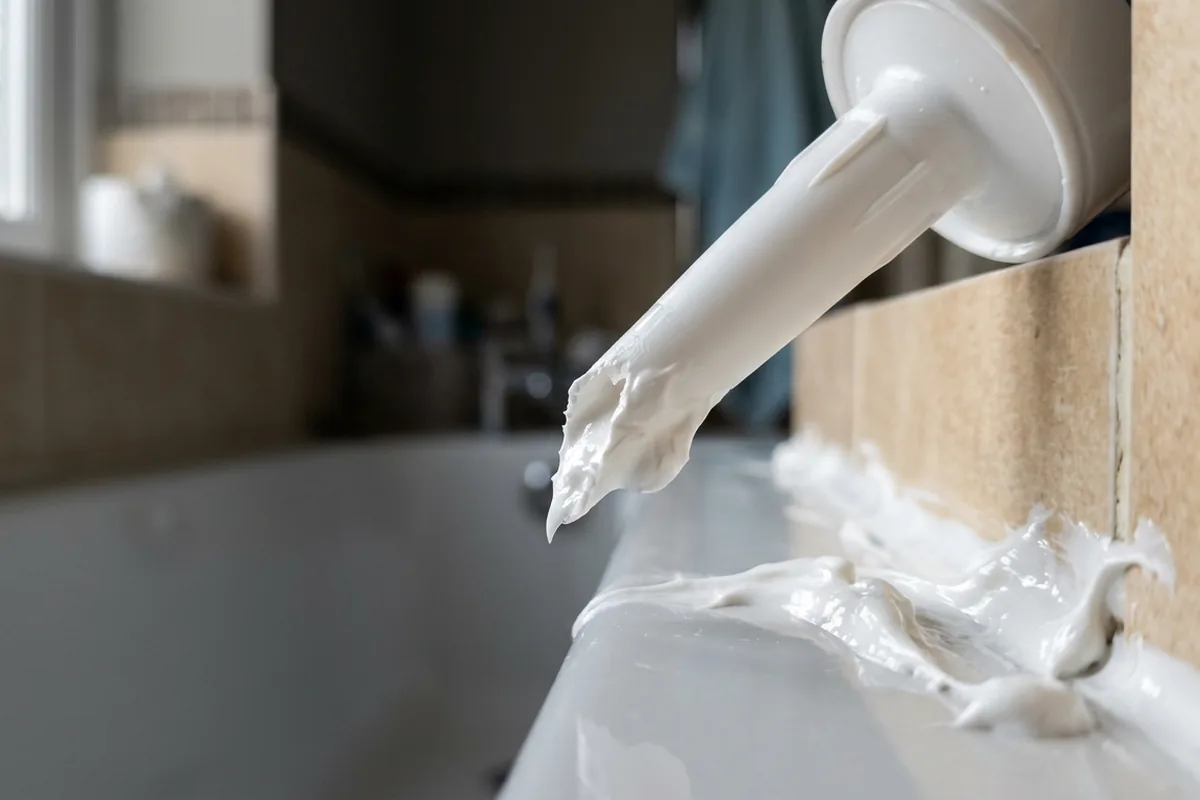
- For gaps and cracks: decorator’s caulk for small indoor gaps around skirting boards, silicone sealant for bathrooms and kitchens, and expanding foam only where you understand the space and movement involved.
- For outdoor fixes: exterior‑grade sealants, roofing tape designed for UV and weather, or new fixings. If ladders or roofs are involved and you are not fully confident, this is where a professional is safer than any roll of tape.
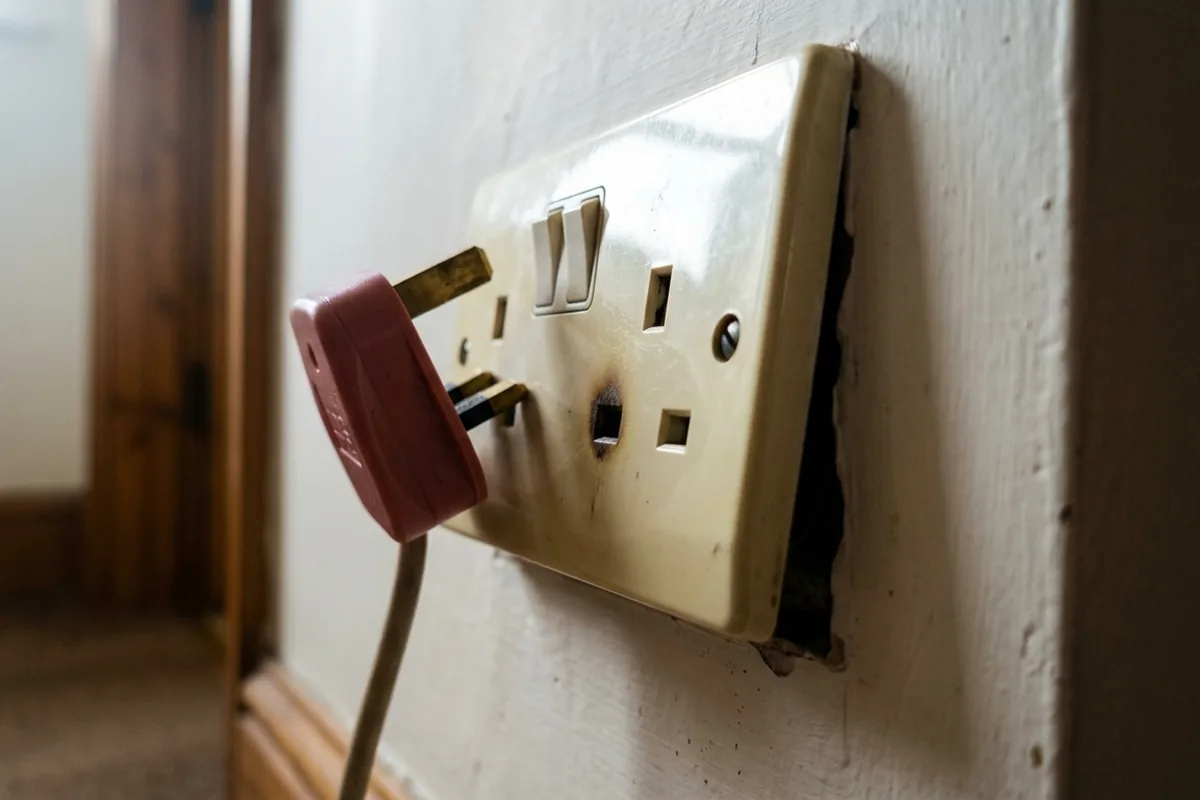
- For cables and electrics: use proper cable clips, trunking and, for damaged flexes, either a new lead or a correctly fitted plug and flex by someone competent. Do not wrap damaged mains cables in duct tape.
When in doubt, ask yourself: would the manufacturer of this item ever have used duct tape here? If the answer is no, it is a clue to stop and look for the right product rather than the quickest roll to hand.
A good rule at home is: duct tape is fine for holding, labelling and bundling, but once water, weather or safety are involved, it is time to put it back in the drawer and reach for a proper fix.