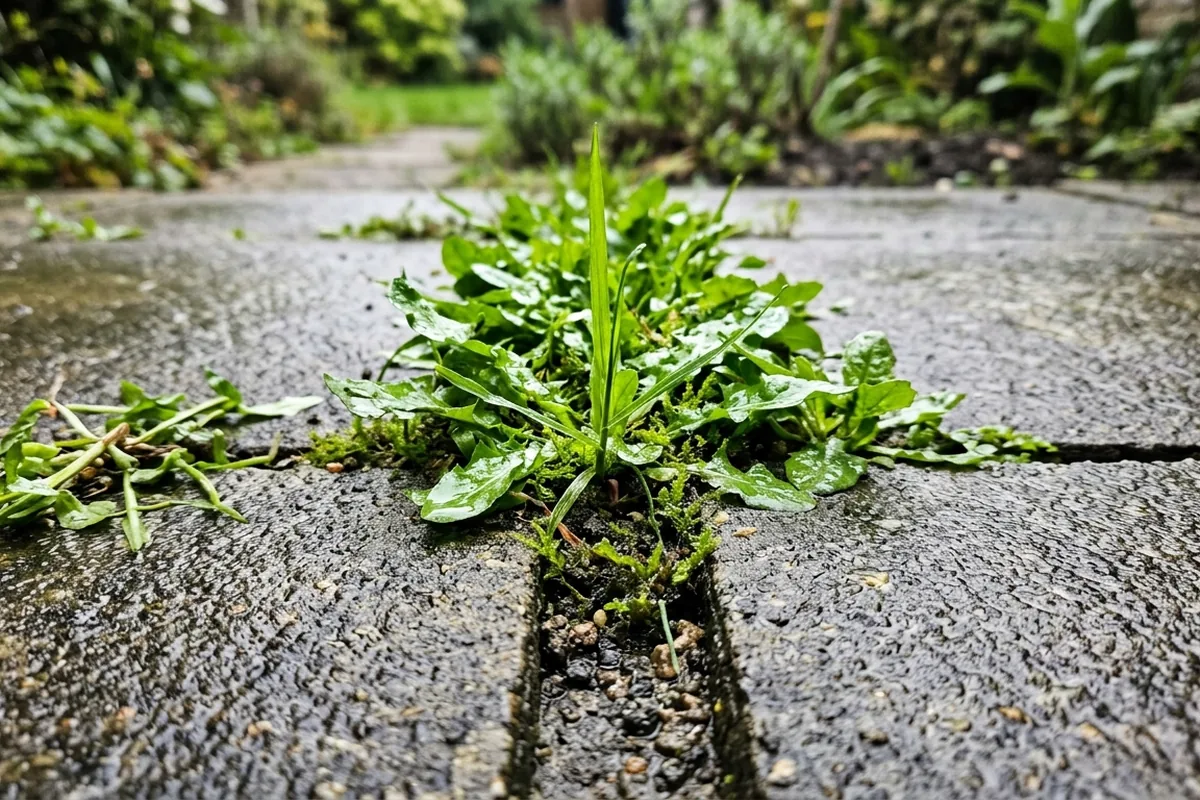
You sweep the patio, stand back pleased with yourself, then it rains for a day and by the weekend the gaps between the slabs look greener than ever. The reason is simple: those joints are perfect mini planters. After rain, the cracks hold moisture, light and warmth, so dormant weed seeds and tiny roots suddenly have everything they need. The first thing to deal with is not the leaves you can see, but the roots and debris in the gaps that are feeding them and holding damp.
Why paving weeds surge after rain and what to tackle first
Between paving slabs you usually have a mix of sand, dust, soil, moss and old leaf bits. After a good downpour this turns into a moist, nutrient-rich strip that stays damp longer than the slab surface. That’s why you often notice a growth spurt a few days after rain, especially in a typical British spring or autumn.
Moist joints mean:
- weed seeds that blew in earlier can finally germinate
- existing roots can grow faster and deeper
- moss and algae spread along the edges of the slabs
The first thing to remove is the packed organic debris in the joints, not just the visible tops of the weeds. If you only snap off the greenery, you leave:
- roots that will regrow, often thicker
- compost-like material that holds more water
- a rough surface that traps fresh seeds
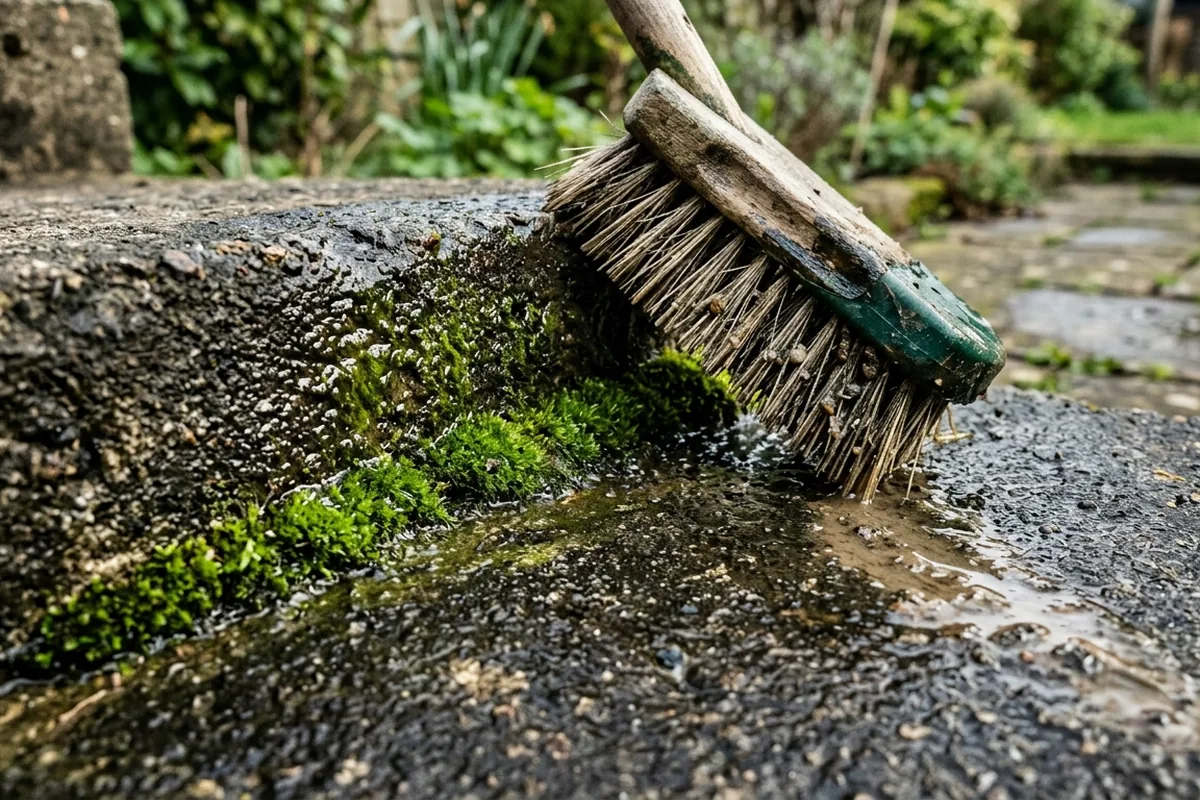
Use a joint scraper, old dinner knife or a narrow weeding tool to dig out the material between slabs down to clean sand or hardcore where you can. Work on a dry day after the slabs have drained, so the debris lifts out more easily and you can see what you’re doing.
Once you’ve cleared a section, brush away the loose material rather than washing it into the next gap, or you’ll just move the problem along the patio.
The mistake that keeps weeds coming back
The most common mistake is treating the paving like a lawn edge: a quick strim or a splash of weedkiller on the green bits and job done. On patios and driveways, surface-only treatments nearly always fail because the root zone is protected in the crack.
If you want to break the cycle, focus on three things:
1. Roots out, not just tops off
On lighter growth, hand weeding with a narrow tool is usually enough. For older paving in a terraced house garden, expect some roots to be thick and woody. If they don’t pull easily, lever them from the side of the joint, not straight up, to avoid chipping the slab edge.
2. Loose “compost” out of the joints
That dark, crumbly material between slabs is often half soil, half decayed leaves. It’s basically a long plant pot. Scrape it out, sweep it up and bin it, rather than tipping it into a border where you don’t want more weeds.
3. Refill with sharp sand, not soil
After scraping, joints left hollow will refill themselves with wind-blown soil and seeds. Brush in dry kiln-dried or sharp sand, which drains quickly and is less inviting for roots. Avoid standard garden soil: it undoes your work.
If you prefer to use a weedkiller, always read the label and keep pets and children off until it’s dry. It works best on actively growing weeds, but it still won’t fix joints that are full of rich debris. Think of sprays as a follow-up, not the main job.
How to keep the gaps drier and less inviting
Once you’ve done the boring bit of scraping and refilling, a few small habits make it much harder for weeds to get going after every shower.
In a typical UK garden, these changes help most:
- Stop leaves rotting in place
On a wet autumn, leaves collect in patio corners and along fences. They break down into exactly the sort of fine material that lodges in joints. A quick sweep after windy days is more effective than a big clear-up once a month.
- Deal with overhanging plants
Low shrubs and hanging baskets that drip constantly keep the joints wetter than the rest of the patio. Trimming them back slightly so more air and light reach the paving helps it dry quicker after rain.
- Check drainage, not just the slabs
If water regularly sits in one area, the joints there will always be greener. Look for blocked gully covers, a sunken slab or a patch where rain from a conservatory roof always lands. On small dips you can often lift a single slab, add a bit of compacted sharp sand underneath and relay it so water doesn’t pool. If a whole area is sinking or near a house wall, it is safer to get advice from a landscaper.
- Consider joint stabilisers only on sound paving
On some modern patios, a jointing compound or polymeric sand can help lock the gaps and shed water. It’s not a cure-all and shouldn’t be used on loose, moving slabs or where you might need access to services under the paving.
If, after clearing and refilling, weeds still shoot back very quickly, you’re probably dealing with seeds constantly blowing in, not old roots. In that case, a light scrape once a month during the growing season is usually enough to stay ahead, especially after spells of rain.
The sign that you’ve cracked it is simple: after the next few showers, the slabs may still darken and you may get the odd tiny sprout, but you won’t see thick green lines racing along every joint.