The problem usually starts with stripy, patchy slabs or little craters appearing after you have blasted the patio clean. The mistake is simple: using too much pressure, too close, often with the wrong nozzle, can strip the surface of concrete or natural stone and blow out the sand or mortar between slabs. Once that top layer is gone, you cannot put it back, and the slabs will weather and stain faster.
The safe rule is: treat patio slabs like a delicate surface, not like a muddy wheel arch. Use a fan nozzle, lower pressure and keep the lance moving at a sensible distance. If you can feel the jet biting into the slab or grout, you are already doing damage.
The pressure washer mistake that actually harms slabs
The damaging move is concentrating a narrow, high‑pressure jet on one spot, too close to the surface, in an effort to “deep clean” stubborn marks, algae or black spots.
On a typical British patio in a back garden, that often means:
- using a turbo/rotary nozzle on full power
- holding the lance only a few centimetres away
- staying on one mark until it “looks new”
What happens is:
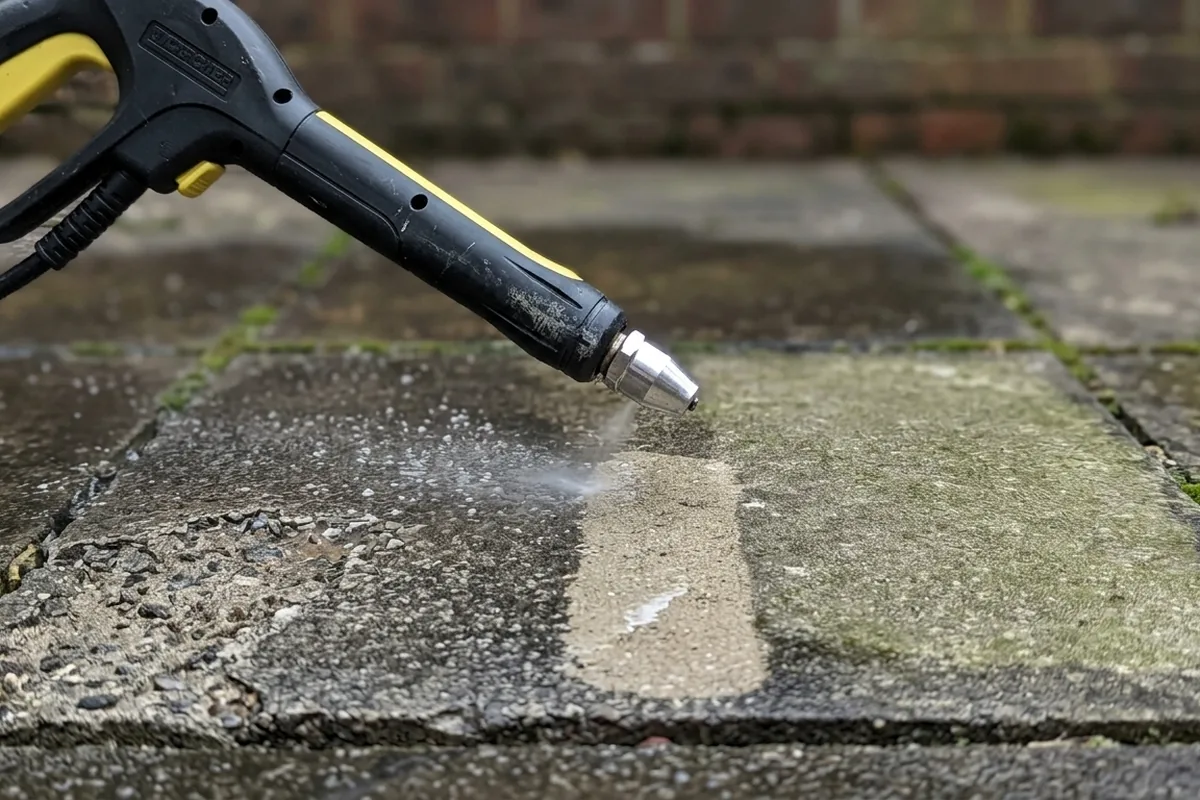
- On concrete slabs, the jet blasts away the smooth top layer, exposing the rough aggregate underneath. You get a speckled, raw look and the slab will hold dirt and algae more easily in future.
- On natural stone (like sandstone or limestone), the jet can etch the surface, leaving permanent lines and pale patches, or even flake softer stone.
- On grout or jointing, the water cuts out the pointing or washes away kiln‑dried sand, leaving loose slabs and gaps where weeds and water get in.
If you notice bright “clean” stripes where you have overlapped the lance, that is a warning that you have already taken off more than just the dirt.
How to clean patio slabs without wrecking them
You can still use a pressure washer on most patios, as long as you dial it back and let time and technique do the work instead of brute force.
Aim for this approach:
- Use the right nozzle: choose a wider fan nozzle or a patio cleaner head rather than a pencil jet or turbo nozzle on bare slabs.
- Back off the pressure: many domestic machines have adjustable pressure. Start low and increase only if needed, especially on older or softer stone.
- Keep your distance: as a guide, stay about a forearm’s length (20–30 cm) away from the surface, and keep the lance moving in smooth, overlapping passes.
- Test in a corner first: pick a discreet slab near a fence or shed. If the colour changes sharply or the surface feels rougher once dry, you are too aggressive.
For green patio algae and general grime in a typical UK garden:
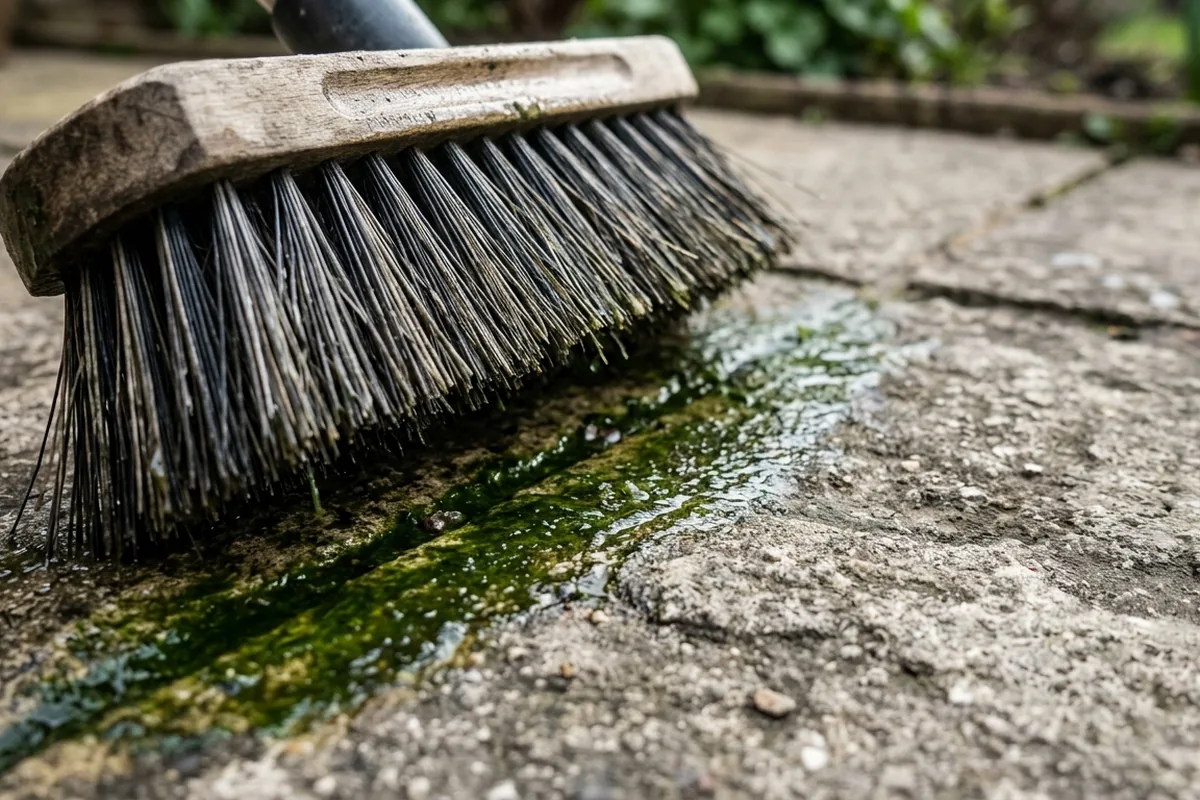
1. Brush off loose dirt and leaves with a stiff broom.
2. Wet the area lightly first so the jet is not hitting bone‑dry, dusty stone.
3. Work in sections, moving steadily rather than “drilling” at stains.
4. Rinse away dirty water so it does not dry back onto the slabs.
If you have stubborn black spots or heavy staining
Those dark “black spot” speckles on older patios are often lichen embedded in the surface. A stronger jet rarely solves this without damage.
Safer options:
- Use a patio or lichen cleaner formulated for the type of stone you have, following the label and rinsing well.
- For delicate natural stone, check the product is suitable and avoid anything acidic unless the manufacturer specifically says it is safe for that stone.
- Accept that some very old, marked slabs will never look brand new without risking the surface.
If a small test patch looks etched, pitted or significantly lighter once dry, stop. It is better to live with some marks than to ruin the whole patio.
Checks to make before and after using a pressure washer
Before you even switch the washer on, a few quick checks can prevent avoidable problems.
Look at:
- Type of slab: pressed concrete, textured concrete, sandstone, limestone, porcelain. Softer stone and older concrete need gentler treatment.
- Condition of joints: if the mortar or sand is already crumbling, a strong jet will make it worse and can loosen slabs.
- Drainage: on many British patios, dirty water can run towards the house. Avoid forcing water against brickwork, air bricks or the base of patio doors.
After cleaning, walk the area once it has dried:
- Check for loose sand or missing pointing between slabs. You may need to re‑sand joints with kiln‑dried sand on a dry day.
- Feel a few slabs with your hand. If they are rougher or “gritty” where you cleaned, ease off the pressure next time.
- Look for etched lines or circles that match your cleaning pattern. That is a sign the pressure or nozzle choice was too harsh.
If you are unsure about an older, uneven or expensive stone patio, a sensible halfway house is to use a stiff outdoor brush and a hose for general cleaning, and reserve the pressure washer for more robust areas like concrete paths and driveways, on a lower setting.
A patio that still has its original smooth surface, even if not perfect, will usually stay cleaner for longer and cope better with the British rain than one that has been blasted raw.