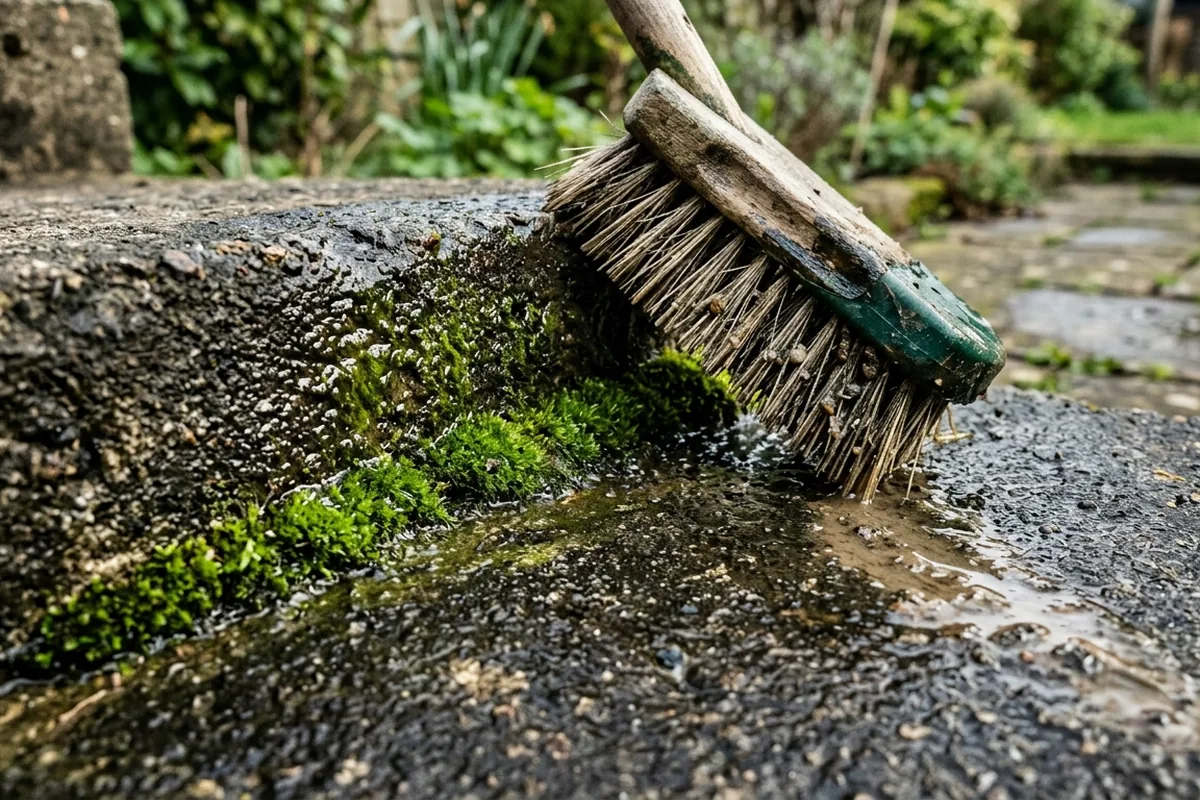
That green film on the treads looks clean for a week after you’ve scrubbed, then the next wet spell hits and the moss is back, especially on the shady side of the steps. The reason is simple: scrubbing only removes what you can see, not the conditions that let moss thrive. Garden steps that stay damp, shaded and slightly rough will keep growing moss, no matter how hard you brush, until you change at least one of those three things.
In practice that means: improve drainage, reduce shade where you can and stop spores re‑settling. A quick clean alone is rarely enough. Once you understand which of those is your weak point, you can usually slow regrowth right down instead of doing the same job every month.
Why moss returns so quickly on garden steps
Moss is not a stain, it is a living plant. If your steps are like most in UK gardens – concrete, stone or old brick, often north-facing and slow to dry after rain – they are almost the perfect moss bed.
The main reasons it keeps coming back are:
- Constant moisture: worn treads, slight dips or missing pointing let water sit. In a British winter, those steps can stay damp all day.
- Shade and still air: overhanging hedges, a fence or a side alley mean the surface never really warms or dries.
- Rough, porous surfaces: tiny pits in concrete or sandstone hold spores and moisture that a normal scrub brush never fully reaches.
- Spores everywhere: moss spreads by spores carried on the wind, on shoes, on the dog. You cannot stop them landing; you can only make the surface less welcoming.
So even after a good scrub, tiny bits of moss and spores remain in the pores and joints. As soon as it’s wet and mild, they start again.
If your steps are also a bit green on the risers, or the path at the bottom goes slippery after rain, that’s a sign the whole area is staying damp, not just the odd patch.
What actually slows moss down, beyond scrubbing
A stiff brush and soapy water are fine as a first clean, but to stop the cycle you need to tackle moisture, shade or surface texture. You do not have to fix all three; even one change can make a big difference.
1. Help the steps dry faster
Focus on anything that lets water sit:
- Clear debris from edges, joints and drain channels so water can run off instead of pooling on the treads.
- If water sits against a wall or at the bottom step, see if you can open a small run‑off gap in gravel or soil so it drains away.
- Sweep off wet leaves and mud after heavy rain. A quick once‑over with a stiff broom or patio brush on a Saturday morning keeps moisture from lingering.
If your steps are under a dripping gutter or overflowing water butt, fixing that will usually reduce moss more than any cleaner.
2. Reduce shade where it’s safe to do so
You don’t need full sunshine, just a bit more light and air:
- Lightly trim back overhanging shrubs or hedges that sit right over the steps.
- Thin out ivy or climbers on a side wall so air can move across the surface.
- If there’s a solid fence very close, even cutting a small gap at the bottom (where secure and allowed) can help airflow.
Where shade comes from the house or a tall boundary you can’t change, focus more on drainage and treatment instead.
3. Use a moss treatment that reaches into the surface
After a physical clean, a dedicated patio or path cleaner that states it treats moss and algae can soak into the pores and slow regrowth. Look for products that say “no rinse” or “leave to work”, as these often keep working for weeks.
Basic approach:
1. On a dry day, brush the steps thoroughly to remove as much growth as possible.
2. Apply the product as directed, usually with a watering can or sprayer.
3. Let it dry fully before using the steps heavily, especially if they’re steep or narrow.
Always check the label for your surface (concrete, natural stone, brick). Avoid strong acidic cleaners on limestone or some sandstone, and keep run‑off away from flower beds and ponds where possible.
Pressure washers can blast moss out of the surface, but on old brick or soft stone they can also damage the face and mortar, making them even more porous and prone to future growth. Use them with care and lower pressure if you must, or stick to chemical treatment plus brushing.
When it’s more than just a cosmetic green film
If moss is back within days, or only in certain areas of the steps, it can be a clue to a bigger issue like poor drainage or constant seepage.
Here’s a quick way to read what your steps are telling you:
| Problem | First safe check | What to do next |
|---|---|---|
| Moss only on lower steps | Look for water pooling at the bottom after rain | Improve run-off with a small channel or gravel strip |
| Thick moss along one edge | Check for a dripping gutter, overflowing water butt or leaky hose | Fix the leak or redirect water away from the steps |
| Green film on nearby path and wall | Feel if the area stays damp even after a dry day | Consider more airflow, trimming planting and a longer-lasting moss treatment |
| Crumbly mortar between step bricks | Press gently to see if joints are soft or missing | Plan to repoint; this reduces water trapping and future moss |
If the steps are very worn, uneven or the mortar is falling out, no cleaner will give a long-term fix. Repointing or resurfacing may be the only way to stop water soaking in and feeding moss.
On steep or frequently used steps, be cautious. Mossy treads are genuinely slippery, especially in a frosty spell. If you cannot keep on top of it, think about adding simple outdoor grip strips or rubber treads on the worst sections once they’re clean and dry.
For most UK gardens, the realistic aim is not “no moss ever again”, but less build-up and fewer deep scrubs. If, after trimming, improving drainage and using a suitable treatment, the moss still bounces back thick every few weeks, that’s a sign the basic construction or layout is against you and you may need to change the surface rather than keep fighting it.