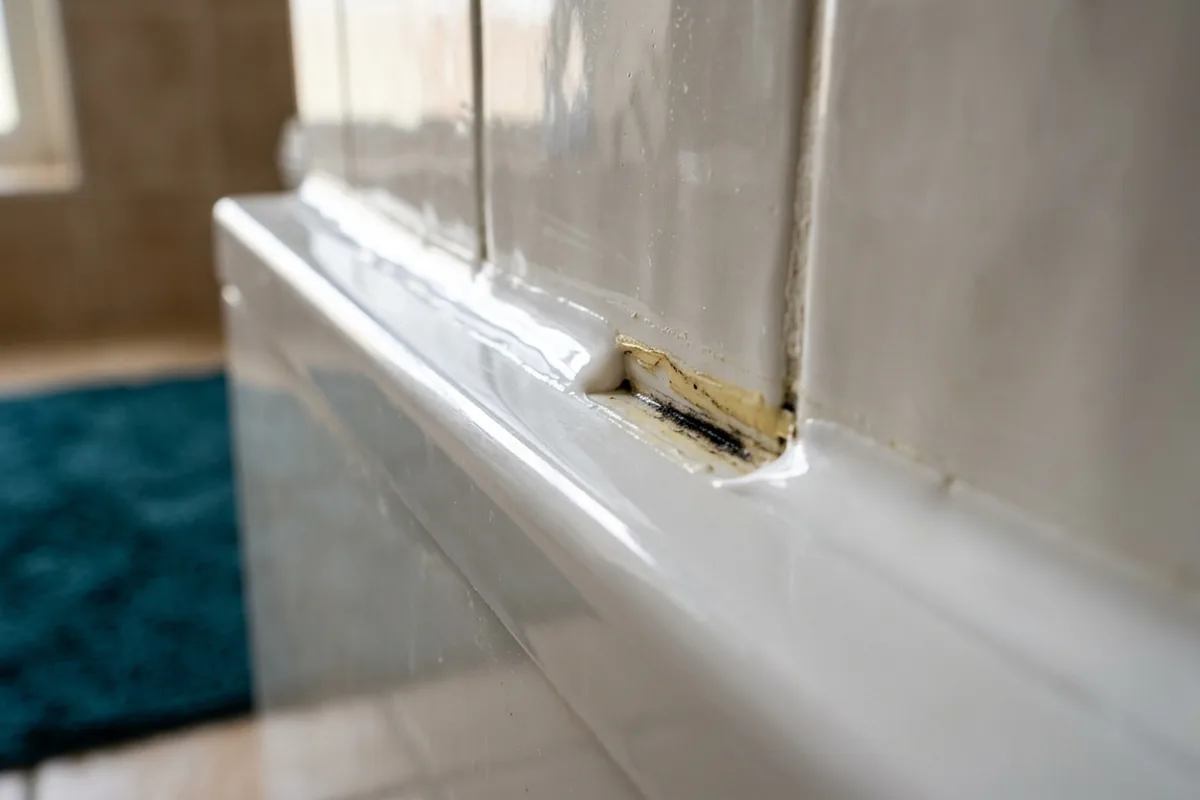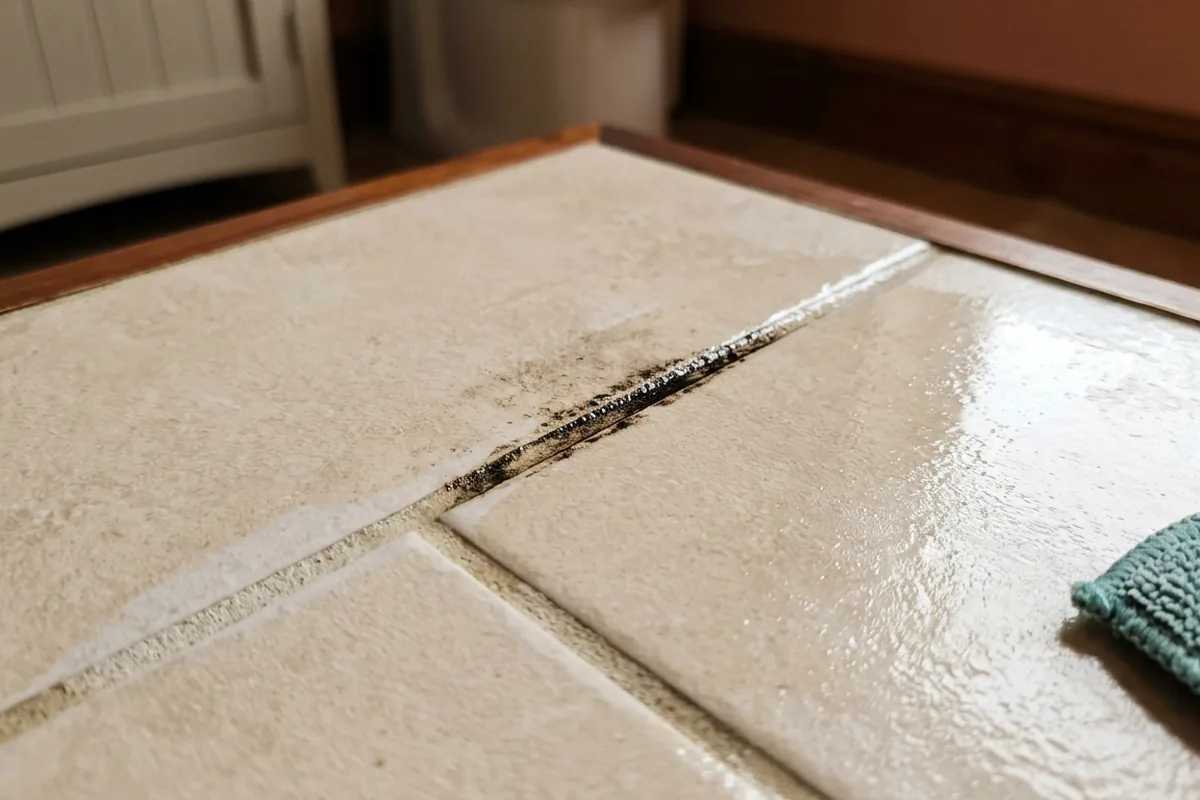
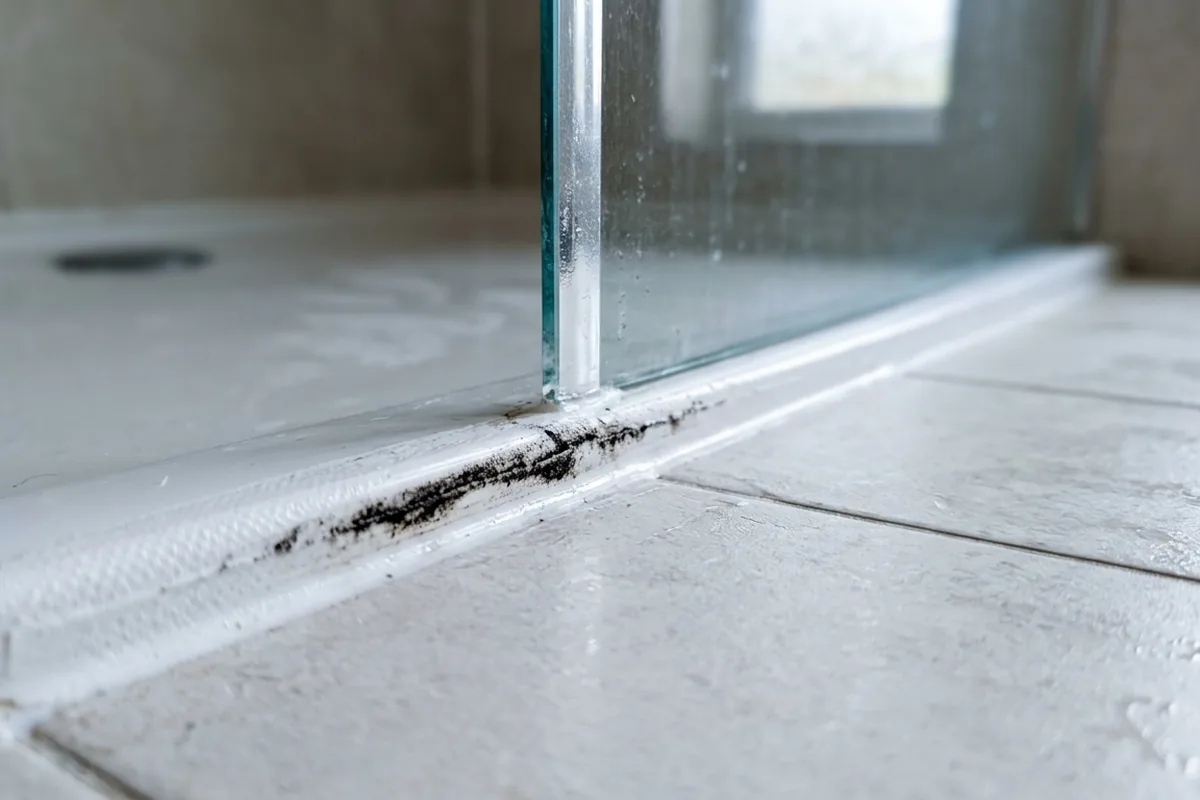
That bright white patch on the bathroom sealant or bedroom wall can look “fixed” after a wipe with bleach, yet the musty smell and black dots keep coming back. Bleach often changes the colour of mould and kills what is on the very surface, but it does not remove the moisture problem feeding it. On porous materials like plaster, grout and wood, the roots stay alive underneath, so the mould quietly regrows while everything looks clean.
Why bleach often only hides the mould
On a typical UK wall, window board or silicone seal, mould is growing because the surface is regularly damp: condensation on cold outside walls, steamy showers in a small bathroom, or a chilly rented flat with poor ventilation.
Bleach seems effective because:
- It strips colour from the mould, so stains fade quickly.
- It disinfects the very top layer of the surface.
- It smells “clean”, which tricks you into thinking the problem has gone.
The catch is that household bleach is water-based and very thin. On porous surfaces, the water soaks in more readily than the active ingredient. You can end up:
- Adding extra moisture into the wall or grout.
- Damaging the surface finish or paint.
- Killing the top of the mould colony but leaving the roots.
That is why the same patch of mould returns on the bedroom wall above the skirting board or along the bathroom ceiling, even though you keep bleaching it.
Bleach can also make diagnosis harder. Once the black or green colour has gone, it is easy to ignore lingering musty odours, faint shadow marks or a wall that still feels cold and slightly clammy. The mould looks “fixed”, so the real issues – condensation, leaks or poor ventilation – carry on unchecked.
Where bleach makes things worse
Used in the wrong place, bleach can actually prolong or hide a mould problem rather than solving it.
On these common home surfaces, bleach is usually the wrong choice:
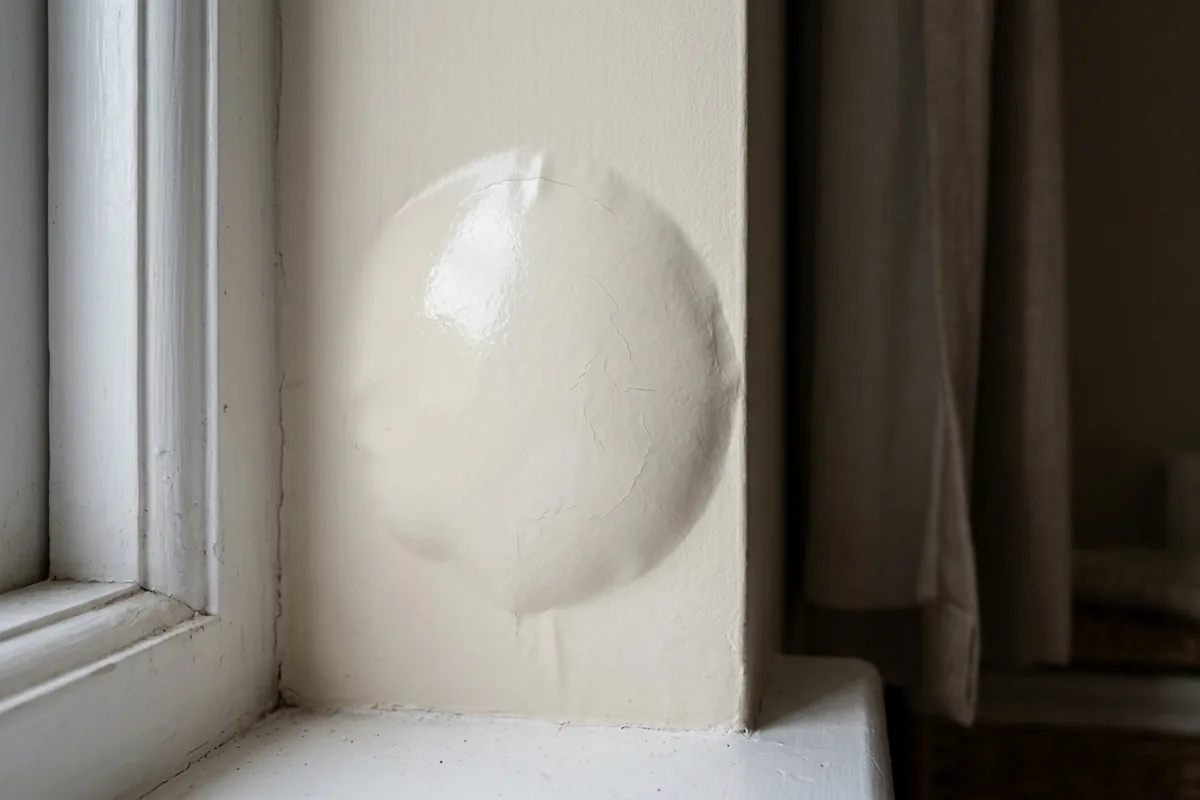
- Painted plaster walls: The paint can bubble or flake, and moisture is pushed deeper into the plaster, where mould can spread unseen.
- Plasterboard and lining paper: These are like a sponge. Bleach water soaks in, the surface weakens and mould can grow behind the finish.
- Timber and MDF skirting boards: Bleach can raise the grain, strip finishes and feed mould in the fibres.
- Porous grout and old silicone sealant: Bleach may lighten staining but often leaves the rubber or grout more brittle and pitted, giving mould more places to cling.
There is also the safety side:
- Never mix bleach with vinegar, descalers or other acidic cleaners: this can release chlorine gas.
- Never mix bleach with anything containing ammonia (including some “bathroom” or “toilet” products).
- Ventilate the room, keep children and pets away and wear gloves when using any strong cleaner.
If you find you are bleaching the same bathroom ceiling or window reveal every few weeks, that is a clear sign the source of moisture has not changed. At that point, more bleach is not the answer.
Better ways to tackle mould and what to do instead of more bleach
The aim is to remove the mould safely and then deal with the conditions that let it grow. Different surfaces need different approaches.
If the mould is light and recent
On small patches of surface mould from everyday condensation, like around a bedroom window frame or in a small bathroom, you can usually:
- Use a dedicated mould remover or fungicidal wash that is suitable for your surface.
- Or use a mild detergent solution (a little washing-up liquid in warm water) on a microfibre cloth, wiping gently and rinsing the cloth often.
- Dry the area thoroughly with kitchen roll or a dry cloth afterwards.
Always test any product on a small hidden patch first, especially on painted walls or laminate window boards.
If the mould keeps coming back in the same place
When a patch returns, treat it as a moisture warning light, not just a cleaning job. This is where bleach really hides the problem.
Common situations and first checks:
| Area | Likely cause | First safe check |
|---|---|---|
| Bedroom outside wall with spots | Cold wall and condensation | Is furniture tight to the wall and vents shut? |
| Window reveals and silicone | Morning condensation sitting on frames | Are you wiping down wet glass and using trickle vents? |
| Bathroom ceiling above shower | Steam with poor extraction | Does the extractor fan run long enough and actually pull air? |
| Under-sink cupboard panels | Slow leak or constant damp | Is any pipework dripping or the base swollen? |
| Skirting boards on one wall | Possible penetrating or rising damp | Is the wall cold and damp to touch even in dry weather? |
If the wall or timber feels persistently damp, paint is blistering or there is a strong earthy smell, that is beyond simple cleaning. In a case like that, especially if it covers a large area or is spreading, speak to your landlord, local council or a qualified damp specialist rather than keep attacking it with bleach.
Simple changes that help mould stay away
Once the visible mould is cleaned with a more suitable product, focus on the conditions:
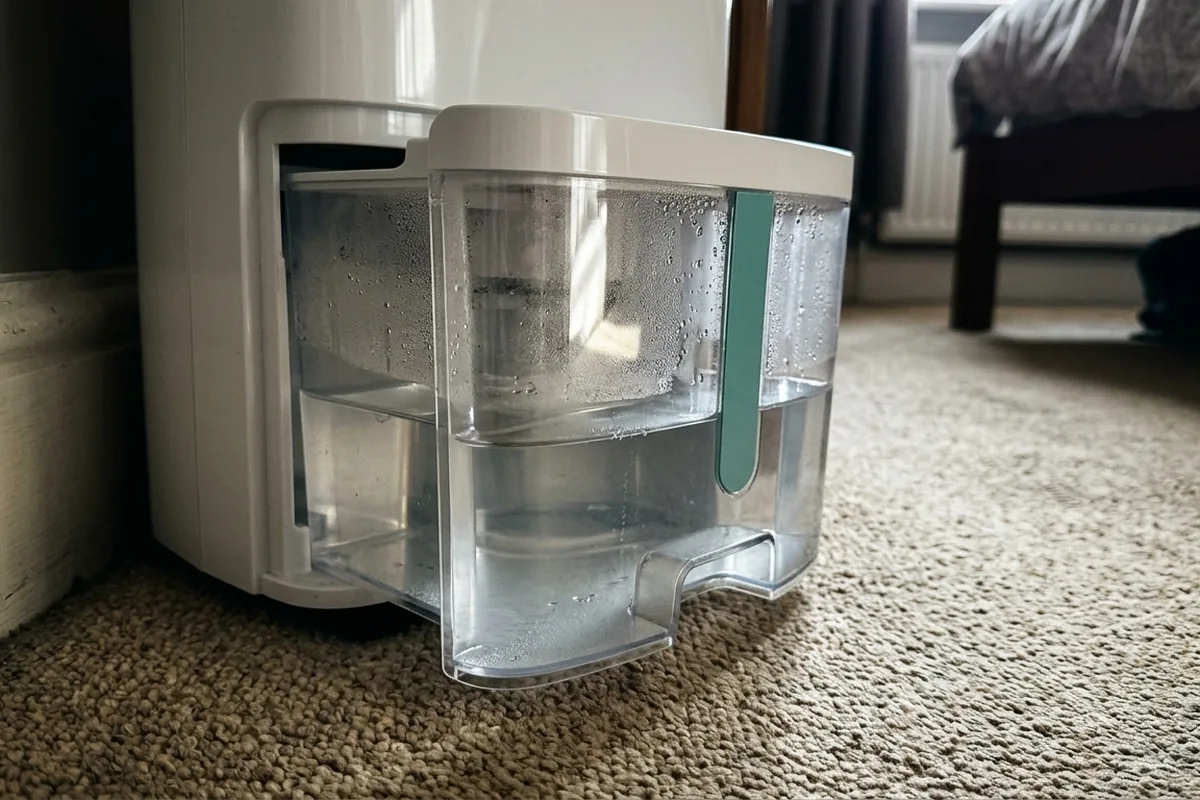
- Cut down condensation: Open trickle vents, crack a window slightly after showers and cooking, and close doors to keep steam in one room.
- Use the bathroom extractor fan properly: Run it during a shower and for at least 15–20 minutes afterwards. Clean the grille so it can actually move air.
- Keep air moving: Pull wardrobes a few centimetres off cold outside walls, avoid stuffing airing cupboards and under-stairs spaces to the brim.
- Dry surfaces quickly: Wipe bedroom window glass and sills with a microfibre cloth or window squeegee on cold mornings so water is not sitting there all day.
- Repair obvious leaks: A drip under the kitchen sink or a failed bead of silicone around the bath needs fixing, not bleaching.
If, after doing those things, you still see widespread black mould or it affects anyone with breathing problems, it is time to stop DIY cleaning and get professional advice.
Bleach has its place on some hard, non-porous surfaces, but with mould it is more often a short-term cosmetic fix. If a patch keeps reappearing, treat it as information: the moisture is still there, even if the stain is not.