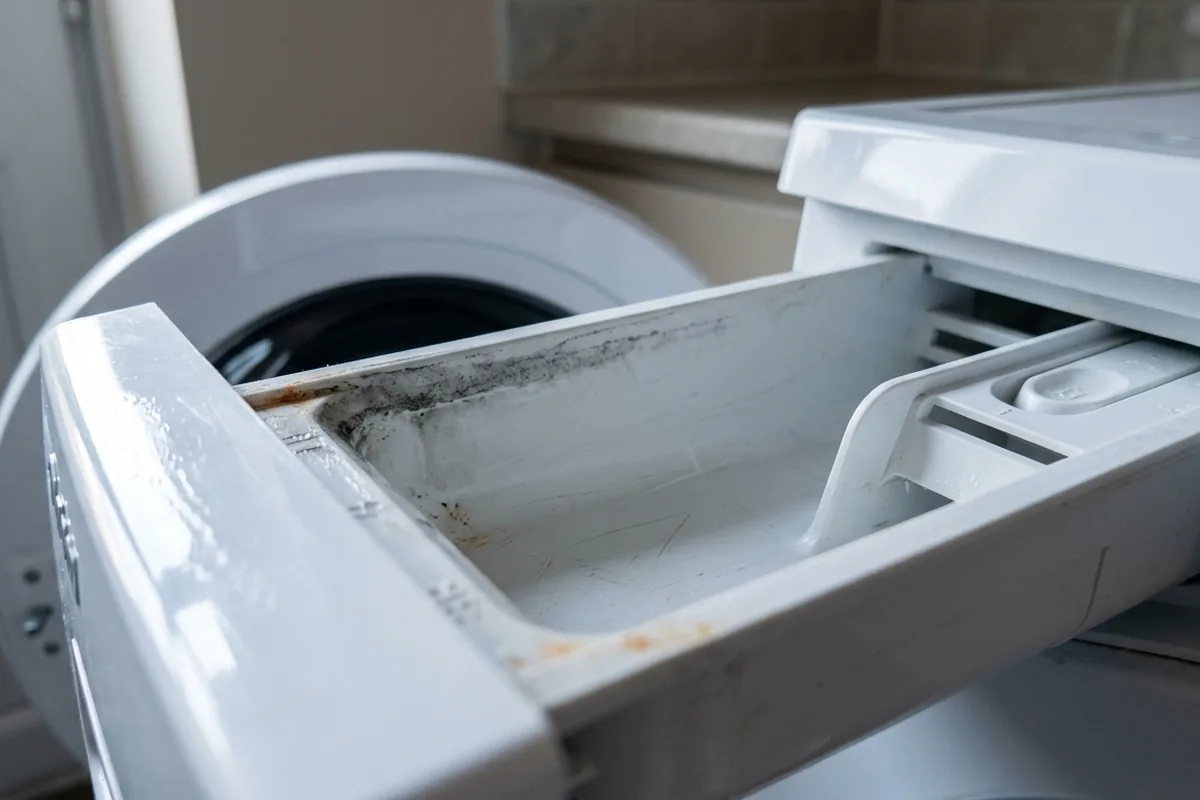
You run a 90°C cycle, fling the door open and expect that sharp “clean laundry” smell – but instead there’s the same sour, musty odour wafting out of the drum. If the machine smells fine for a few hours and then turns stale again, the source of the smell is still sitting somewhere inside the washer, not cleared by the hot wash at all.
Why the smell lingers even after a hot wash
A hot wash only cleans where the water and detergent actually reach, and only if the dirt can be lifted and rinsed away. Smelly washing machines are usually caused by residue and trapped moisture, not just “dirty water”.
Common reasons the odour survives a hot cycle:
- Biofilm and sludge: Over time, detergent, fabric softener and body oils form a greasy film inside the drum, behind the drum, on the plastic outer tub and in hidden pipework. A single hot wash may heat it, but often doesn’t fully dissolve and flush it away.
- Detergent drawer build-up: The washing machine drawer and the cavity behind it in many UK utility rooms are coated with dried softener, black specks and slime. A hot drum wash barely touches this area.
- Rubber door seal: The rubber seal on a front-loader can trap lint, hair, coins and standing water. If there’s black mould or slimy residue tucked into the folds, it will keep re-scenting the machine.
- Partially blocked drain or filter: A clogged pump filter or smelly standpipe (the waste pipe the machine drains into, often under the kitchen sink) can push odours back into the washer, especially once the machine is warm.
- Constant low-temperature washes: If most loads are 30–40°C with liquid detergent and softener, bacteria and odour-causing residues thrive. One occasional hot wash helps, but doesn’t undo years of build-up.
So the hot wash isn’t useless – it just doesn’t reach the drawer, seal, filter and waste pipe where the smell is usually living.
The checks to make before you run yet another hot cycle
Before pouring in more cleaner or putting the machine on another empty boil wash, it’s worth doing a simple inspection. You’re looking for visible residue and places where water sits.
Work through these low-risk checks:
1. Open the drawer fully
Slide the washing machine drawer right out (most lift slightly then pull). If you see black mould, greenish slime or thick softener residue, that’s a major odour source. Clean the drawer in warm water with washing-up liquid and an old toothbrush. Wipe the cavity with a microfibre cloth and mild cleaner. Avoid spraying strong bleach into electrics; apply it to the cloth instead if you use it, and ventilate the room.
2. Inspect the rubber door seal
Gently pull back the folds of the seal. If there’s standing water, grit, or black mould, wipe it out with a cloth and a mild detergent solution. For stubborn patches, a small amount of diluted bleach on a cloth can help – but:
- do not mix bleach with vinegar or any other cleaner
- keep it away from clothes
- rinse the seal with a damp cloth afterwards
3. Check and clean the pump filter
Usually found behind a small flap at the bottom front of the machine. Turn the machine off, place a tray or old towel underneath, then slowly open the cap. Remove lint, coins and sludge. A filter full of grey slime will give you a smelly machine, no matter how hot you wash.
4. Smell the standpipe or under-sink waste
If the odour is stronger from the under-sink cupboard or standpipe than from the empty drum, the house drain is part of the problem. A washing-machine cleaner won’t fix that; a drain-friendly cleaner or a plumber may be needed if it’s persistent.
Once these are clean, running a hot maintenance wash with a proper machine cleaner or a scoop of biological powder is far more effective. Do not use vinegar on machines with a manufacturer warning against it, and avoid sloshing strong acids around metal parts or natural stone floors nearby.
How to keep the smell from coming back
The aim is to stop moisture and residue sitting in the machine between washes, which is when that stale smell develops.
Simple habits that usually help:
- Use less detergent and softener
Overdosing is one of the biggest causes of sludge. Follow the packet for your water hardness and load size. In many UK areas with hard water, biological powder for main washes plus no or minimal softener is often enough.
- Leave the door and drawer ajar
Let the drum and drawer air-dry between loads, especially in a small bathroom or utility room with limited ventilation. A constantly shut door keeps the inside damp and musty.
- Run a hot maintenance wash regularly
Once a month or so, run the hottest cotton cycle empty with a proper machine cleaner or a full dose of biological powder. This helps break down film in the drum and pipework, but it works best after the drawer, seal and filter are physically cleaned.
- Use higher temperatures for the dirtiest loads
Towels, gym kit and heavily soiled items can be washed at 60°C (check care labels). Constant 30°C washes are kinder to energy bills, but they do little to kill odour-causing bacteria.
If, after a thorough clean of the drawer, seal and filter plus a hot maintenance wash, the machine still smells strongly and quickly, the issue may be deeper inside the appliance or in the household plumbing. At that point, forcing more chemicals through is unlikely to cure it; a proper service call or a plumber’s inspection is safer than stripping the machine down yourself.