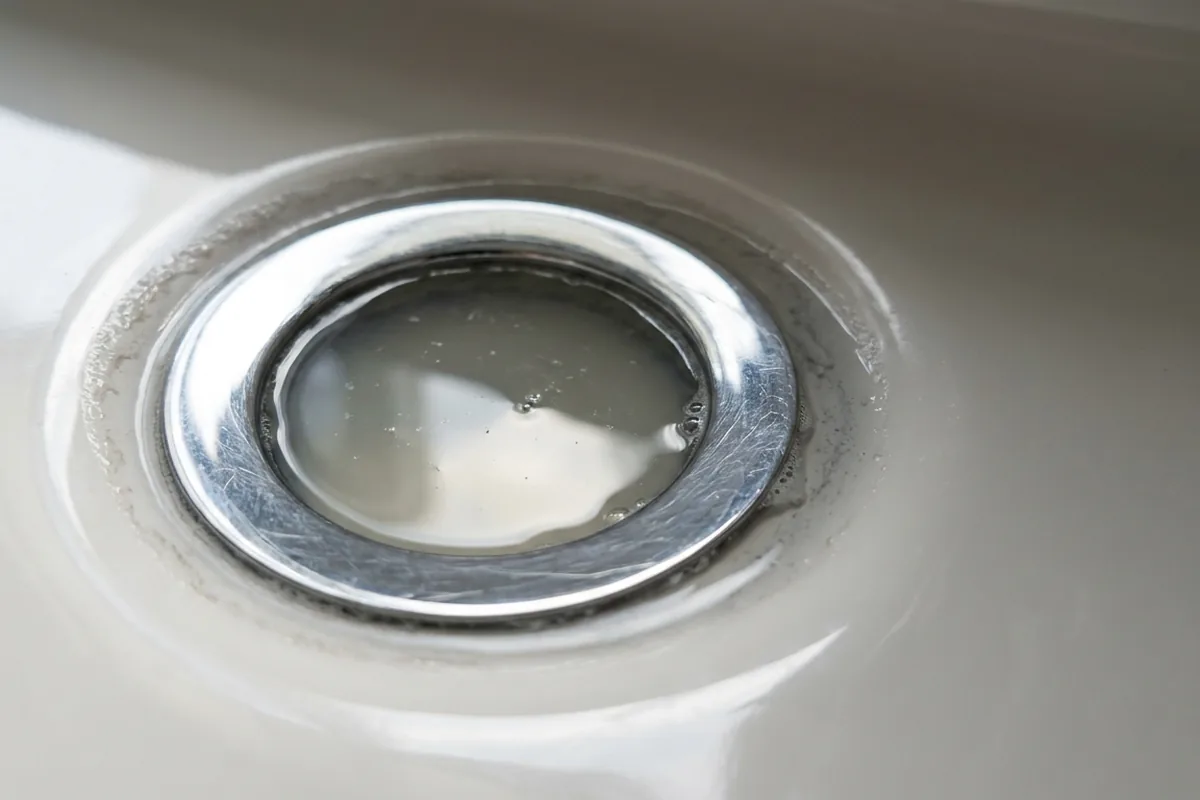
That slow swirl in the sink is annoying enough, but it is often the smell that really gets to you – that whiff of rotten food or eggy drain that seems to puff up every time you empty the washing-up bowl. If the sink drains slowly and smells worse after running hot water or cleaner, the blockage is usually building up, not clearing.
The easy mistake is to keep pouring things down the plughole – boiling water, thick bleach, vinegar, even old coffee grounds – in the hope that “more” will finally shift it. In many cases, this cocktail just warms and stirs the gunk, releasing more odour and sometimes compacting it further down the pipe. A better first move is to stop feeding the blockage and clear what you can reach: the plug, the strainer, the trap and the overflow.
The slow-drain mistake that makes odours worse
When a sink in a typical UK kitchen or bathroom starts draining slowly, most people reach for liquid drain cleaner or a kettle. The water level eventually goes down, so it feels like it has helped – but the smell often gets stronger and returns faster.
The key mistake is treating a physical blockage as if it were only a smell problem. Grease, soap scum, hair and food particles cling to the inside of the pipes. Pouring hot water, bleach or vinegar over the top might clear a thin film, but it often:
- Softens and moves the sludge, pushing it into a tighter lump further along.
- Releases trapped gases, so the sink smells worse straight after “cleaning”.
- Leaves a sticky layer behind, so new debris grabs on more easily.
If the water is consistently slow to go and you keep tipping more products down, you can end up with a long, smelly plug of waste sitting in the waste pipe and trap. That’s what produces those sulphur/eggy smells when you run the tap or drain a washing-up bowl.
The one thing not to keep doing
If the sink is already slow, do not keep alternating products – for example, bleach one day and vinegar or a “natural” cleaner the next. Apart from being largely ineffective on a solid blockage, bleach and vinegar must never be mixed: together they can release chlorine gas, which is dangerous in a small kitchen or bathroom.
If you have used a strong chemical drain cleaner, avoid adding anything else on top. Ventilate the room, follow the instructions on the bottle, and if it has not worked after one or two goes, move on to mechanical clearing or call a plumber rather than building a chemical soup in the pipe.
How to clear a smelly, slow-draining sink safely
You do not need to strip the whole kitchen to improve things. Start with what you can reach without tools, then move gently to the trap if you are comfortable doing so.
First, tackle the obvious gunk:
- Lift out any removable plug, basket or strainer and clean it properly. Food and hair caught here can smell surprisingly strong.
- Use a bit of washing-up liquid and a small brush (an old toothbrush works well) around the plughole and the metal ring. Wipe with a microfibre cloth.
- Check the overflow hole (the slot near the top of the basin or sink). This often holds slime that smells. Pour a little hot (not boiling) water with washing-up liquid down it, or feed a cloth-tied cable tie gently in to wipe it.
If the sink is still slow and smelly, the next likely culprit is the trap – the U-bend or bottle-shaped section under the sink, usually inside the under-sink cupboard in a UK kitchen.
If you’re comfortable checking the trap
If you are unsure at any point, it is fine to stop here and get a plumber. But if access is easy and you can see plastic compression fittings:
1. Turn off the tap and clear the sink.
2. Place an old washing-up bowl or bucket under the trap.
3. Loosen the large plastic nuts by hand (they should usually undo without tools). A small amount of dirty water will spill out.
4. Remove the trap and wash it out in a different sink or outside, using washing-up liquid and a bottle brush.
5. Check inside the accessible lengths of pipe you can see from the cupboard – wipe out any reachable sludge.
6. Refit the trap, hand-tightening the nuts. Do not overtighten – plastic threads can strip.
7. Run the tap and check for drips around the joints. If anything leaks, gently tighten a fraction more.
Once the physical muck is out, a simple deodorising flush can help: a squirt of washing-up liquid, followed by a kettle of hot but not boiling water, is usually enough. Boiling water can be harsh on some plastic sinks and seals, so let the kettle sit for a minute after boiling.
How to stop the smell and slow draining coming back
Once the sink is running clear again, the aim is to keep the inside of the pipes as clean and smooth as possible so odours do not build up.
A few small habits help more than any fancy product:
- Scrape plates into the bin before rinsing, especially oily or greasy leftovers.
- Avoid tipping fat, oil or roasting tin juices down the sink – let them solidify in a container and bin them.
- Run the tap for a few seconds after emptying a washing-up bowl or draining pasta so that hot, soapy water is chased by clean water.
- Every week or so, pour a bowl of hot (not boiling) water with a squirt of washing-up liquid down the plughole to rinse away light build-up.
Bicarbonate of soda (baking soda) and hot water can help with light odours if the pipework is already clear, but they will not shift a heavy blockage on their own. If you use this, stick to one method, avoid mixing it with bleach, and keep expectations realistic – it is a freshen-up, not a cure-all.
If, after cleaning the plug, overflow and trap, the sink is still slow or the smell keeps returning within a day or two, the problem may be further along the pipe or in shared waste in a block of flats. At that point, it is safer to stop experimenting and speak to a plumber or, in a rented flat, your landlord or managing agent.
A clear, free-running sink should drain in a smooth, steady whirl with no lingering odour once the water has gone. If you notice the smell creeping back, catching it early with a quick clean of the plug and overflow is usually enough to stop it turning into another slow, smelly blockage.