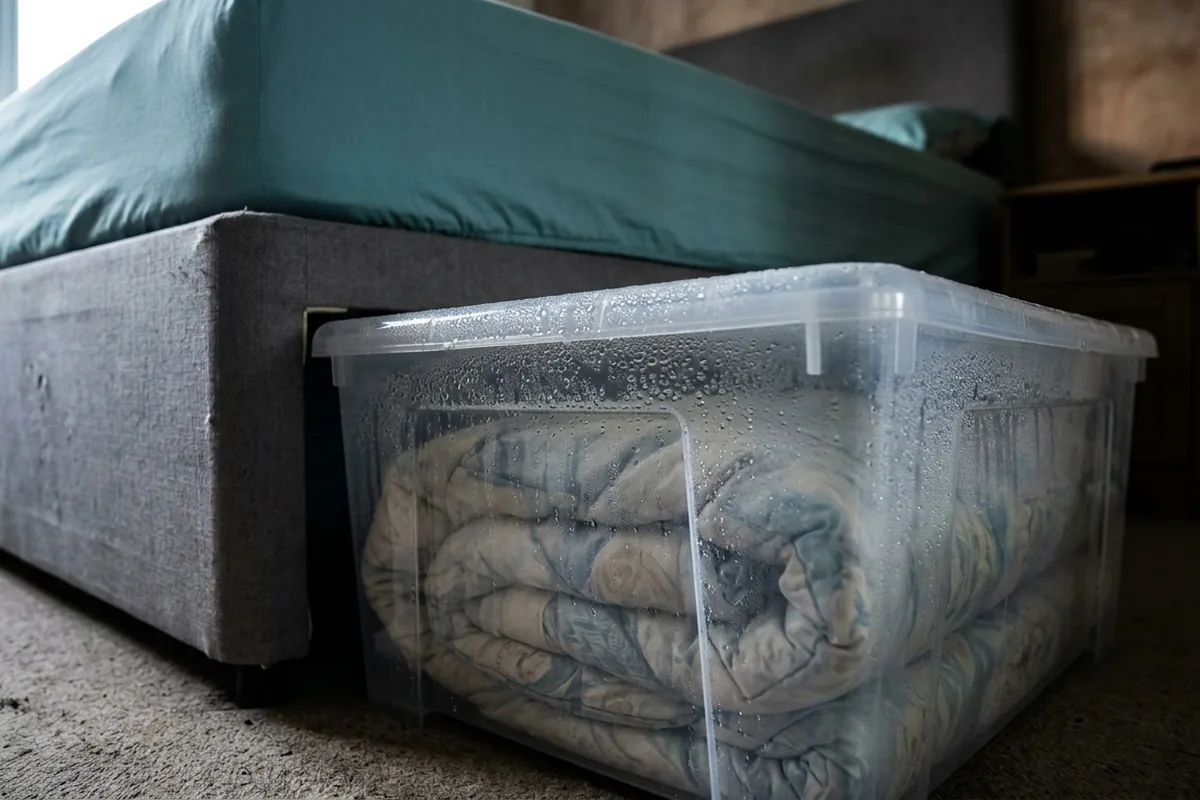
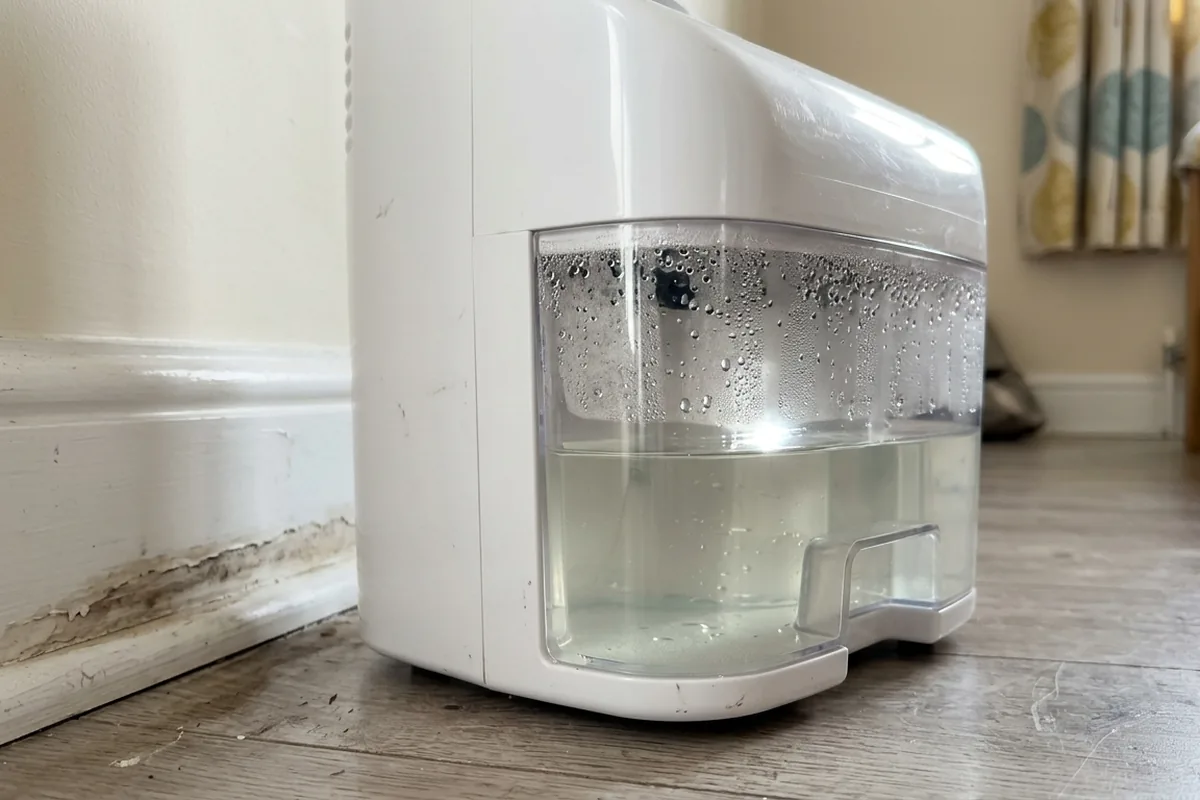
The giveaway is often wet bedroom windows in the morning, a musty smell in a box room or black mould starting on a cold outside wall. If the room feels clammy and clothes take ages to dry, a dehumidifier can help, but only if you pick the right type and size. The quick answer: measure the room, work out how damp it really is, then choose a compressor or desiccant unit with enough extraction rate, a decent-sized tank and a way for the dry air to circulate round the whole space.
Matching the dehumidifier to your room and damp problem
The first choice is between compressor and desiccant dehumidifiers. Compressor models suit most heated UK homes; desiccant models cope better with colder spaces like unheated spare rooms, garages and conservatories.
| Product or tool | Best for | Watch out for |
|---|---|---|
| Compressor dehumidifier | Heated rooms above ~15°C | Less effective in cold spaces |
| Desiccant dehumidifier | Cool rooms, garages, conservatories | Uses more electricity, blows warmer air |
| Small “mini” unit | Tiny spaces like cupboards | Too weak for a normal room |
| Rechargeable moisture absorber | Wardrobes, under-sink cupboards | Won’t fix streaming windows |
For a typical UK bedroom or living room, a mid-sized compressor unit with a 10–20L quoted daily extraction is usually a good starting point. You do not actually get that output in normal use, but it’s a useful way to compare models.
In a very damp room (peeling paint, mouldy skirting boards, musty smell even when aired), lean towards the higher end of that range. In a small box room with just condensation on the window, a compact 8–12L unit is often enough.
If the room is unheated or regularly below about 15°C, a desiccant dehumidifier usually outperforms a compressor and will keep working on cold winter evenings.
Features that matter more than the box claims
Once you’ve picked the type, the useful features are the ones that make it easy to live with day to day in a normal house or flat.
Look for:
- A built‑in humidistat: lets you set a target humidity (often around 50–60%) so it cycles on and off instead of running flat out.
- A sensibly sized water tank: 2–3L or more for regular use, so you are not emptying it every few hours.
- Continuous drain option: handy if you can run a hose to a drain in a utility room or garage.
- Laundry mode or boost setting: genuinely useful if you dry washing indoors on an airer.
- Decent carry handle and wheels: especially if you plan to move it between a damp bedroom and the landing.
Noise matters too. For a bedroom or small flat, check the quoted dB(A) figure and user reviews rather than just the marketing. A quieter unit near the door is usually better than a loud one right by the bed.
Pay less attention to glossy “room size” claims on the box and more to:
- your actual floor area and ceiling height
- how closed-in the room is (door shut vs open to the landing)
- how much moisture you generate there (showers, drying clothes, lots of people)
If you have visible mould patches, a dehumidifier helps prevent new growth by drying the air, but it does not remove existing mould. Clean that separately, ventilate well and be cautious with bleach, especially on painted walls and silicone sealant.
Where to put it, and when not to rely on it
A dehumidifier works by pulling in moist air, drying it and blowing it back out. Shoving it in a corner, behind a sofa or under a desk makes it much less effective.
For most rooms:
- Place it near the centre or by an internal wall, not jammed up against an outside wall.
- Keep it away from soft furnishings that can block airflow.
- Leave doors open if you want it to dry a small flat rather than a single room.
- In a bathroom, only run it on mains power with dry hands, and keep it away from the shower area.
If you’re using it mainly for laundry in a spare room, put the unit close to the clothes airer, with space around both so air can circulate. You’ll usually see towels and jeans drying far faster and less condensation on nearby windows.
A dehumidifier has limits. If you notice:
- damp tide marks on walls
- salty white deposits on plaster
- consistently wet skirting boards or floor edges
then you may be dealing with penetrating or rising damp, not just high humidity. In that case, a dehumidifier can mask the symptoms but won’t cure the cause, and it’s worth speaking to a qualified damp specialist rather than buying a bigger machine.
For rented flats with chronic condensation and mould on window boards, a sensibly sized unit plus using the bathroom extractor fan, opening trickle vents and not drying everything on radiators usually works better than any single measure on its own.
If the room still smells musty after a couple of weeks of regular use, good airflow and cleaning visible mould, the moisture source is probably still there: a hidden leak, blocked gutter soaking a wall, or cold bridging. That’s the point to pause, not just upgrade to a more powerful dehumidifier.