That sour “wet dog” smell on a “clean” towel usually isn’t the fabric softener failing, it is trapped moisture and bacteria. Towels are thick, so if they don’t dry fully between wash, tumble and cupboard, the fibres stay slightly wet and start to smell. The big mistake at home is folding and stacking towels away before they are bone dry, especially in a small airing cupboard or bathroom with poor ventilation. Fixing the smell is less about fancy products and more about hotter washes, full drying and better airflow.
Why your freshly washed towels still smell damp
When a towel smells musty straight from the cupboard or as soon as it gets slightly wet, the problem is usually one of three things: low-temperature washing, slow drying or poor storage.
Towels pick up skin oils, soap residue and bacteria from daily use. If you mostly wash them at 30–40°C with a quick spin, a lot of that residue stays in the fibres. Add a bit of leftover moisture and you get that stale, locker-room odour.
Common causes in UK homes:
- Low wash temperature: Regular 30°C cycles often don’t shift body oils and bacteria from heavy cotton towels.
- Overloaded drum: A crammed washing machine means towels don’t rinse or spin properly, so they come out wetter and take longer to dry.
- Softener build-up: Fabric softener can coat the fibres, making towels feel fluffy at first but less absorbent and slower to dry, which encourages odours.
- Slow drying indoors: Towels hung on radiators in a cool terraced house, or draped over doors in a small flat, can stay damp in the middle even when the edges feel dry.
- Damp bathroom environment: If your bathroom extractor fan is weak or rarely used, steam from showers keeps humidity high, so towels never properly dry between uses.
The result is the same: bacteria feeding on trapped moisture. The wash makes them smell fresher for a day or two, but the underlying build-up is still there, so the damp smell returns quickly.
The storage mistake that keeps the smell going
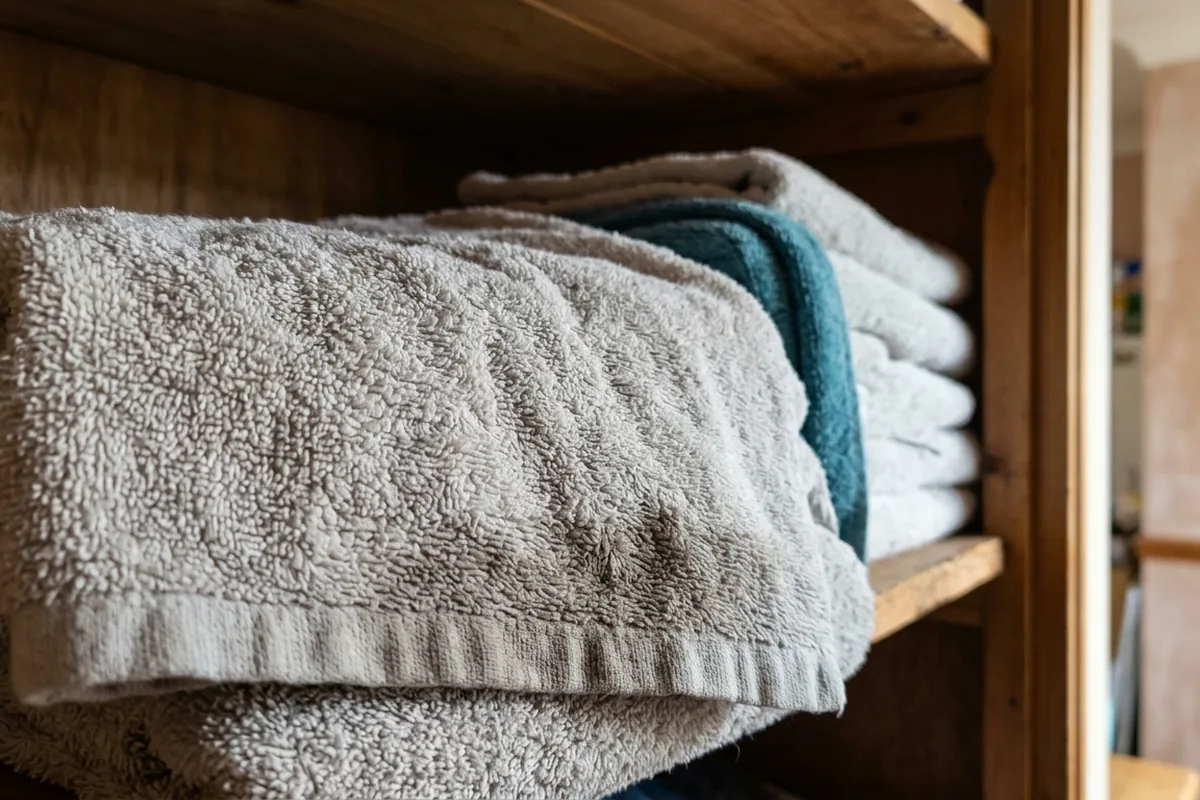
The most common storage issue is putting towels away when they feel “nearly dry” rather than completely dry. Folded towels trap any remaining moisture in the thicker layers, especially in the middle of the pile.
In a typical UK airing cupboard, heat from the cylinder is often mild and airflow is poor. Stack a pile of slightly damp towels in there and you’ve created a warm, humid mini-greenhouse for bacteria and that familiar musty scent.
Other storage habits that cause trouble:
- Folding straight from the line or radiator at night, when the air is cool and damp and the towel centre is still moist.
- Storing towels in a closed bathroom cupboard where there’s regular condensation on the window and mould on the silicone sealant.
- Layering used and clean towels together, so moisture from a recently used towel spreads smell to the “fresh” ones.
If you’re not sure, feel deep into the fold or roll of a towel before storing. If it feels even slightly cool or clammy compared with the room, it is not dry enough to go in a cupboard.
A simple rule that avoids most issues: towels must be fully dry and aired before they are folded and stored behind a door.
How to get rid of the damp smell and stop it returning
Once towels smell off, you need to clear the build-up and then change how you wash, dry and store them.
Reset smelly towels
1. Wash hot enough
Run a 60°C cotton cycle for towels if the care label allows. This is often enough to shift bacteria and odours. Avoid boiling washes which can damage fibres and colours.
2. Skip the softener for now
Use your normal detergent but no fabric softener. This helps rinse out old residue and lets towels dry faster and smell cleaner.
3. Add an extra rinse
If your machine allows it, an extra rinse helps remove leftover detergent and odour-causing residues.
4. Dry completely, not just “mostly”
- Tumble dry on a suitable heat until fully dry, then hang over a clothes airer or banister for 30 minutes to cool and air.
- If line drying indoors, spread towels fully on an airer in a room with an open window or dehumidifier, and turn them at least once so the middle dries.
If a towel still smells after this, it may be too far gone. Very old, greyed towels that have been musty for months are sometimes easier to replace than rescue.
Change your everyday routine
Once you’ve cleared the worst of the smell, small habits keep it away:
- Wash towels hotter, less often
A regular 60°C wash (if the label allows) every few uses is better than constant 30–40°C cycles that never reset them properly.
- Don’t overload the machine
You should be able to move a hand through the drum. Overloading leaves towels wetter and smellier.
- Use less softener, or none
If you like softener, use a reduced dose. For many households, towels are fine with just detergent and a good spin.
- Improve bathroom drying
Use the bathroom extractor fan during and after showers, and keep the door slightly open so towels on the rail can actually dry between uses.
- Store only when bone dry
Make it a habit to check the middle of the towel. If there’s any cool dampness, leave it on a rail or airer overnight before folding.
A good sign you’re winning is when a towel, once dried properly, still smells neutral even when you splash it with hot water. If the mustiness comes back quickly, look again at the wash temperature, drying time and how tightly you’re packing the cupboard.