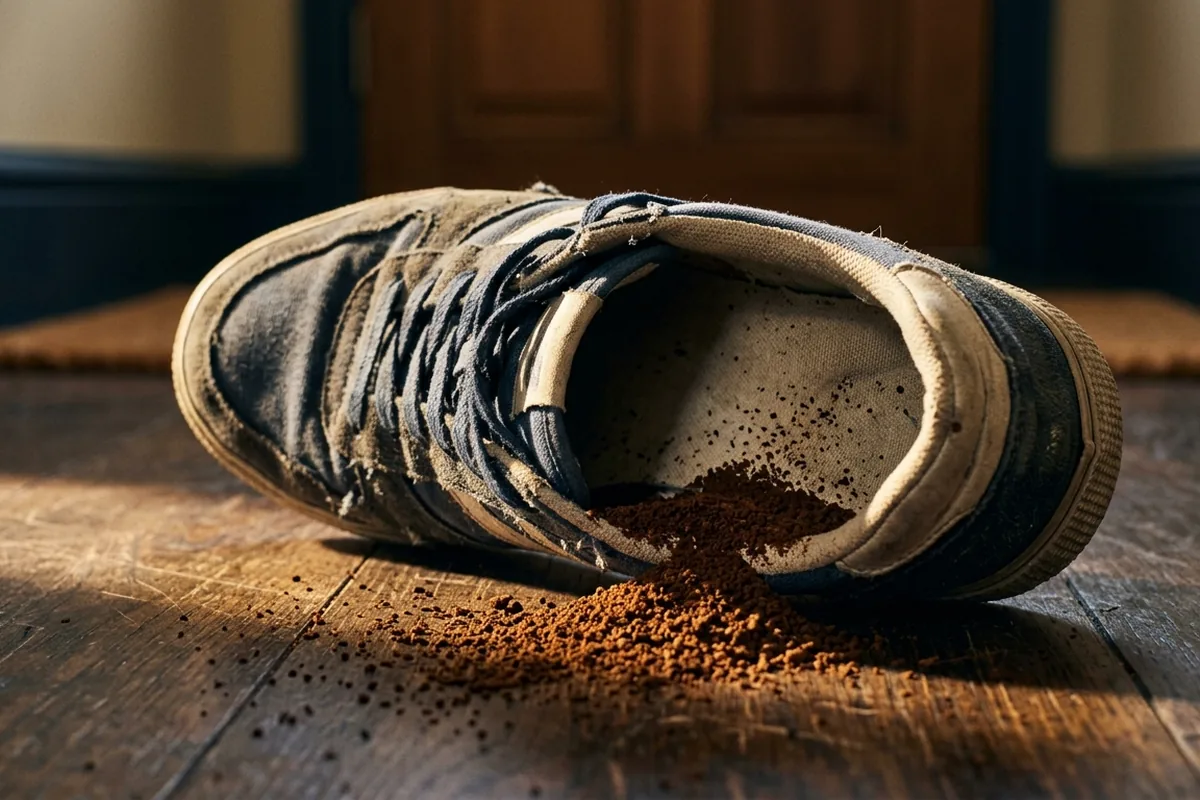
That stubborn sour shoe smell in trainers by the front door or work boots in a hallway cupboard is usually what sends people hunting for quick hacks. Used coffee grounds get mentioned a lot: tip them into your shoes, leave overnight, and the pong supposedly vanishes. There is some truth in it, but it is not a magic reset. Coffee grounds can absorb and mask light odours in fairly dry shoes, but they will not fix shoes that are still damp, mouldy or heavily sweat-soaked. For most UK homes, they are a handy stopgap between proper cleans, not a full cure.
What coffee grounds in shoes actually do (and don’t do)
People use coffee grounds in shoes because the grounds are porous and slightly oily, so they can trap some odour molecules and add a stronger, more pleasant smell of their own. It is the same reason a bowl of grounds can freshen a fridge.
They can genuinely help with:
- Mild, dry odours in shoes that are otherwise clean
- Short-term freshening of trainers or pumps you wear with socks
- Reducing mustiness in shoes stored in an airing cupboard or wardrobe
They cannot properly deal with:
- Shoes that are still damp or sweaty inside
- Deep, long-term sweat build-up in running trainers or work boots
- Any sign of mould, black spots or a slimy feel inside the shoe
- Strong smells from bacteria in insoles that really need washing or replacing
If the shoe is wet or clammy when you put the coffee in, you are likely to end up with a messy brown sludge, stained socks and possibly more bacteria, not less.
How to use coffee grounds safely without ruining your shoes
Used carelessly, coffee grounds can stain light insoles and linings, especially in white trainers or pale leather. The trick is to keep the grounds contained and only use them once the shoe is dry.
The safest way is to bag them:
- Let used coffee grounds cool, then spread them on a plate to dry a bit so they are only slightly damp, not wet.
- Spoon a couple of tablespoons into an old pair of tights, a thin sock or a small muslin bag and tie a knot.
- Check the shoes feel dry inside; if not, air them first near a radiator or in a warm, ventilated room.
- Tuck the coffee-filled bags into the shoes overnight, then remove in the morning.
This way, the grounds can absorb odours without touching the lining, and you avoid gritty residue in the toe area.
Avoid:
- Pouring loose grounds straight into the shoe, especially on fabric or leather.
- Using very wet, fresh grounds that will never dry properly in a closed shoe.
- Leaving coffee bags in shoes that are already slightly mouldy; you will simply be scenting the mould.
If you do get loose grounds on a light insole, let them dry fully, then tap the shoe out over the bin and use a dry brush or vacuum with a crevice tool to clear the rest. Do not soak the area or you risk brown staining.
When coffee grounds are not enough – and better options for stubborn odours
If the smell is strong the moment you open the shoe cupboard, or your running trainers stink even after a day’s rest, you are dealing with bacteria and sweat residue, not just a bit of stale air. Coffee can only disguise this slightly.
For anything more than a mild whiff, a better routine is:
- Dry first: After wearing, pull out removable insoles and let both shoes and insoles dry in a warm, airy spot. Avoid putting them right on a hot radiator, which can warp glue and rubber.
- Wash what you can: Many fabric trainers and insoles can be hand-washed with warm water and a tiny amount of washing-up liquid. Rinse well and air-dry completely.
- Use bicarbonate of soda: Sprinkle a light layer of bicarbonate of soda inside dry shoes, leave overnight, then tap or vacuum out. It is better at neutralising acidic odours than coffee and does not stain as easily.
- Replace insoles: If the smell is concentrated on removable insoles, it is often quicker to replace them than to keep battling with hacks.
If you notice mould spots or a musty, damp smell, especially in shoes stored in a cold hallway or under-stairs cupboard, the problem is usually moisture, not just odour. In that case:
- Move shoes to a drier, ventilated place for a while, such as near (not on) a warm radiator or in an airing cupboard.
- Wipe any visible mould from synthetic linings with a lightly damp cloth and a tiny bit of mild detergent, then dry thoroughly.
- If leather is involved or the mould is extensive, it is safer to use a proper shoe cleaner or speak to a cobbler rather than experiment.
In rented flats and small terraces where shoes live by the front door, a simple shoe rack with gaps for airflow and a shallow tray of bicarbonate of soda nearby will usually do more for long-term freshness than repeated coffee tricks.
Coffee grounds are handy when you want to take the edge off a light smell quickly, but if shoes keep smelling as soon as they warm up on your feet, it is a sign they need washing, drying or new insoles, not another handful of grounds.