That musty waft straight after you’ve hoovered the sitting room is usually not the vacuum “making” a smell. In most UK homes, a stale or doggy odour after vacuuming means the hoover has stirred up smells that were already in the carpet or in the machine. The quick test is this: smell the room, then the hoover. If the odour is strongest at the carpet and lingers there, the problem is in the fibres or underlay. If it hits you when you open the hoover or switch it on, the vacuum itself needs attention.
A vacuum can spread smells, but it rarely creates them out of nowhere. The real fix is usually a mix of drying, deodorising and better airflow, not just more fragrance or carpet powder.
Why the carpet smells worse just after vacuuming
When you vacuum, you blast air through dusty fibres and warm up any lingering moisture. That’s why a smell that was faint before suddenly fills a small lounge or bedroom.
Common carpet-based causes are:
- Old spills and pet accidents that were blotted but never fully rinsed, leaving residue deep in the pile or underlay.
- Damp from below, such as a concrete floor that sweats in winter or a patch near a draughty patio door where rain has crept in.
- General life: cooking odours, tobacco, wet dog, muddy shoes, all slowly absorbed into the fibres.
A quick way to narrow it down is to find where the smell is strongest once the hoover is off:
| Where the smell is strongest | Likely source | First check |
|---|---|---|
| Specific patch of carpet | Old spill, pet accident or damp spot | Look for staining, feel for dampness |
| Whole room, especially low down | General embedded odour in carpet and underlay | Lift a corner if possible, check underlay |
| At the hoover body or exhaust | Dirty bag, clogged filter, damp dust | Open machine and inspect bag and filters |
If a patch near the sofa or by the hallway smells stronger than the rest, that’s the area to treat, not the entire carpet.
Checks to make on the carpet before blaming the hoover
Before you start dismantling the vacuum or buying a new one, do a few quick carpet checks.
First, feel for hidden damp. Run your hand firmly over the carpet in a few places: by the skirting boards, near a radiator, by a patio door, in front of the fireplace. If it feels cooler and slightly “heavy” or faintly damp in one area, you may have a moisture issue feeding that stale smell. In a ground-floor room on a cold day, this is common on outside walls.
Next, look closely for old stains. Tea, coffee, wine, pet urine and even muddy rainwater can leave a ring or slightly different texture. These can still smell long after the mark has faded. If you find one:
- Lightly mist the area with lukewarm water and a tiny bit of mild carpet cleaner or washing-up liquid.
- Blot with a white cloth, working from the outside in.
- Rinse by misting plain water and blotting again so you’re not leaving soap behind.
- Let it dry fully with windows open or a fan running.
For general stale odour, bicarbonate of soda is useful as a first pass, but only if the carpet is dry. Sprinkle a thin, even layer, leave for at least an hour (overnight is better), then vacuum thoroughly. It can help absorb light smells but will not fix damp underlay or active mould.
If the carpet ever feels persistently damp, smells strongly of mould or you see black or green growth on the backing when you lift a corner, that is beyond a quick freshen. In a rented flat or if large areas are affected, it is safer to speak to the landlord or a professional carpet cleaner, and in some cases a damp specialist, rather than keep masking the smell.
What to check on the hoover so it doesn’t spread the smell
If the carpet seems dry and there are no obvious stains, the odour may be mainly inside the vacuum. Dust mixed with hair, carpet deodoriser, bits of food and pet fluff can go sour, especially in a warm cupboard or understairs space.
Work through these low-risk checks:
1. Bag or bin
If it’s a bagged hoover, change the bag, even if it looks only half full. A bag can hold months of humid air and smells. For bagless models, empty the bin outside, then wash it with warm water and a drop of washing-up liquid. Let it dry completely before refitting.
2. Filters
Most vacuums have at least one pre-motor filter and often an exhaust (HEPA-type) filter. Take them out and tap gently over a bin. If the manual says they’re washable, rinse under lukewarm water until it runs clear. Do not use hot water or detergent unless the instructions allow it. Leave to air dry for at least 24 hours; never put a damp filter back in, or you’ll bake in a new smell.
3. Brush bar and head
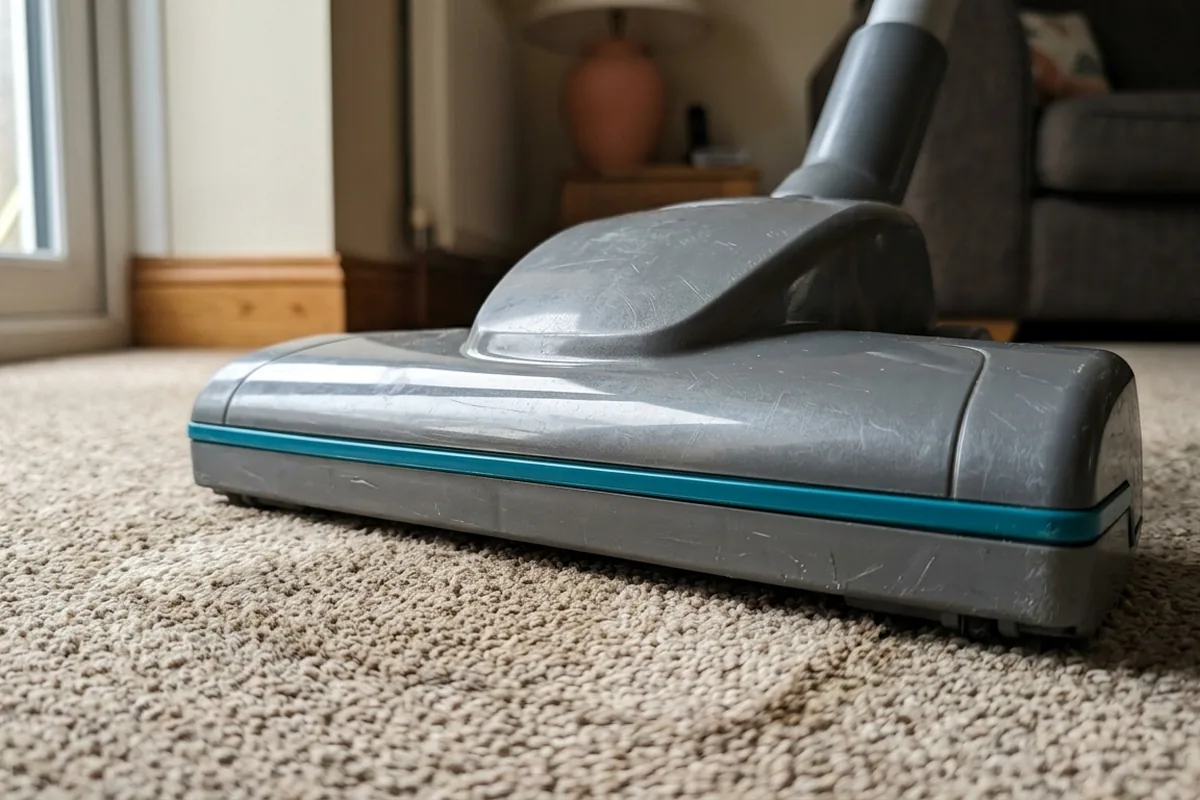
Flip the floor head over. If the brush bar is wrapped in long hair, threads and fluff, cut it away carefully with scissors. Wipe the head and the underside with a damp cloth and a tiny bit of mild detergent, avoiding any electrical parts. Built‑up hair and fluff can trap odours and stop the hoover picking up properly.
4. Hose and tools
A musty smell that appears the moment you start vacuuming but not when you open the machine can sit in the hose. Detach it and check for blockages. If it’s washable, run warm water through it in the bath and hang it to dry fully (ideally overnight) before reattaching.
Once everything is dry and back together, vacuum a clean rug or a bit of bare floor and see if the smell has gone. If the odour only appears when you move back onto the main carpet, that points back to the carpet or underlay as the main culprit.
If you keep getting a stale, slightly earthy smell from carpets, especially on ground floors or in a small terraced-house lounge, it is often a sign that moisture or old spills are still there somewhere. A hoover can highlight the issue, but it cannot cure damp; focus on drying, spot cleaning and airflow, and treat the vacuum as the final link, not the first thing to blame.