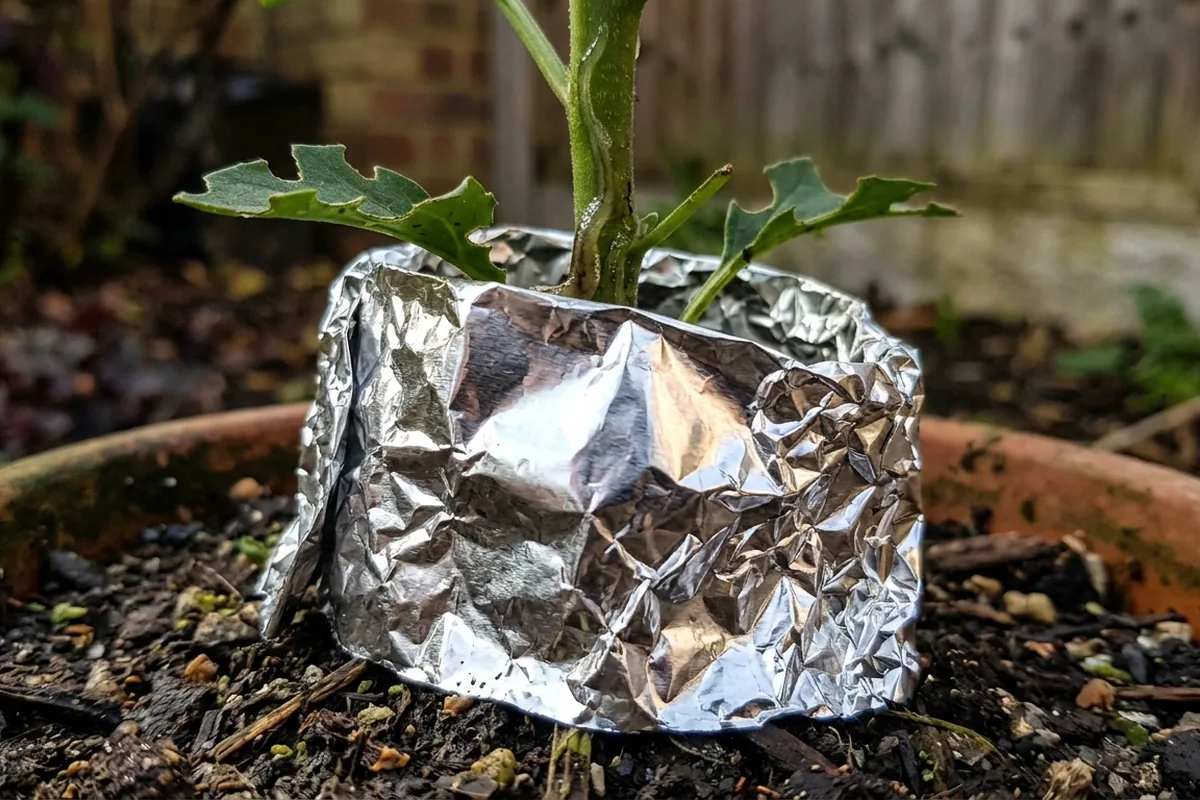
The crinkled strip of foil around the base of a rose, or pegged to a bamboo cane by the veg patch, usually means someone is trying a cheap garden hack. People use aluminium foil outdoors mainly to reflect light back onto plants and to scare off pests such as birds, cats and some insects. It can help a bit in a small, sunny corner, but it is far from a magic fix and can easily become more hassle than it is worth if you are not careful with heat, glare, wildlife and tidiness.
In a typical UK garden, foil is most useful as a short-term deterrent or light-booster for seedlings in pots or a small raised bed. It is not great for open borders, windy spots or anywhere children, pets or wildlife are moving about. If you are fighting slugs, soggy soil or deep shade, foil will not solve the underlying problem.
Why people put foil near outdoor plants in the first place
Most uses of foil in the garden boil down to three ideas: more light, fewer pests, drier soil surface. In reality, it only does some of this, and only in certain setups.
Common reasons people use foil:
- Reflecting light: A sheet of foil behind pots on a shady patio or windowsill can bounce extra light onto leaves, which may help leggy seedlings in early spring.
- Scaring birds and cats: Shiny, rustling strips tied to canes over seedlings or freshly planted veg can startle pigeons and discourage cats from using beds as a litter tray.
- Confusing flying insects: The reflections from foil under or around plants can make it harder for some pests (like aphids or whitefly) to home in on leaves.
- Acting as a crude mulch: A layer of foil over compost is sometimes used to keep the surface a bit drier and reflect heat away from roots in a heatwave.
Used carefully, foil can be a temporary helper for:
- Seed trays and small pots on a balcony or by a south-facing wall
- Young brassicas or salad leaves that birds keep pecking
- A couple of tomato plants in growbags by a fence that only get sun on one side
It works best when it is securely fixed, checked often and removed once plants are established.
When foil is more trouble than it is worth
Foil looks simple, but in a real garden it can create as many problems as it solves, especially in British weather with gusty wind, showers and low, bright sun.
The main drawbacks to watch for are:
- Heat and scorch risk: On a hot, still day, tightly wrapped foil around a dark pot or close to leaves can create hot spots. Leaves that touch hot foil may scorch, especially delicate seedlings.
- Glare and comfort: Strong reflections can be unpleasant if the foil faces your kitchen window, neighbour’s garden or a busy patio seating area.
- Litter and wildlife: In wind, loose foil tears, blows into next door’s garden or the street, and can be a hazard if shredded into sharp bits. It also looks messy once it weathers.
- Poor for soil health: A solid foil layer over beds stops rain and air getting into the top layer of soil, which is bad for worms and roots. It can also trap too much moisture underneath, encouraging fungus and mould on the compost surface.
- Limited pest control: Pigeons and cats often get used to foil quite quickly. Slugs, snails and vine weevils are not bothered by reflections at all, so you may still lose plants while dealing with the faff of foil.
If you notice wilting leaves on sunny days, compost that feels slimy under the foil, or bits of foil scattered round the lawn after a windy night, it is a sign the hack is doing more harm than good.
In most normal UK gardens, it is usually better to switch to:
- A simple netting over veg beds for birds
- Slug collars, copper tape or beer traps for slugs
- A light-coloured mulch (like pale gravel or bark) instead of foil for soil protection
Safer, tidier ways to get the same benefits
You can get most of the supposed benefits of foil with materials that last longer, look better and are kinder to plants and wildlife.
If you want more light on plants
For pots along a shady fence or beside a shed, try:
- White or pale containers: These reflect light without sharp glare.
- A painted backing board: A piece of exterior ply or leftover fence panel painted white and stood behind pots bounces light without flapping or tearing.
- Strategic positioning: Moving pots a little further from a wall or onto a brighter patio corner often helps more than any reflective trick.
If you are trying to deter pests
Foil is only one of several low-effort deterrents. A few alternatives are usually more reliable:
| Problem | Try instead of foil | Why it helps more |
|---|---|---|
| Birds pecking seedlings | Fine mesh netting over canes | Physical barrier, works in wind |
| Cats in veg beds | Short canes, twiggy sticks, lattice | Makes digging awkward, no glare |
| Slugs and snails | Copper tape, pellets, traps | Targets the real pest directly |
| Aphids on soft growth | Regular hosing off, soapy spray | Removes insects, no litter |
If you still want to use foil briefly
If you are curious to try foil, keep it small-scale and temporary:
- Use short strips tied to canes rather than big sheets over soil.
- Keep it a few centimetres away from leaves so they cannot touch hot metal.
- Face the shiny side where you want light, but avoid direct line of sight into windows.
- Check after windy weather and bin damaged pieces properly so they do not blow about.
- Remove the foil once plants are bigger and sturdier, or when the pest problem eases.
If you find yourself constantly re-fixing, chasing stray bits round the garden or noticing plants looking stressed, that is the point to stop and swap to a more robust solution.
For most UK gardens, foil is best treated as a short experiment, not a standard gardening method. If it starts to look messy or your plants are not clearly benefiting, it is time for it to go in the recycling and for you to use something more stable and plant-friendly instead.