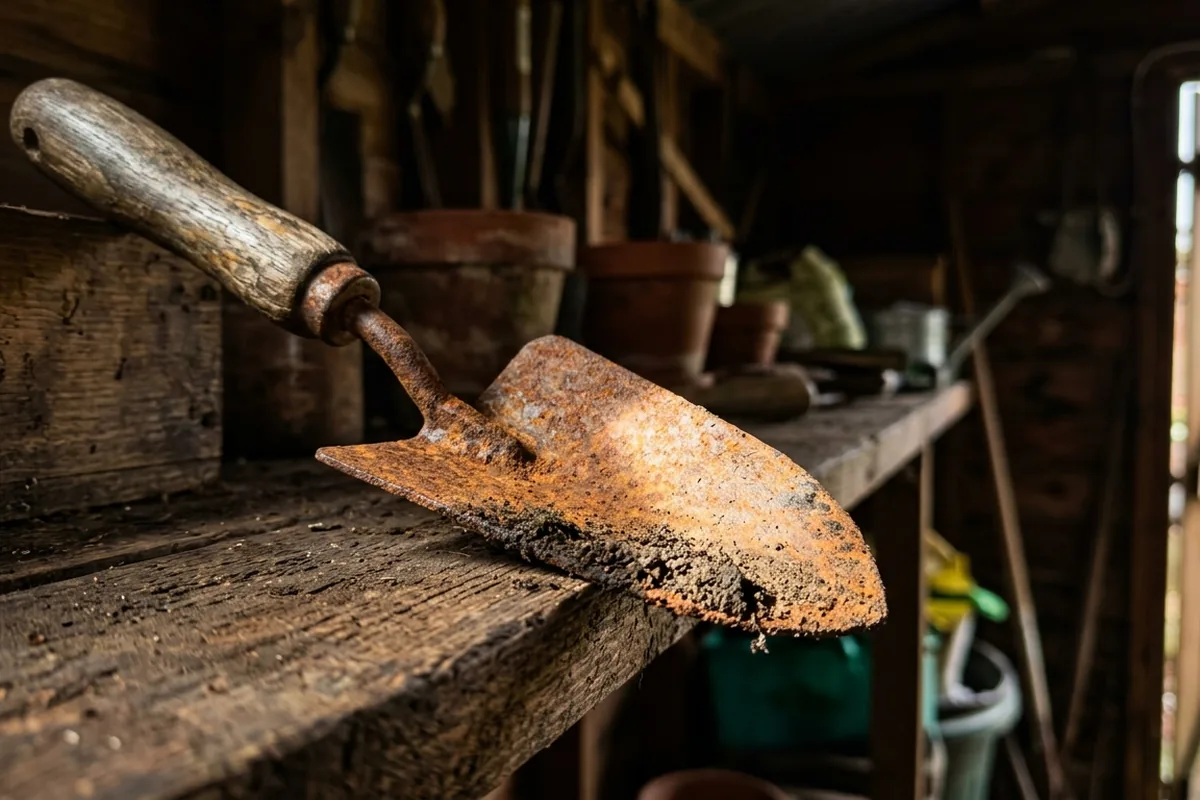
You wipe the trowel clean, hang it in the shed or garage, and a few weeks later there are orange spots creeping across the blade. Even tools kept in a utility room or under the stairs can start pitting and flaking. The simple reason is that indoor storage does not mean dry storage: moisture in the air, tiny traces of soil and fertiliser, and temperature swings all combine to let rust form on bare steel.
Rust is iron reacting with oxygen and water. You do not need visible water; normal indoor humidity, especially in a damp shed or brick outbuilding, is enough. Any leftover soil holds moisture and salts against the metal, speeding things up. So the answer is not just “store them indoors”, but keep them clean, dry and lightly protected, and avoid humid corners.
Why tools rust when they’re nowhere near the rain
Even in a closed shed or garage in the UK, the air often sits at 60–80% humidity, higher after rain. Bare metal constantly pulls in a thin film of moisture from that air. That is all rust needs.
A few things usually work together:
- Residual damp soil: Soil in the joints of secateurs, on a spade edge or in the serrations of a hoe stays damp for days. It also contains salts and fertiliser residues, which act like an electrolyte and make corrosion faster.
- Condensation in outbuildings: In a brick shed or single-skin garage, surfaces cool down overnight. Warm, moist air from the day condenses on cold metal handles and blades, just like condensation on bedroom windows in winter.
- Unfinished or worn metal: Many garden tools are only lightly coated at the factory. Once that thin lacquer or paint chips, the exposed steel is free to rust, especially along edges and welds.
- Hidden moisture in timber handles: Wooden handles absorb water when you are working on wet soil or lawn. That damp slowly moves into the metal socket, rusting it from the inside even if the blade looks dry.
- Storage next to damp surfaces: Hanging tools on a cold outside wall, leaning them against a slightly damp concrete floor, or leaving them in contact with a wet compost bag all keeps moisture where you do not want it.
So you can have tools that never see direct rain, but live in a chilly, slightly damp shed and rust faster than ones used often and dried properly.
The simple checks that slow rust right down
You do not need anything fancy to keep rust under control, but you do need to break the moisture–metal contact.
After each use, especially in wet weather:
- Brush off all soil, including around joints and springs on secateurs. A stiff hand brush or an old washing-up brush is ideal.
- Wipe metal parts with a dry cloth or bit of old towel. If the cloth comes away slightly dirty or damp, keep going.
- For blades and spades, add a thin film of light oil: 3‑in‑One, sewing machine oil or even a drop of vegetable oil wiped over with a rag. Do not soak wooden handles in oil, just the metal.
- Store tools off the floor on hooks or a rack, with space around them so air can circulate. Avoid pushing them tight against a cold, outside wall.
If you already have light surface rust (orange bloom, not deep pitting), you can usually rescue tools easily:
- Rub the area with fine wire wool or a green scourer and a drop of washing-up liquid to cut through grime.
- Dry thoroughly, then wipe on a little oil.
- For secateurs or loppers, pay attention to the pivot and spring, as these seize first.
If the rust is deep, flaky or the metal is thinning, the tool may be weakened. At that stage, it is often safer and more economical to replace heavily stressed items like loppers rather than force them and risk them snapping.
Better storage spots and small upgrades that actually help
The best place for garden tools is cool, reasonably dry and with a bit of airflow. Many UK sheds and garages are the opposite: cold, damp and cluttered.
A few small changes can make a big difference:
- Move them away from damp walls and floors: If your garage floor sometimes looks dark or your shed wall feels cold and clammy, fit a simple timber batten or rail and hang tools so metal parts are in free air, not touching masonry.
- Use a small tray of dry sand and oil for hand tools: Fill a flowerpot or small bucket with dry builders’ sand, mix in a splash of light oil, and plunge trowels and hand forks into it between uses. The sand cleans, the oil coats, and they are always to hand.
- Improve basic ventilation: A small vent or grille near the top of a shed, or simply not blocking the existing vents, helps moisture escape instead of sitting on metal and timber. Avoid sealing everything completely airtight unless you are also controlling humidity.
- Avoid storing tools right next to fertilisers or compost: Open bags release moisture and salts into the air. Keep them in lidded tubs or on a separate shelf if possible.
- In very damp garages or outbuildings, a small dehumidifier or even moisture-absorbing crystals can help, but they work best in relatively enclosed spaces and will not fix structural damp.
For tools you rarely use, like an edging iron or post-hole digger, an extra layer of protection helps. A coat of paste wax, petroleum jelly or thicker oil wiped on and then buffed off leaves a more durable barrier than a quick spray.
If you notice tools rusting despite these measures, feel around where they are stored. Cold, slightly damp concrete or a wall that feels clammy is often the real culprit, not the tools themselves.
A calm rule of thumb: if metal in that space feels chilly and slightly damp to the touch most days, focus on drying and airflow in the storage area as much as cleaning the tools. Once you see tools coming out of the shed still bright and smooth after a wet spell, you know you have the balance about right.