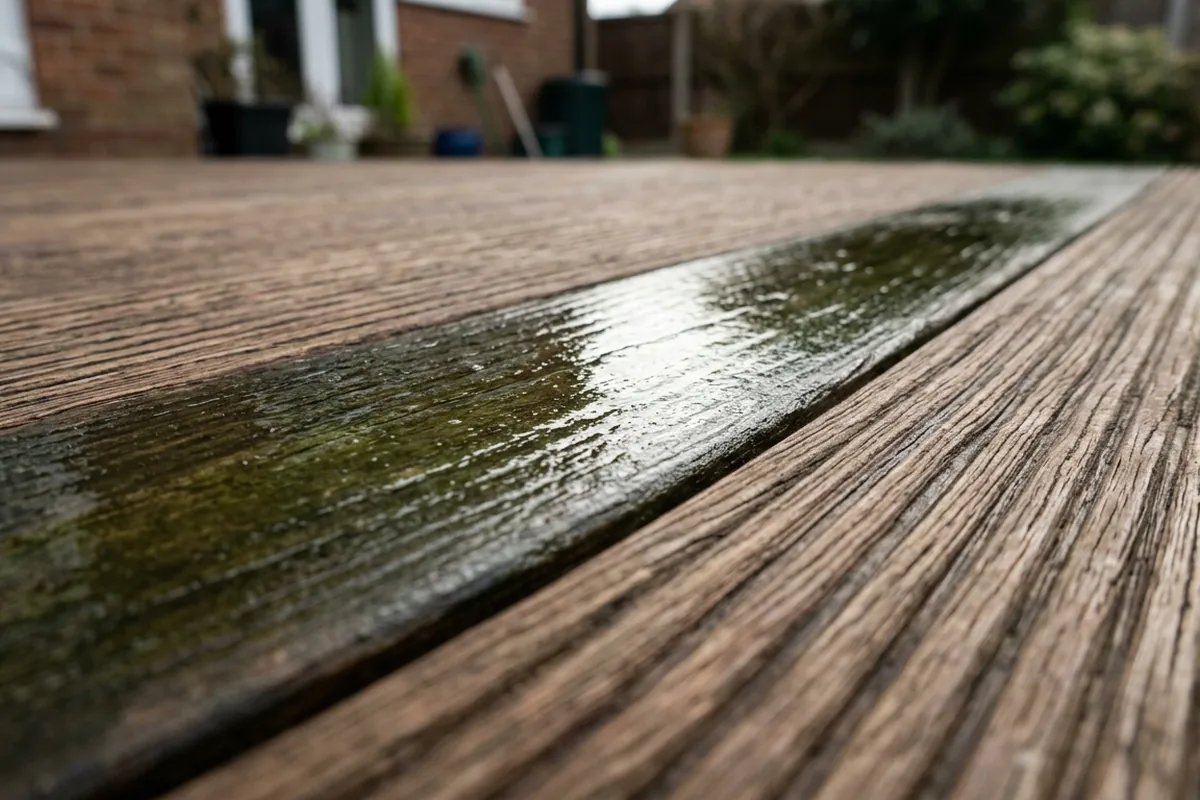
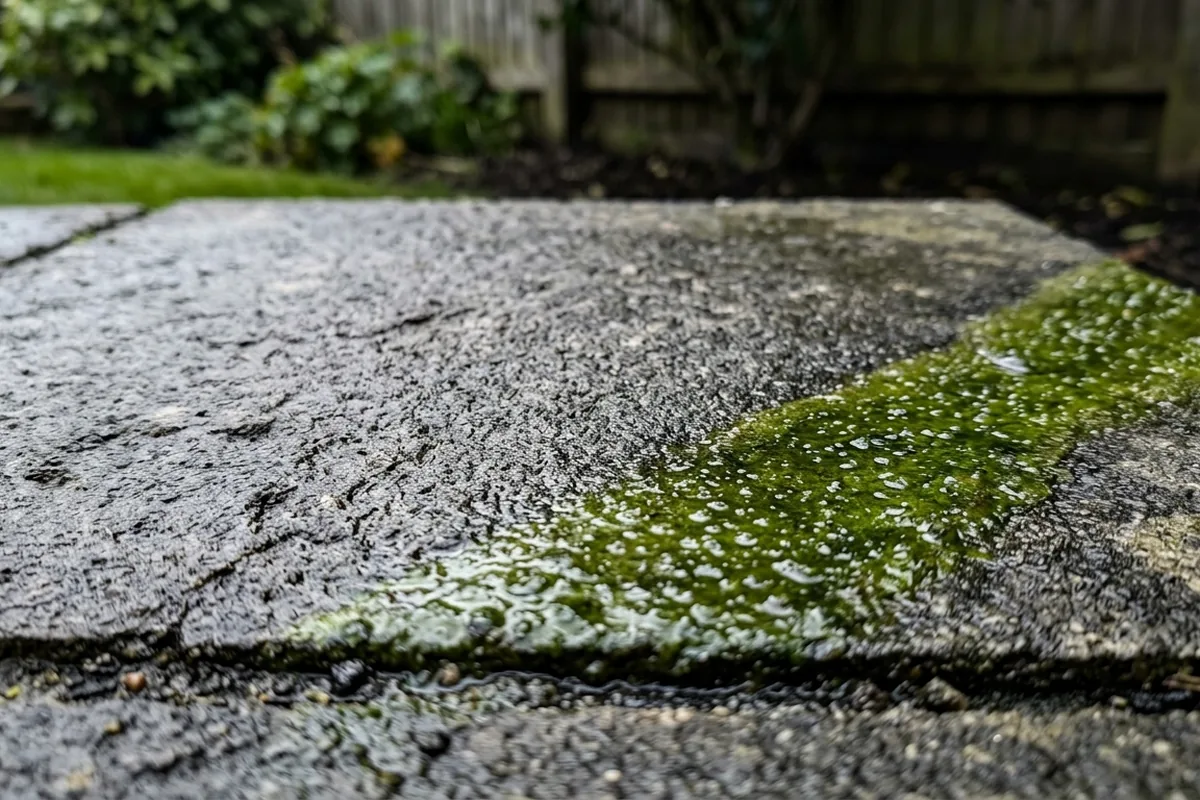
The slabs looked fine yesterday and then, after a couple of days of rain, you step outside and the patio is suddenly slippery, green and slimy. The quick answer is that you are seeing a mix of algae, moss and sometimes lichen feeding on constant moisture, shade and trapped dirt. Wet British weather gives them exactly what they need, so they can appear or darken in just a day or two, even if you’ve cleaned recently.
The patio is not “going bad” overnight and the slabs themselves usually aren’t the problem. The speed of the green growth is mainly about how long the surface stays damp, how much light it gets and what’s sitting on the surface: dust, soil, leaf fall and bird droppings all act like fertiliser. Fixing those conditions slows it down far more than just blasting it with cleaner every few weeks.
Why the patio turns green again after rain
On most UK patios, the green film that appears after wet weather is algae, sometimes with moss in the joints. They spread by microscopic spores that land on the surface all year round and wait for the right conditions.
Those conditions are:
- A damp film of water that hangs around after rain
- Shade or low winter sun, especially against a fence or north-facing wall
- A bit of grime or organic matter to feed on
If your slabs are in a shady corner of a terraced house garden, under overhanging trees or next to a dripping gutter, they may stay damp for hours or even days after the rain stops. That’s why you can see a patio in full sun stay fairly clean, while the path down the side of the house goes green almost overnight.
Algae can start to show as a light green haze within 24–48 hours of a good soaking if the surface was already primed with spores and dirt. You’re often not seeing brand new growth from scratch, just existing algae rehydrating and thickening so it suddenly becomes visible.
The same thing happens on garden paths, steps and concrete at the side of a shed. Anywhere that’s shady, slightly rough and slow to dry will green up fastest.
What makes some patios worse than others
Two patios laid with the same slabs can behave very differently after wet weather because of drainage, surface texture and what’s around them.
Surface and drainage clues to check
Before you reach for a cleaner, it helps to work out what’s encouraging the green layer on your particular patio.
| Sign at home | Likely cause | First check |
|---|---|---|
| Green in patches near house wall | Shade and poor air flow | See how long it stays wet after rain |
| Slime in joints and along edges | Trapped soil and moss in gaps | Look for soil build-up and leaf debris |
| Whole surface dull and greenish | Rough or porous slabs holding moisture | Check if surface feels rough like sandpaper |
| Green strip under gutter or downpipe | Overflow or slow leak | Watch gutters and joints during heavy rain |
| Only shady half of patio is green | Low winter sun and longer damp time | Note which areas get sun and when |
If the patio holds puddles or you can see water sitting against the house after a shower, the surface is staying wet long enough for algae to thrive. Slight re-levelling, clearing blocked channel drains or even brushing away the fine mud that collects along the edge can make a bigger difference than yet another bottle of patio cleaner.
Rougher concrete slabs, textured Indian sandstone and older, slightly pitted paving all give algae more places to cling to than very smooth porcelain paving. That’s why older patios often seem to green up faster each winter.
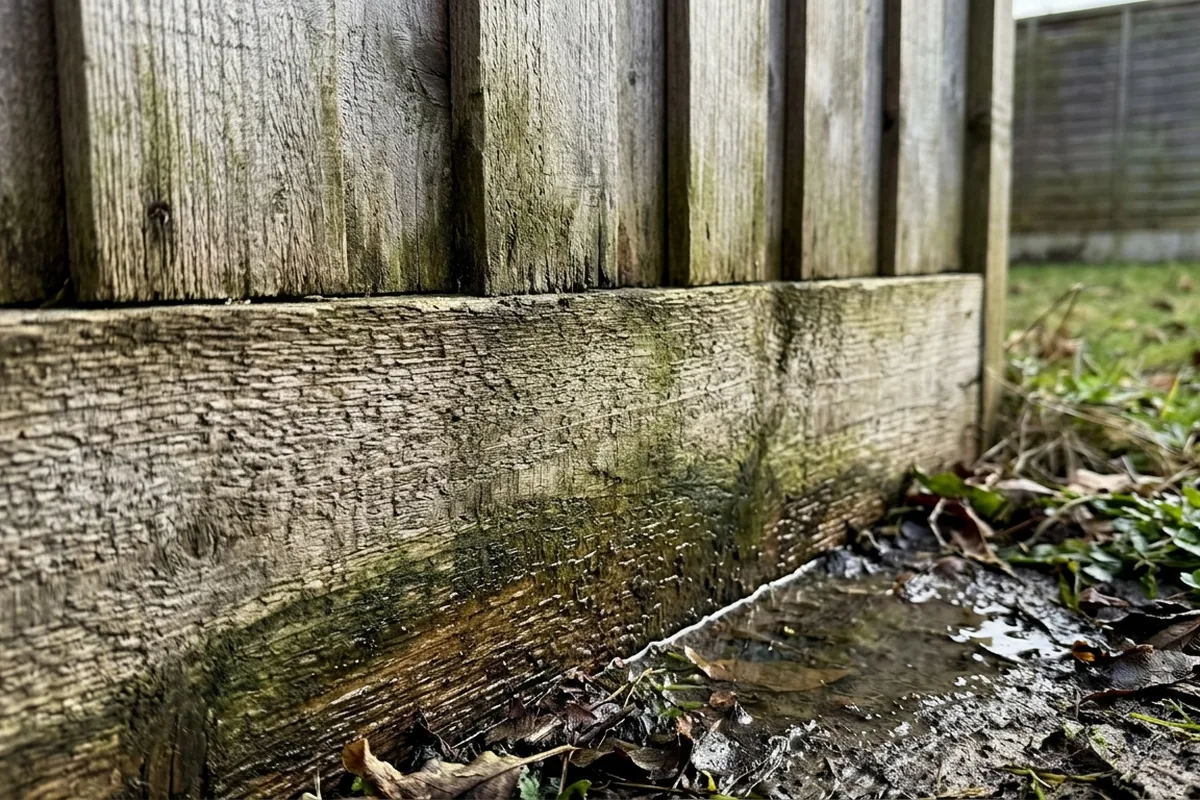
Overhanging shrubs, a dripping gutter joint, or a water butt overflow that constantly splashes the same area will also keep one patch permanently damp, so it greens within hours of any rain.
How to slow the green growth between cleans
You can’t stop the rain or the spores, but you can make your patio less welcoming so it doesn’t turn bright green at the first sign of a shower.
For most homes, a mix of lighter regular care and occasional deeper cleaning works better than harsh treatments every time it rains:
- Brush off debris often: A quick sweep with a stiff broom after windy or leafy days removes the film of soil and leaves that feeds algae, especially between slabs.
- Help it dry faster: Trim back low branches, lift pots off the surface on small feet, and move items like log stores slightly away from the wall so air can move around.
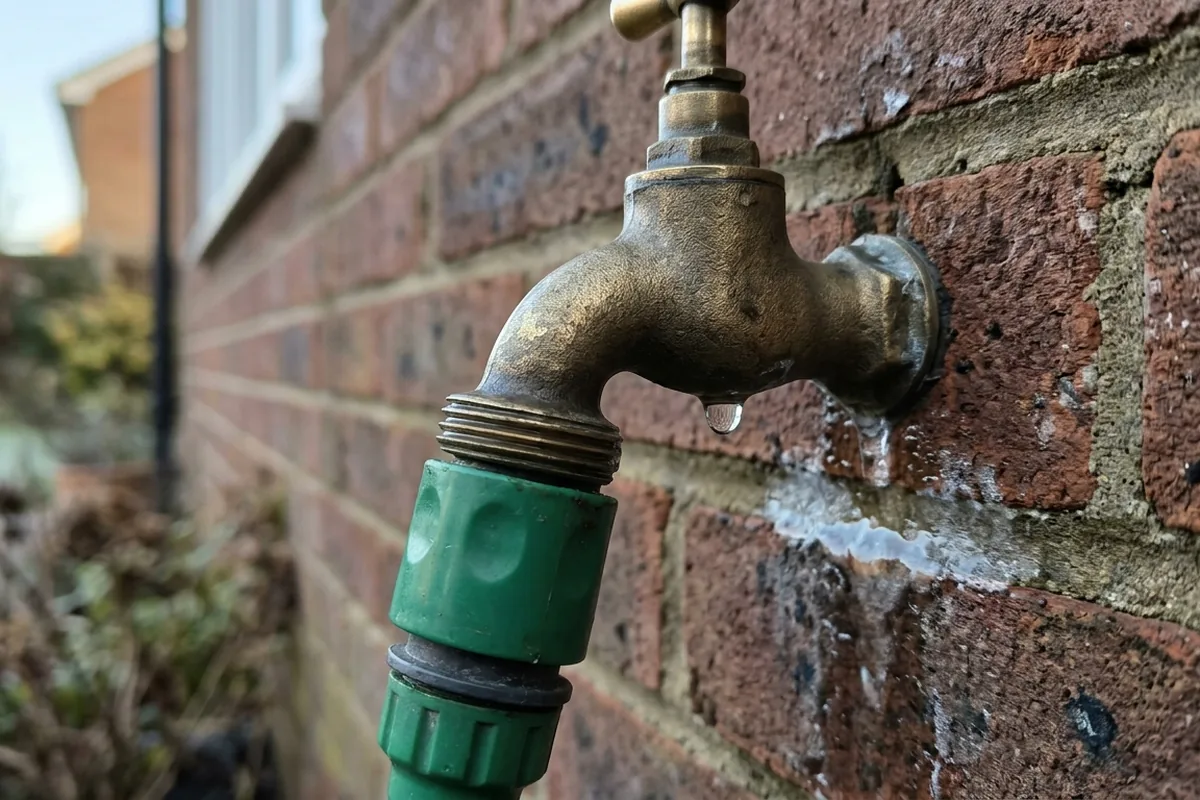
- Deal with drips: If you notice a green strip under a gutter or outside tap, fix the drip or redirect the overflow so the same patch isn’t soaked after every shower. If you’re unsure about heights or roof work, a professional is safer than ladder DIY.
- Use cleaners sensibly: Algae removers and patio cleaners from places like B&Q can work well, but they are a short-term surface fix. They help most when combined with better drainage and shade reduction.
- Take care with pressure washers: They clear green growth quickly but can damage pointing, softer stone and even drive water into cracks. Use a lower setting, keep the lance moving and stop if joints start to crumble.
If you prefer milder options, some people use diluted patio cleaners or soapy water with a stiff brush for light growth. Avoid vinegar on natural stone, as the acid can etch or dull the surface. Always test any cleaner on a small, hidden area first.
Whatever you use, the green will return quickly if the surface still stays wet and dirty after every bit of rain. The cleaning simply resets the clock.
If you walk out after the next downpour and the patio is still damp when the garden fence is already dry, that’s your cue to look again at shade, drainage and where the water is coming from.