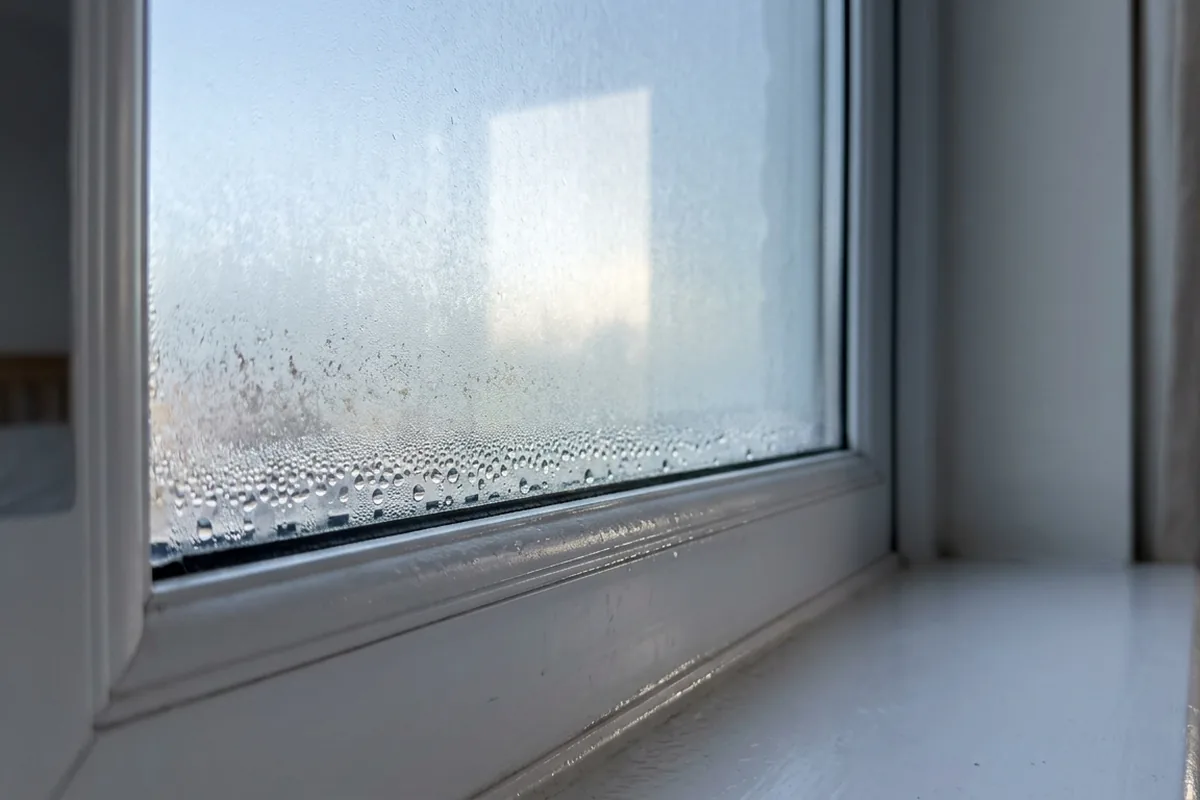
That stale, clammy smell when you pull back the curtains on a cold morning is almost always overnight condensation rather than a hidden leak. Cold air outside, a cool bedroom and your own breathing combine to load the air with moisture. That moisture then settles on the coldest surfaces – usually the window glass, window board, outside walls and sometimes wardrobes against an external wall. If it sits there, it can start to smell musty and eventually feed mould.
The quick version: you’re smelling trapped moisture and mild mould activity, not “bad air”. To improve it, you need three things working together: a bit of gentle heat, some ventilation and fewer cold surfaces for water to cling to. Air freshener or opening the window for five minutes after you wake up will not fix it on their own.
What cold nights are doing to your bedroom
On a cold night, several things line up to cause that damp smell, especially in UK homes with older windows or poorly insulated walls.
You breathe out warm, moist air all night. If the bedroom door is shut and the window is closed, that moisture has nowhere to go. The room cools down, especially by the window and on any outside wall behind your bed or wardrobe. When warm, moist air hits those cold surfaces, it condenses, leaving droplets on the glass, frames, window board and even the paint or wallpaper.
If you’re noticing:
- Wet bedroom windows every morning
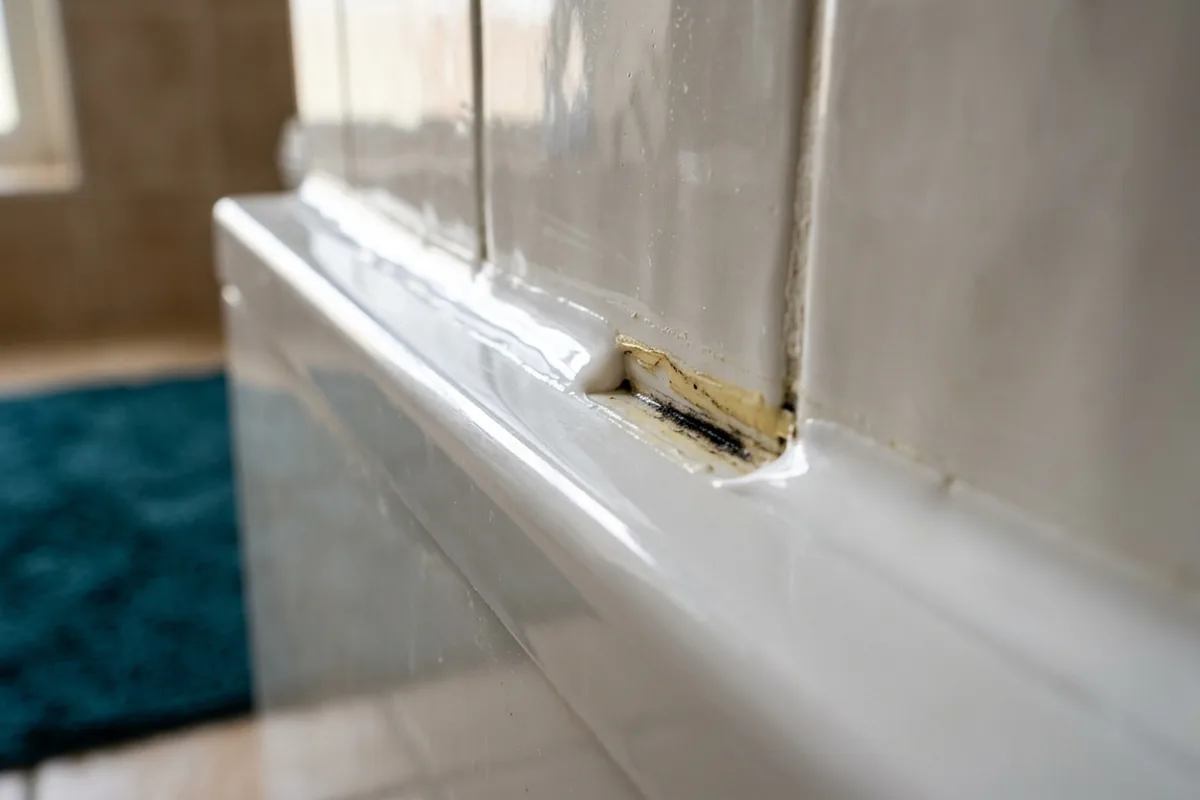
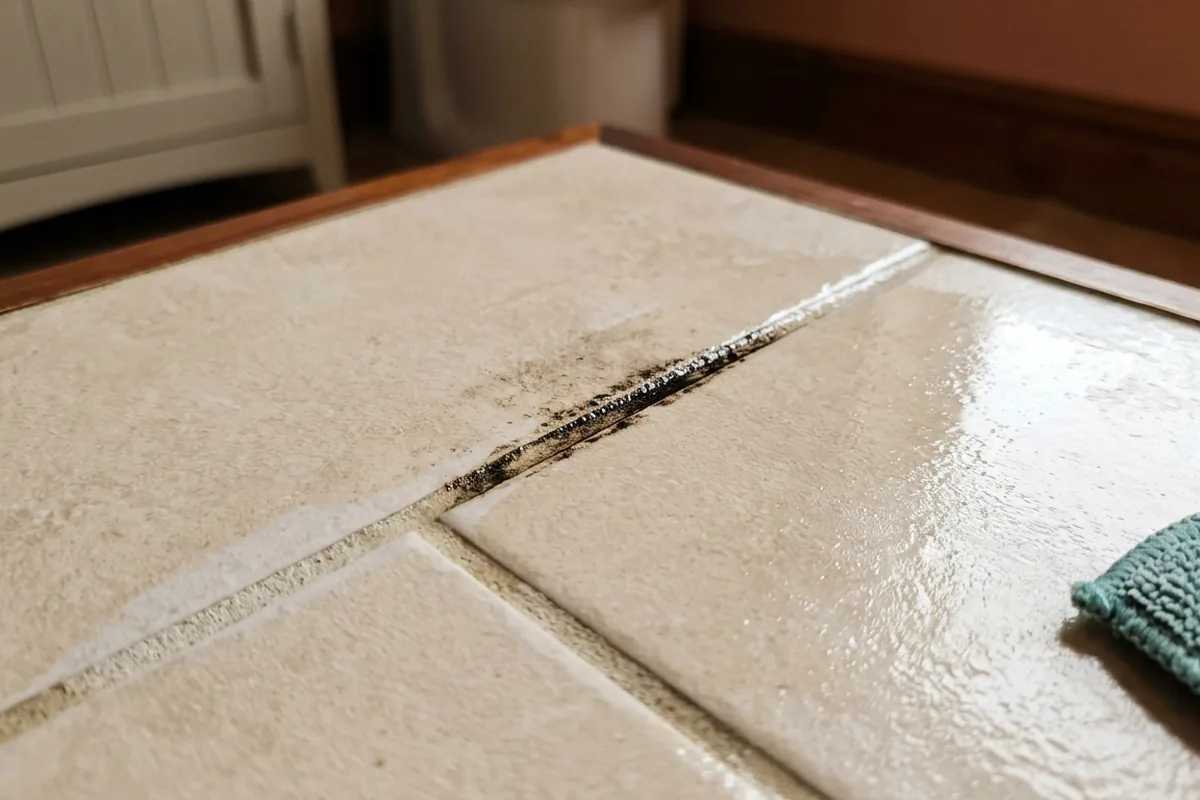
- Dark specks or grey fuzz on silicone sealant, the window board or skirting boards
- A wardrobe corner or wall that feels cold and slightly clammy
then the smell is likely a mix of stale, humid air and light mould growth.
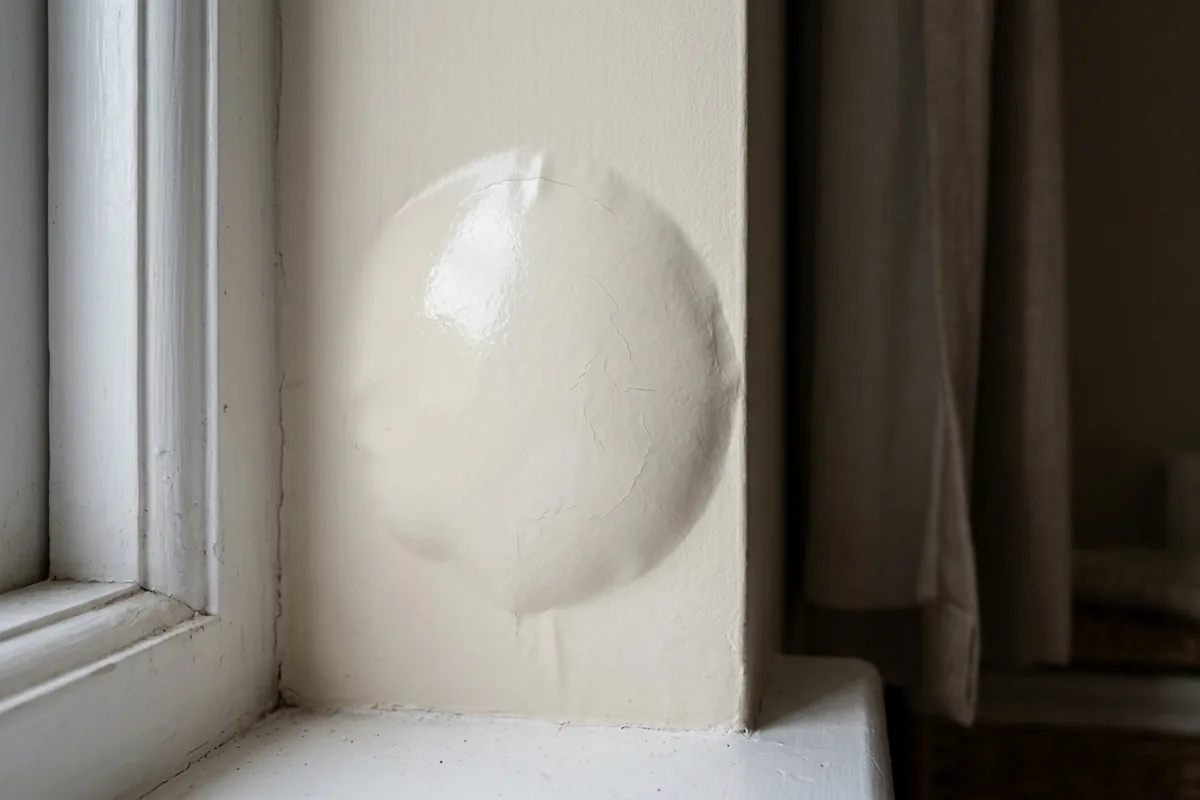
A hidden plumbing leak is much less common in this situation. Leaks tend to leave persistent damp patches that don’t dry by lunchtime, flaking paint or blown plaster, not just morning smell that fades once the room warms and you air it.
How to cut the smell quickly and safely
You don’t need to strip the room. Focus on reducing moisture and stopping it sitting on cold surfaces.
Start with three simple habits on cold nights:
- Leave a small gap for air: either the bedroom door slightly open or the window trickle vents open. This lets moist air drift out instead of building up.
- Use gentle, steady heat: a low setting on the radiator is better than switching it off completely. Rooms that swing from warm evening to very cold night get the worst condensation.
- Deal with wet glass every morning: keep a microfibre cloth or window squeegee by the window and wipe off condensation as soon as you get up, then dry the frame and window board. Don’t let it run onto the sill and skirting.
If the smell is already there, clean the obvious moisture spots:
- Wash the window board, frame and any visible mouldy spots with warm water and a little washing-up liquid, then dry thoroughly.
- For light mould specks, a ready-made mould spray from somewhere like B&Q or Wickes can help. Ventilate the room, wear gloves and never mix it with bleach or vinegar.
- Check behind the bed and inside wardrobes against an outside wall. If clothes feel slightly damp or the wall is cold and musty, pull furniture a few centimetres away from the wall to let air move.
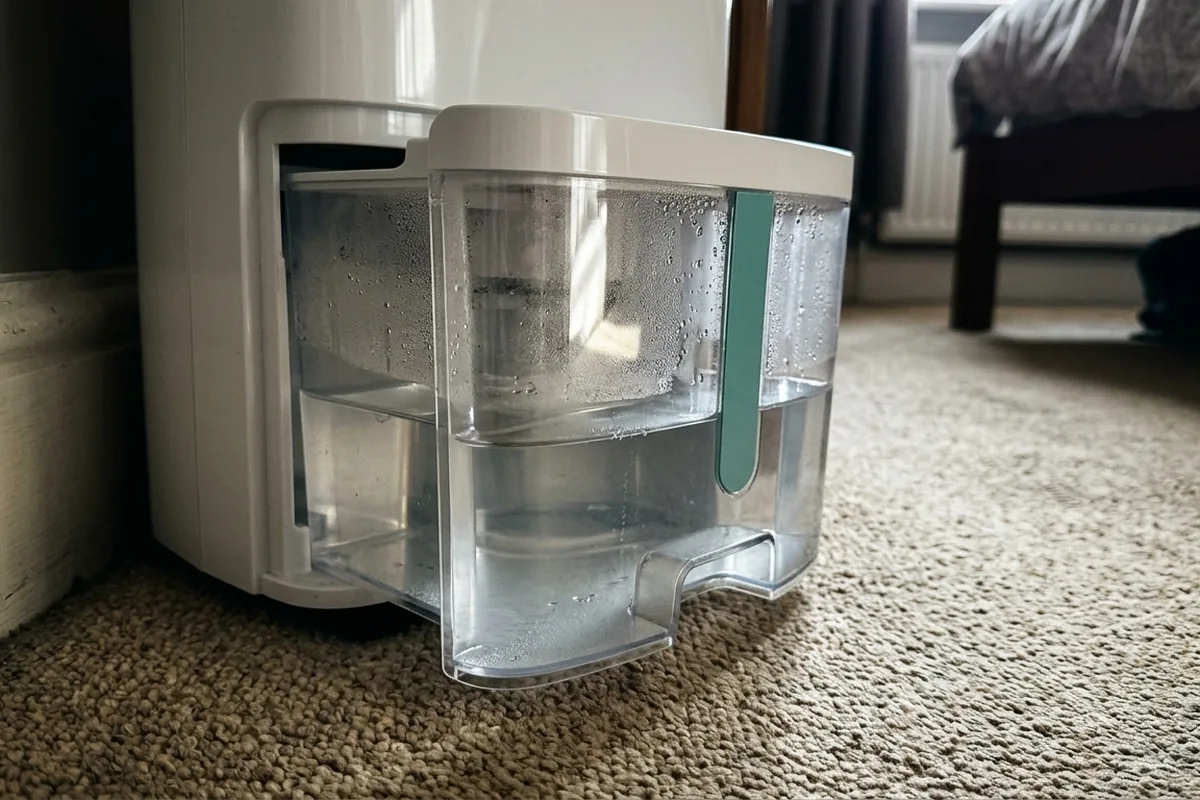
A small, quiet dehumidifier can help in stubborn cases, especially in a rented flat where you can’t change much. Place it in the bedroom in the evening and run it on a timer. It won’t cure poor insulation, but it can take the edge off humidity and odour.
When it might be more than just condensation
If the smell is strong, lingers all day or you can’t see obvious condensation, it’s worth checking where it’s strongest and what the surfaces are doing. This can help you decide if it’s routine condensation, poor ventilation or a possible damp problem.
| Where the smell is strongest | Likely cause | First safe check |
|---|---|---|
| By the window in the morning only | Overnight condensation | Look for wet glass and frames, wipe dry and see if smell eases |
| Low down on an outside wall | Cold wall and trapped moisture | Feel for cold, clammy paint and check furniture isn’t tight to the wall |
| Inside a built-in wardrobe | Very poor airflow | Look for mould on back panel, leave doors ajar and reduce contents |
| Same patch stays damp all day | Possible damp issue, not just condensation | Watch over a few days; if still wet, speak to landlord or a damp specialist |
If you see black mould patches spreading, flaking plaster, or skirting boards swelling, that’s beyond normal bedroom condensation. Avoid aggressive scrubbing or sanding, as that can release spores. In a rented property, report it to your landlord or letting agent with photos. In your own home, a reputable damp surveyor is safer than guessing and painting over it.
Where the smell is mild and mainly appears after cold nights, focus your effort on airflow, gentle heat and wiping down surfaces. You should notice a difference within a few days of consistent changes.
If, after a week of better ventilation and regular drying, the room still smells damp even on warmer days and you can’t see a clear cause, that’s the point to pause and get proper advice rather than chasing it with more cleaning products.