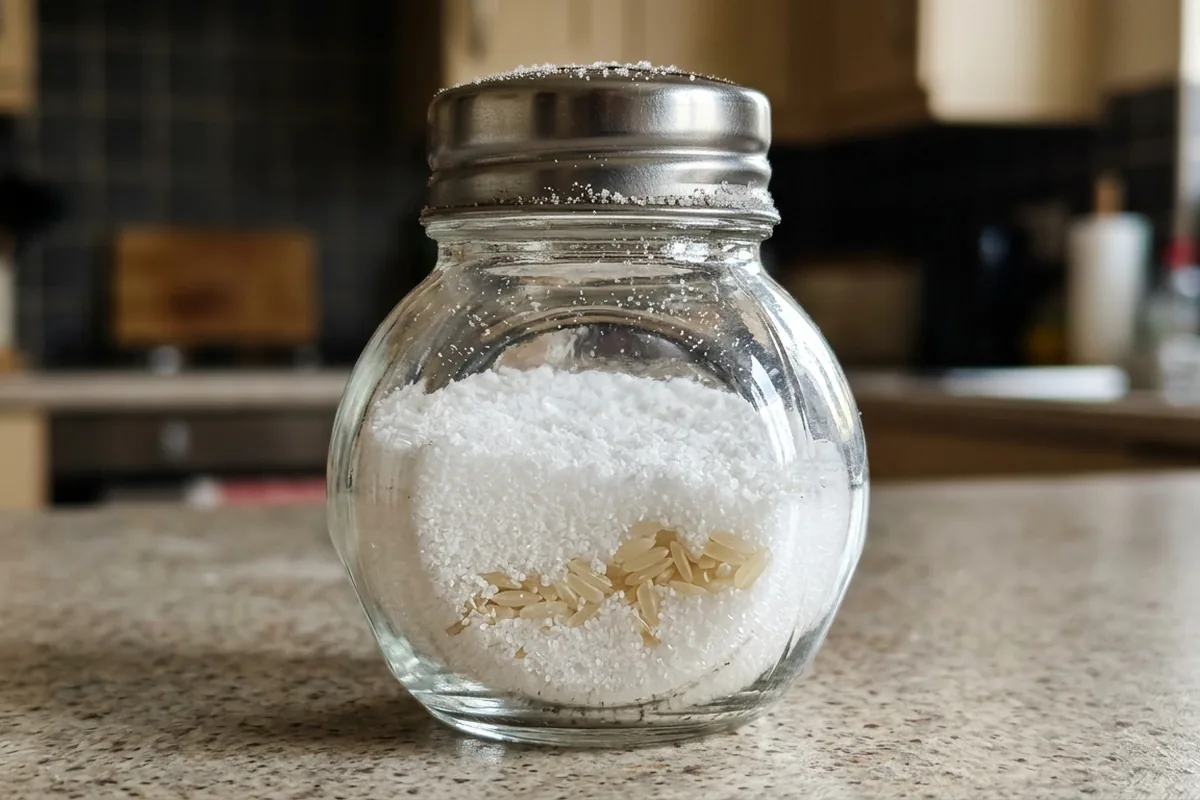
That solid block of salt in the shaker, or the way it only comes out in sudden bursts, is usually down to one thing: moisture in the air. People add a few grains of uncooked rice because rice is more hygroscopic than salt. It attracts and holds onto water vapour, so in a small, fairly dry kitchen it can keep table salt free-flowing for longer.
The catch: rice only helps in mild humidity. If your kitchen is steamy from boiling pans or you live in a damp flat, the rice will quickly saturate and the salt will still clump. In those conditions, better storage and less moisture in the room matter more than any hack in the shaker.
What the rice-in-salt trick actually does
When you drop a few grains of uncooked white rice into a salt shaker, they sit among the salt crystals and quietly soak up water vapour first. The rice grains are bigger, so they tend to bridge tiny damp spots and stop the salt welding itself into a lump.
It works best when:
- the air is only slightly humid
- the shaker has small, fairly tight holes
- the salt is fine table salt, not coarse sea salt
In that situation, the rice can keep the salt loose enough to shake out cleanly, especially in a normal dining room or a kitchen that is not constantly full of steam.
But it does not change the basics: if the surrounding air is very damp, the salt will still absorb moisture and clump, just a bit more slowly.
When rice really helps – and when it will not
If your salt only clumps now and then, such as on very wet winter days when the heating is off, rice is usually enough. A few grains in the shaker, and keeping it away from the hob, will often solve the annoyance.
Rice is most useful when:
- the salt lives on a dining table, not right by the cooker
- your kitchen is ventilated reasonably well
- you only refill the shaker with completely dry salt
- you are using a ceramic or plastic shaker with a decent lid
In these conditions, the rice grains dry out again between steamy episodes, so they can keep working.
Rice is far less effective when:
- the shaker sits next to a boiling kettle or hob
- you often cook with lots of pans on and no extractor fan
- the kitchen is in a damp basement or very steamy small flat
- the shaker is left open or loosely capped
In those homes, the salt is constantly exposed to moisture. The rice quickly becomes saturated, then behaves like a little sponge buried in the salt. At that point it stops helping and can even make odd little wet patches inside the shaker.
If your salt is turning into a solid plug that will not move even when you bang the shaker on the worktop, the real fix is not more rice, it is better storage and less moisture around it.
How to actually stop salt clumping in a UK kitchen
If clumping is a regular problem, treat the rice trick as a small assist, not the main solution. A few simple changes work better in most British homes.
First, keep the bulk salt dry:
- Store your main supply in a sealed jar or tub with a proper lid, not the thin cardboard tube it came in.
- Keep it away from steamy areas, not on the window board above a frequently wet, condensing window.
- If the salt has already clumped in the tub, spread it on a baking tray in a very low oven (no more than warm) until it is dry, then cool completely before decanting. Do not leave it unattended.
Then, rethink where the shaker lives. A shaker that sits:
- beside a busy hob
- in the steam path of a boiling kettle
- next to a dishwasher that vents hot steam
will always struggle, rice or not. Move it to a drier shelf or dining table, and only bring it close to the cooker when you are actually seasoning.
If your kitchen has persistent condensation on windows, or mould spots on silicone sealant around the sink, that is a sign the room itself is too damp. In that case:
- use the extractor fan every time you cook, and leave it running for a bit afterwards
- crack a window open slightly while boiling pans
- avoid leaving wet washing to dry in the kitchen if you can
Once the room air is drier, you may find the salt behaves itself even without rice. Then the rice becomes what it really is: a small, cheap backup, not a cure for a damp kitchen.
If your salt keeps turning into a brick even after you move the shaker and dry the bulk supply, try a grinder-style salt mill with coarse dry salt instead. The grinding action breaks minor clumps as you go, so you are less affected by the odd humid day.
For most homes, a handful of simple habits – dry storage, a sensible shaker position and decent ventilation – will do more to keep salt flowing than any amount of rice. Use the rice if you like the tradition, but if it keeps clumping, the answer is not more grains in the shaker, it is less moisture in the room.