That greyish stain on wood and faint garlicky whiff from the chopping board is usually when people reach for the lemon and salt trick. It can work well for fresh smells and light staining, but it is not a magic reset button for every board. As a rule of thumb: lemon and salt are fine for a quick refresh on a reasonably clean wooden board, but they do not fully disinfect, and they will not fix deep knife scars, raw meat contamination or long‑standing smells.
How the lemon and salt trick helps – and where it stops
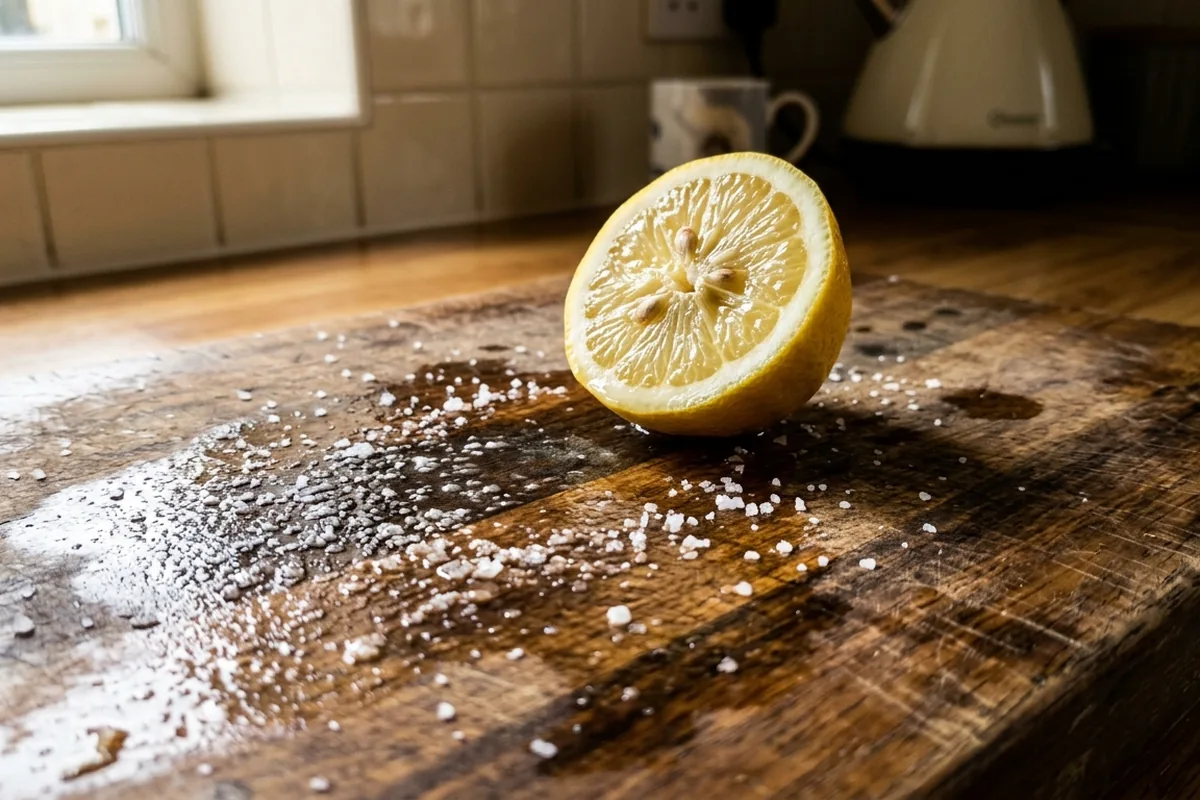
The classic method is simple: coarse salt scattered over the board, half a lemon used like a scrubber, then a rinse and dry. It works because the salt is mildly abrasive and the lemon juice is acidic and deodorising, so you lift surface grime and some odour.
For everyday vegetable and bread boards, this can:
- brighten the surface slightly
- lift surface stains from things like beetroot and herbs
- reduce light onion or garlic smells
- remove a thin layer of greasy residue
It is not enough on its own when:
- the board has been used for raw meat, poultry or fish
- there are deep knife grooves that feel rough under your hand
- the smell is strong even after washing up with hot water and washing-up liquid
- the board feels slimy, warped or has dark patches that do not scrub away
In those cases you need proper cleaning first, and sometimes you should retire the board altogether.
What to do before you reach for the lemon
Before going straight to the “hack”, treat the board like any other food-contact surface. You want it physically clean and dry before you think about freshening.
For a wooden chopping board:
1. Wash it properly first. Use hot water and washing-up liquid, scrub with a stiff brush, then rinse. Do not soak a wooden board in a full sink; it can warp and split.
2. Check both sides in good light. Look for blackened cracks, fuzzy patches or areas that stay damp. These can be signs of mould or deep staining, not just surface dirt.
3. Feel the surface. If your fingers catch in grooves or the board feels furred, lemon and salt will only clean the top of those cuts, not what is trapped inside.
4. Dry it upright. Stand it on its edge on the draining board or a rack so air can circulate. A board that lives flat on a damp worktop in a small kitchen will stay musty whatever you scrub it with.
Once it is clean and dry, the lemon and salt trick is best used as an occasional refresher, not instead of washing up.
If you still want to use lemon and salt
Use it on a dry, already-washed board:
- Sprinkle a thin, even layer of coarse salt over the surface.
- Cut a lemon in half and use the cut face to scrub with the grain of the wood.
- Leave the juice and salt for 3–5 minutes, not much longer, then rinse quickly with warm water.
- Dry immediately with a clean tea towel or microfibre cloth and stand the board upright.
If the board still smells strongly once dry, the problem is deeper than this trick can reach.
When you need more than lemon – and when to replace the board
If your board regularly sees raw chicken, mince or fish in a busy family kitchen, lemon and salt are not a reliable disinfectant. In that situation, it is safer to:
- Keep separate plastic boards for raw meat and fish, which you can wash in a hot dishwasher cycle or with a food-safe disinfectant following the label.
- Reserve wooden boards for bread, fruit and veg, and the occasional cooked meat.
For wooden boards that you want to rescue rather than bin, you can:
- Sand the surface lightly with fine sandpaper to remove the top layer of scored wood. Wipe off the dust with a barely damp cloth, then dry fully.
- Once dry, treat with a food-safe mineral oil or board oil to help repel moisture and reduce future staining. Avoid standard cooking oils as they can go sticky or rancid.
It is time to retire a wooden board when:
- it has deep, dark cracks that stay even after a light sanding
- it smells unpleasant even when dry and freshly washed
- there is visible mould in the grain or along the edges
- it rocks on the worktop because it has warped
At that point, no amount of lemon, salt or sanding will make it reliably hygienic, and it is better to replace it than risk food poisoning.
Used in the right way, the lemon and salt trick is a handy refresher for a clean, lightly stained board. If you are dealing with raw meat, deep cuts or stubborn odours in a small, steamy UK kitchen, treat it as a finishing touch, not your main line of defence.