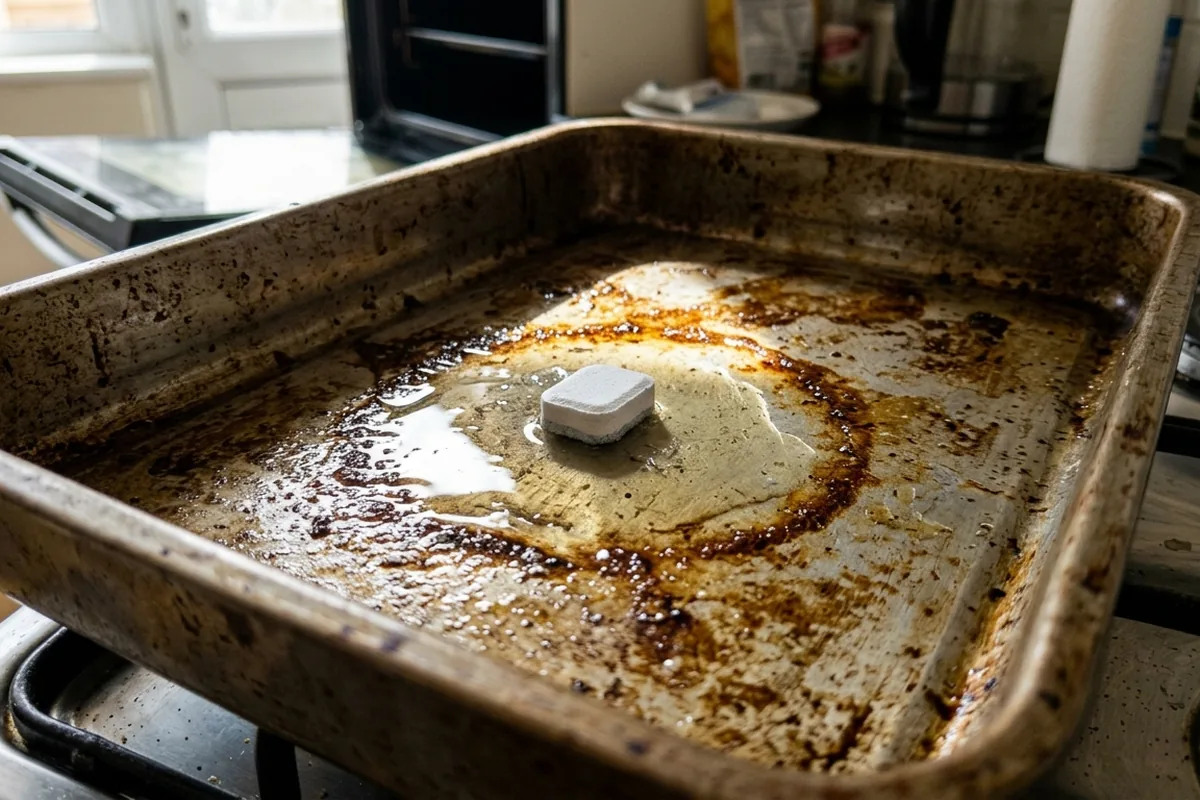
The usual scene is this: you open the oven door, get a blast of burnt-on smell, see brown glass and greasy sides, and then put it off again because you know the spray cleaners drip everywhere. If you’ve tried bicarbonate of soda before, you may also have ended up with gritty white dust all over the floor and in the door seal.
A tidy way to clean an oven with bicarbonate of soda
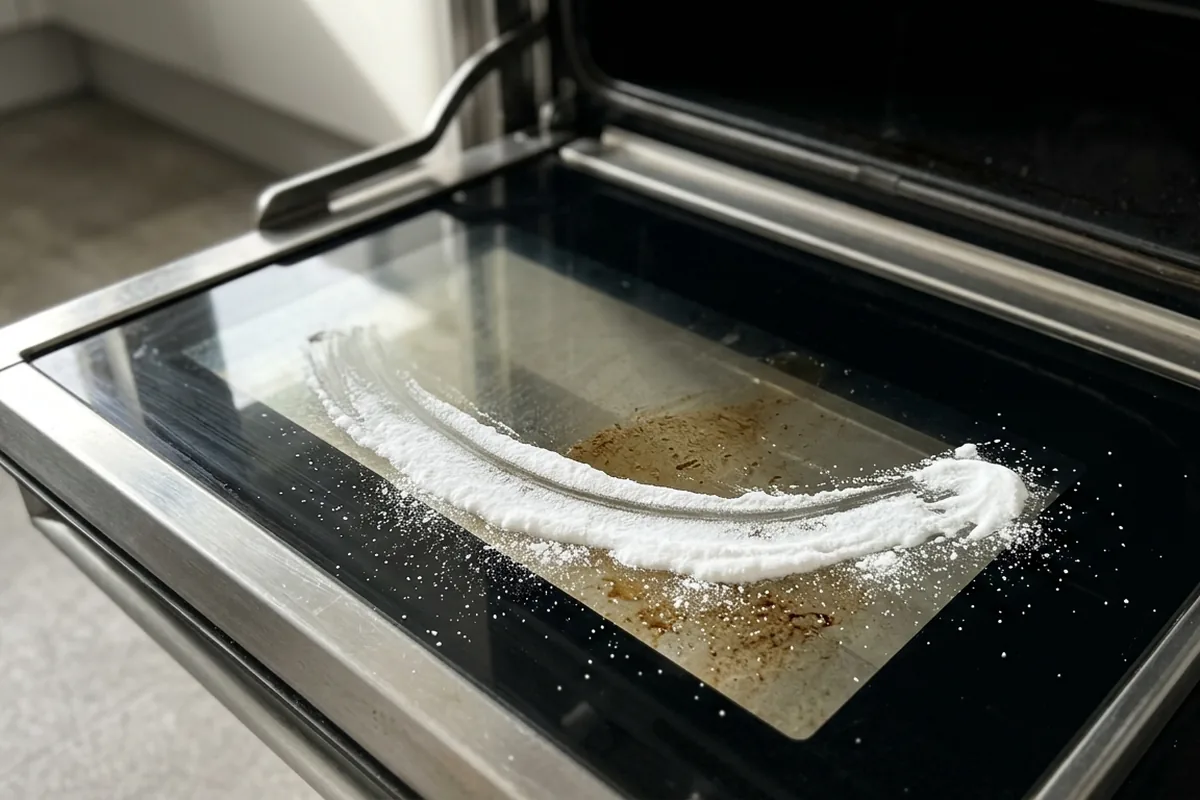
The cleanest way to use bicarbonate of soda is to keep it thick and contained so it doesn’t run or dry into loose powder. You’re aiming for a spreadable paste, applied only where you need it, and covered so it can work without flaking.
1. Prep the oven and kitchen area
- Switch the oven off and let it go completely cold.
- Remove shelves and trays and put them in the sink or bath lined with an old towel.
- Lay an old towel or sheet of newspaper on the floor in front of the oven to catch any bits.
2. Mix a no-drip paste
- In a bowl, mix bicarbonate of soda with a little water to make a thick, spreadable paste – like toothpaste, not runny.
- Optional: add a drop of washing-up liquid to help cut grease; don’t add vinegar at this stage, or you’ll just make it fizz and weaken the paste.
3. Target only the dirty areas
- Using a small spatula, old bank card or the back of a spoon, spread the paste over burnt-on patches and greasy sides, avoiding the heating elements and gas burners.
- Keep away from door hinges, vents and the rubber door seal, as the grit can sit in the gaps.
4. Cover to stop it drying out and shedding
- Lightly press a layer of cling film or baking paper over large pasted areas. This stops the paste crusting and dropping off while it works.
- Leave for a few hours or overnight for heavy build-up.
5. Wipe off in a controlled way
- Peel off the covering and use a damp microfibre cloth to scoop off the bulk of the paste into a bowl or straight into the bin. Don’t rinse handfuls of gritty paste straight down a small sink if your drain is prone to clogging.
- Rinse the cloth frequently in a bowl of warm water, tipping the cloudy water down a well-draining kitchen sink when the grit has settled, not into a slow-draining one.
6. Final rinse and dry
- Wipe the oven interior with clean warm water once or twice until there’s no residue.
- Dry with a clean cloth or kitchen roll so no white streaks reappear when the oven heats.
Shelves can be treated the same way in the sink: paste on the bars, leave, then scrub with a non-scratch pad and rinse.
Where bicarbonate of soda helps and where mess (or damage) creeps in
Bicarbonate of soda is excellent for softening baked-on grease on enamel interiors and glass, but it does have limits and a few traps.
It works well for:
- Standard enamel oven cavities
- Oven doors with brown baked-on splashes
- Racks and trays with stubborn patches
It’s less suitable or needs care on:
- Self-cleaning or catalytic liners – the rough side panels that feel slightly sandy. Scrubbing these with bicarb can clog or damage their surface; just wipe them with a damp cloth instead.
- Bare aluminium or delicate coatings on some trays or liners – the mild abrasiveness can dull the finish. Test a small hidden corner first.
- Rubber door seals and gaps – paste can lodge and dry there, looking messy and sometimes affecting the seal if you scrub too hard.
Two common mistakes that create the mess
1. Paste too runny
If your mixture is watery, it will slide down the back of the oven, pool near the door, and drip onto the floor when you open it. Always thicken with more powder until it holds its shape.
2. Leaving it to dry uncovered for too long
A thin layer left exposed overnight turns into a brittle crust that breaks into dust when you wipe. That’s when you find white grit along the window board, on laminate flooring and in the door seal. Keeping it covered, and scooping rather than brushing, avoids this.
Simple safety checks before you start and when to stop
Before you spread anything inside the oven, check the manual or model online if you can. Many modern ovens in UK flats and terraced houses have special liners or steam-clean functions that shouldn’t be scrubbed with abrasive pastes.
Basic safety points:
- Make sure the oven is cold and off at the switch before you start.
- Avoid getting paste on exposed elements, pilot lights or fans. Wipe off straight away if you do.
- Do not mix bicarbonate of soda with bleach, and avoid adding vinegar inside the oven while it’s still warm – the fizz is messy and the fumes can be unpleasant in a small kitchen.
- Ventilate the room if you’re also using any commercial degreaser on the trays or glass.
If, after cleaning, you notice smoke, odd noises, or a strong electrical smell the next time you use the oven, stop using it and get a qualified appliance engineer to check it. That’s a sign of a fault, not just leftover grime.
Once you’ve done a proper deep clean this way, a quick monthly wipe with a damp cloth and a small dab of bicarb on fresh splashes will keep things under control without another big, messy session.