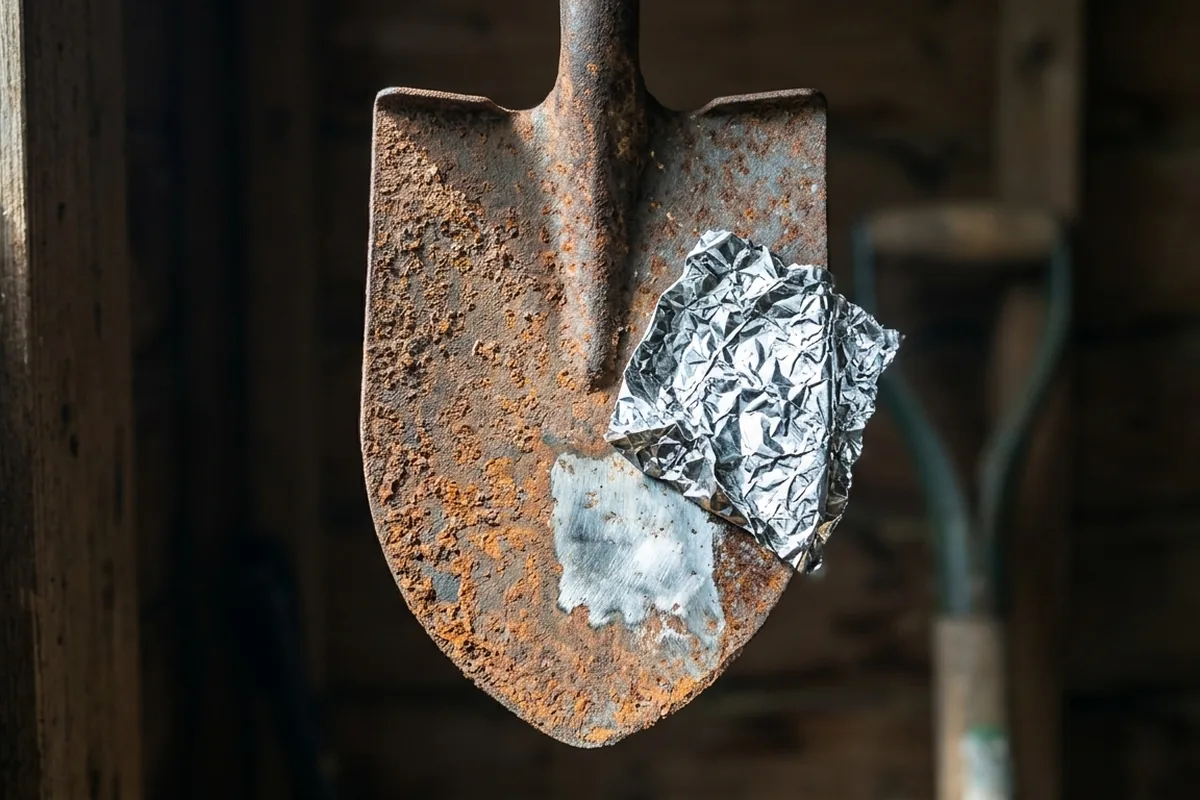
That bit of surface rust on a garden chair, bike frame or shed hinge often tempts people to reach for a ball of kitchen foil. It looks like a clever hack: rub the rusty metal with scrunched-up aluminium foil and a bit of water, and the orange staining seems to vanish. The key thing to know is this: foil can help loosen and smooth off light surface rust, but it does not stop rust coming back and it is the wrong choice for some metals and heavier corrosion.
Why foil works on rust – and what it actually does
Foil-on-rust is mostly a gentle abrasion trick, not magic chemistry. Scrunched aluminium foil is softer than steel, so it can rub away loose rust and smooth pitted areas without gouging the base metal as much as sandpaper might.
When used with water (or a mild soapy solution), the foil:
- knocks back loose, flaky rust and staining
- can burnish bare metal so it looks shinier
- sometimes leaves a slight aluminium smear that makes the metal look more uniform
On small jobs such as:
- a bit of rust on chrome-plated bathroom fittings
- light orange specks on bike handlebars
- surface rust on BBQ grills or garden tools (non-food contact area)
foil can be a quick way to tidy the appearance before you protect the metal properly.
The important limit is this: foil only deals with what you can see on the surface. It does not neutralise all the active corrosion, it does not seal the metal and it does not replace a proper rust treatment.
When foil is only a temporary fix – and when not to use it
If you just rub with foil and walk away, the metal is still bare or poorly protected. In a damp UK garden, on a balcony or in a shed that sweats in cold weather, the rust will usually return quite quickly.
Foil is only a short-term tidy-up if:
- the metal is left unpainted or uncoated afterwards
- the item lives in damp conditions, like a shed, garage or outdoors
- the rust is already pitted or flaky, not just a light bloom
In those cases, you will often see brown patches reappearing within weeks, sometimes days, especially after rain or condensation.
There are also times when foil is a poor idea:
- Delicate finishes: thin chrome on cheap bathroom fittings can scratch and dull if you rub too hard.
- Food-contact areas: you do not want aluminium smearing onto cooking surfaces. Avoid this on the part of a BBQ grill that actually touches food.
- Structural rust: anything load-bearing (ladder, gate hinge taking real weight, bike frame near welds) should not be “fixed” with foil. If the metal is thinned, holed or flaky, think of it as a warning sign, not a cleaning job.
- Rust near electrical fittings: for example, on an outside light bracket. Stick to gentle cleaning and get a qualified person involved if the metal looks badly corroded.
If you are seeing recurring rust on a radiator, flaking around a window board fixing, or rust streaks on a balcony rail in a rented flat, foil polishing is only cosmetic. The real answer is usually to clean properly, treat the rust and then paint or otherwise protect the metal.
How to use foil safely – and what to do afterwards
Used carefully, foil can be the first stage in a proper rust repair on small household items. The important bit is what you do next.
1. Clean first
Wipe off dirt, grease and cobwebs with washing-up liquid and warm water, then dry with a microfibre cloth. You want to be rubbing rust, not grit.
2. Use foil gently
Scrunch up a piece of aluminium foil, dip it in clean water and rub the rusty area with light pressure. Watch the surface: stop if you see shine turning dull or scratches appearing.
3. Wipe and inspect
Dry the area and look closely. If you can see pitting, flaking layers or dark pits that catch a fingernail, the rust is more than cosmetic. At this point, switch to a proper rust remover or sanding and a rust-inhibiting primer rather than just more foil rubbing.
4. Protect the metal
This is the step that turns a quick polish into a longer-lasting fix. Depending on the item, that might be:
- a rust-converting primer followed by metal paint on a garden chair or gate
- a thin coat of light oil (like 3‑in‑One) on hand tools in the shed
- a suitable clear lacquer on decorative indoor metal
Without this protection, the cleaned metal will start reacting with moisture and oxygen again, and you are back where you started.
For small household bits such as rusty screws on a bathroom radiator cover, or a slightly rusty spanner in the airing cupboard, it is often worth skipping foil altogether and going straight to a quick sand and a rust treatment product from somewhere like Screwfix or B&Q.
If you reach the point where rust is spreading, causing stains on nearby walls or skirting boards, or affecting safety, stop treating it as a cleaning hack. That is when to think about replacement or getting a professional opinion, rather than more rubbing with kitchen foil.