The first warning is often not a drip or a puddle, but a slightly swollen plinth or a faint musty smell when you open the under-sink cupboard. People look for obvious water on the floor and miss the quieter sign: the bottom edge of the cupboard or laminate starting to puff up or feel “fluffy” to the touch. If the board at floor level looks rippled, the corners are crumbling or the white coating is bubbling, you’re probably dealing with a slow leak rather than normal kitchen splashes.
The small sign to look for under your cupboards
The giveaway with a hidden leak is persistent swelling or softness at the very bottom of the cupboard or plinth (the kickboard), especially below the sink. Water runs down pipes and fittings, pools on the base, then gets soaked up by chipboard long before you ever see a proper puddle.
You’re looking for things like:
- The plinth bowing out slightly or no longer sitting straight
- A “blown” look to laminate or melamine at the bottom edge
- Chipboard that feels soft, crumbly or furry if you press it
- A grey or dark tide mark along the bottom of the cupboard sides
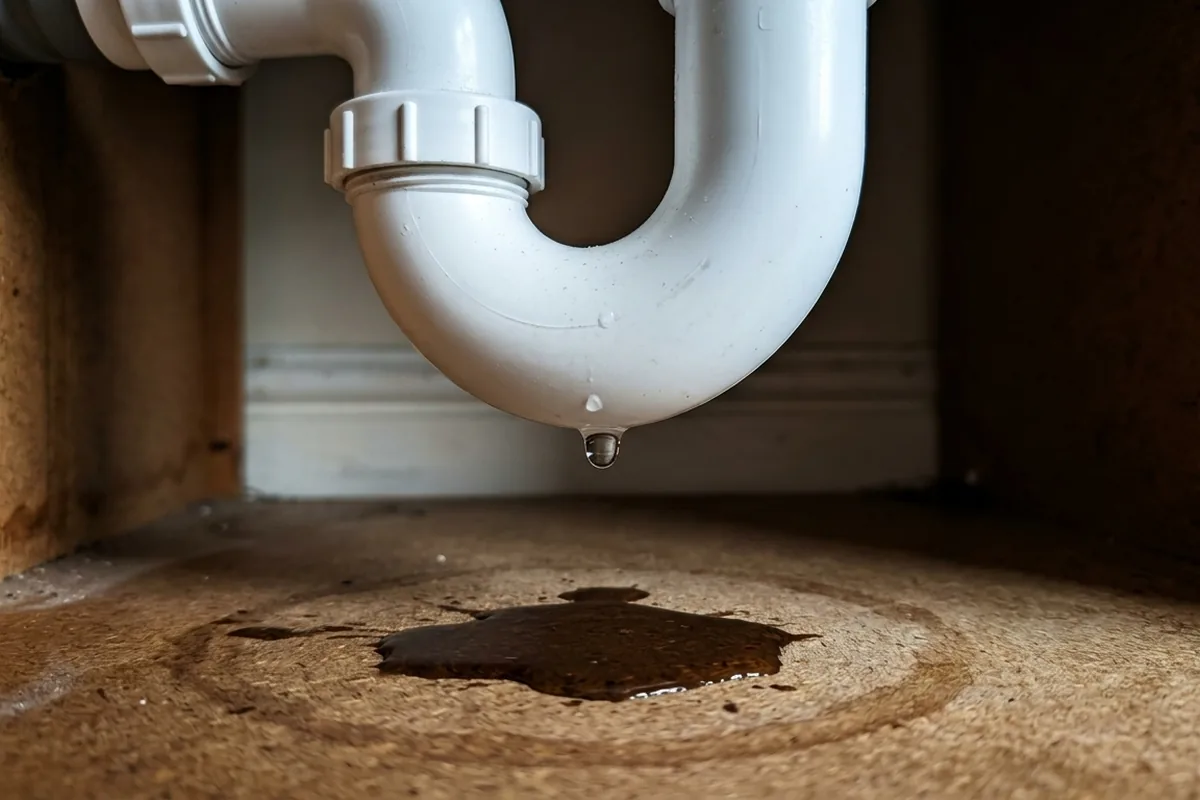
Normal splashes from washing up usually dry out and don’t change the shape of the wood. Swelling that gets worse over days is the classic sign that water is arriving more often than it can escape, usually from a tiny drip on a trap, tap tail, dishwasher hose or isolation valve.
If you spot this, the next step is not more cleaning, it’s to find and stop the moisture source as soon as you reasonably can.
How to check safely for a hidden leak
You do not need to strip plumbing apart. A simple, careful look is often enough to work out whether you have a problem that needs a plumber.
Start by clearing the under-sink cupboard so you can see the base and the pipework. Use a torch or your phone light and look slowly, not just for dripping water but for anything that looks “off”.
Key things to check:
- Feel the base and sides: if they are cold and damp when the rest of the kitchen is dry, that is suspicious. Use kitchen roll and press it along the back and corners; any moisture will show up quickly.
- Run the tap for 30–60 seconds, both hot and cold, and watch the trap and joints. Look for a bead of water forming on a joint, or water tracking along a pipe.
- Check while an appliance runs: if you have a dishwasher or washing machine next to the cupboard, run a short cycle and look at the inlet and waste hoses where they join the valves or spigot.
- Sniff for a musty odour: a slightly earthy or stale smell that lingers even after you’ve cleaned often means the board has been wet for a while.
If you’re unsure, put a dry sheet of kitchen roll or an old light-coloured tea towel flat on the cupboard base and check it the next day. Any new water marks show that something is still leaking, even if you can’t see the drip happen.
When to stop and call a professional
There are limits to safe DIY here. Contact a plumber rather than pushing on if:
- You can see water forming on a joint but can’t tighten it gently by hand
- The leak worsens when you nudge a pipe or fitting
- You can’t find isolation valves or are unsure how to turn the water off
- The chipboard is so rotten the base is sagging or collapsing
In a rented flat, report it early to the landlord or agent and take a quick photo of any swelling or damage so it’s logged.
What you can do now and how to limit damage
If the leak is tiny and you’re waiting for a plumber or landlord, there are a few low-risk things you can do to reduce further damage.
First job is to keep things dry. Remove everything from the cupboard and gently dry the surfaces with a microfibre cloth. Leave the doors open for a few hours to let moisture escape; a small fan or dehumidifier nearby can help, especially in a damp-prone terraced house or small kitchen.
If you can see where the drip is coming from and it’s safe:
- Very slightly tightening a plastic nut or compression joint by hand or with a small adjustable spanner can sometimes slow a weep, but stop immediately if it offers resistance or gets worse.
- Place a shallow tray, baking tin or plastic box under the suspect area with a dry sheet of kitchen roll inside. This both catches drips and makes it easy to see if water is still arriving.
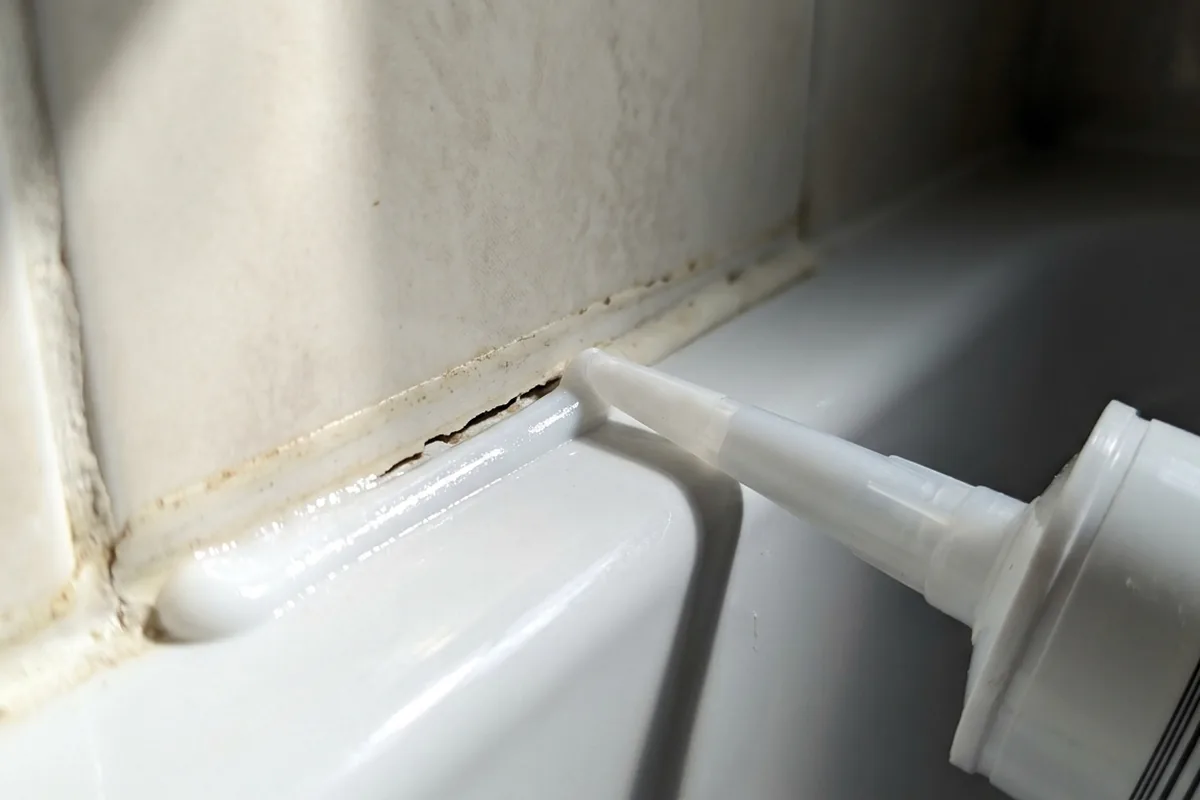
Do not rely on sealant or tape as a fix for a pressurised pipe or fitting. Silicone sealant is fine for sealing around a sink, but it is not a repair for a leaking pipe joint.
If the chipboard at the front edge has already blown, you usually can’t reverse the swelling. What you can do is:
- Keep it dry so it doesn’t crumble further
- Avoid loading that part of the cupboard heavily
- Plan for eventual replacement of the plinth or base once the leak is fixed
Once everything is dry and the leak has been sorted, keep an eye on that area for a week or two. If the swelling spreads, the smell returns or the board still feels damp, there may still be moisture getting in and it’s worth getting it rechecked.
The small change in shape at the bottom of the cupboard is easy to dismiss, but catching it early often means a simple plumbing visit and a new plinth, rather than warped floors and mouldy skirting boards later on.