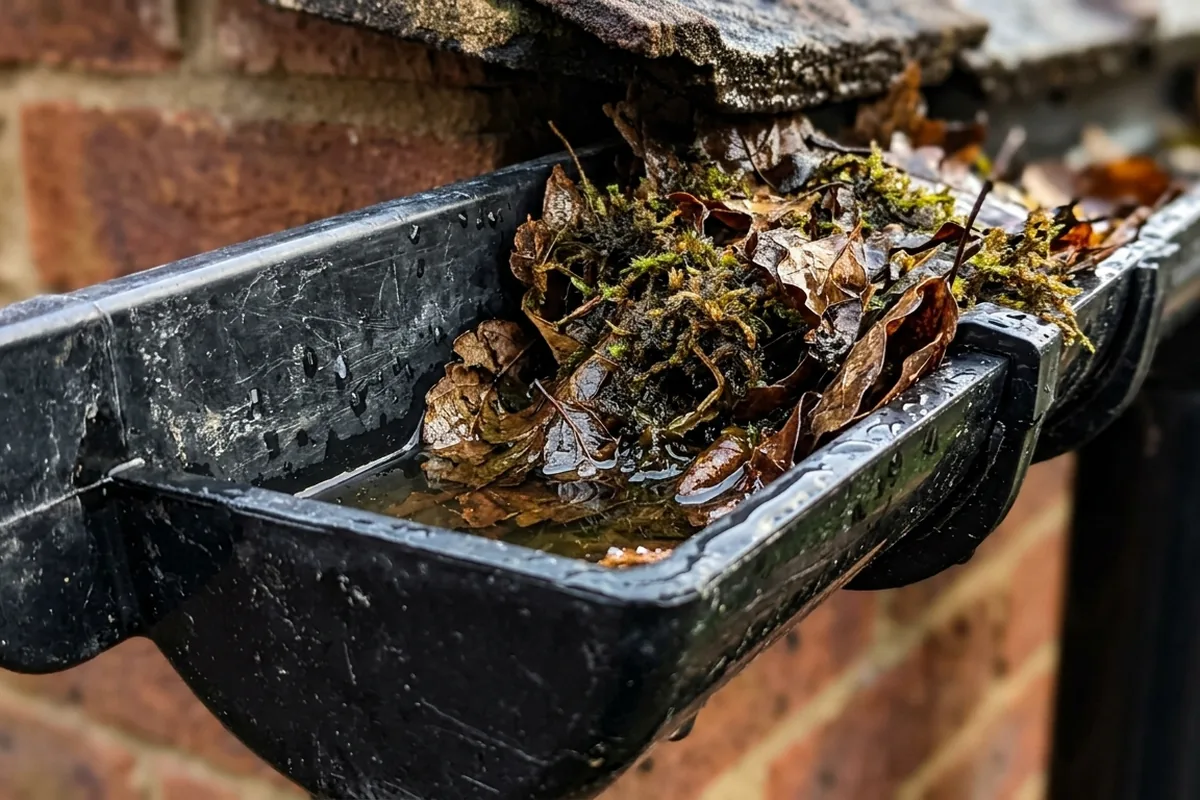
You notice a dark streak running down the outside wall below the gutter, and inside, the wallpaper near that spot feels a bit cold or looks slightly discoloured. That dirty “tide mark” on the brickwork or render directly under the gutter is the key sign that a blockage is forcing water over the edge, not into the downpipe. When that happens in wet UK weather, water can soak the wall, bridge across into the cavity or solid brick, and eventually show up as damp patches, peeling paint or musty skirting boards indoors.
If you can see water cascading over the front of the gutter in heavy rain, or a permanent stain beneath a short section of gutter, treat it as a damp warning, not just a cosmetic issue.
The gutter sign that points to indoor damp risk
The most important sign is water escaping where it shouldn’t, at the same spot every time it rains.
Outdoors, you’re usually looking for one or more of these around a terraced house, semi or flat:
- A brown or green vertical streak on the wall below a short run of gutter or a joint.
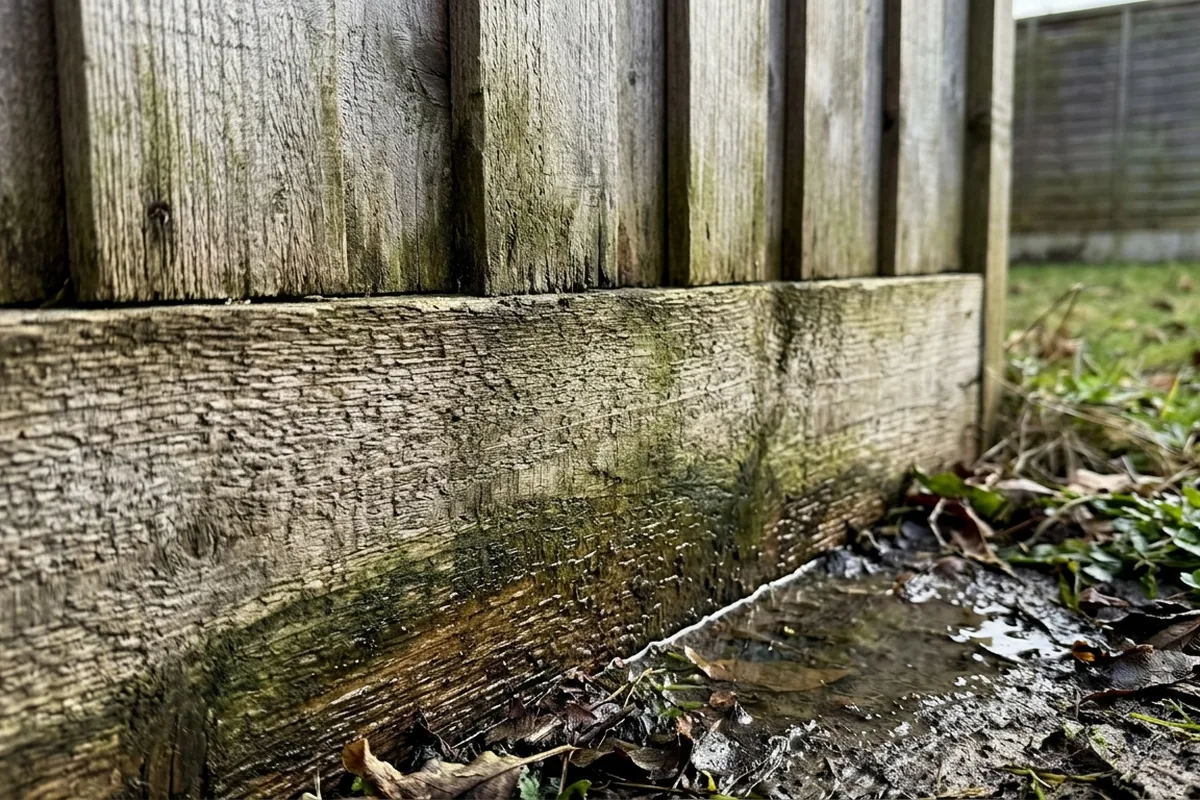
- Algae or moss growth on the wall or window board under the gutter line.
- Water dripping or pouring from the middle of a gutter run, not from a joint, outlet or downpipe.
- A permanently damp patch on the ground, path or patio slabs directly under that area, even after a few dry days.
Indoors, the linked sign is often a localised damp patch that lines up with the problem section of gutter:
- A patch of bubbling paint or blown plaster high on an outside wall.
- Peeling wallpaper or a faint yellow stain near the ceiling line.
- Musty skirting boards or slightly soft timber below that same area, especially in a front room or hallway.
When the outside streak and inside patch line up vertically, a blocked or overflowing gutter is a strong suspect.
Quick checks before anyone goes up a ladder
You do not need to start with tools. Your first job is to match what you see outside with where the damp is inside.
Stand back from the house on a dry day and look along the gutter run:
- Is one section visibly sagging or sitting lower than the rest?
- Can you see plants, moss or a “hedge” of debris sitting in the gutter?
- Is there a dark stain under a bracket or joint that doesn’t appear elsewhere on the wall?
Then, inside the same area:
- Gently run your hand over the wall. If it feels cold and slightly clammy compared with other walls, that supports a moisture problem.
- Look at the top corners of the room and the window board on that wall. Any recurring mould or tide marks there can be linked to water soaking through from outside, not just condensation.
If you’re unsure whether the stain is old or active, stick a small strip of masking tape next to it and lightly pencil round the edge of the damp mark. Check a few days after heavy rain. If the patch has grown beyond the pencil line, the problem is ongoing and needs attention.
If height, access or your own balance is at all doubtful, do not climb a ladder yourself. This is exactly the sort of small job a local handyman, roofer or gutter specialist can do quickly with the right kit.
What a blockage is doing to your walls and what to do next
A blocked gutter usually holds water instead of moving it to the downpipe. Once full, water spills over the back or front:
- Over the front, it runs down the brickwork, soaking the outer leaf and mortar.
- Over the back, it can bypass the edge of the roof felt, wetting the fascia, soffit and sometimes the top of the wall.
Over time, this can lead to:
- Damp patches on upstairs bedroom walls that line up with the gutter.
- Rot in timber fascias or soffits, especially on older houses.
- Persistent musty odours near external walls, even after surface cleaning.
If the sign is clear and access is safe from ground level (for example, a bungalow with solid flat ground and a helper to foot the ladder), the basic sequence is:
1. Check the downpipe outlet first. If the outlet is blocked with leaves or moss, clearing that can let the gutter drain.
2. Scoop out obvious debris near the overflow point using a small plastic scoop or gloved hands. Avoid leaning sideways off the ladder.
3. Flush the gutter with a hose from the end furthest from the downpipe, watching that water flows freely and does not pool.
If you cannot see what you’re doing, the ground is uneven, or you’re in a taller house (typical two-storey terrace or more), it is safer to get a professional with proper access equipment. Many will also spot cracked joints or slipped tiles while they’re up there.
Once the gutter is cleared and flowing properly, keep an eye on:
- The outside streak: it should gradually fade and stop looking damp after rain.
- The indoor patch: it may take weeks to dry fully, but it should not grow or feel wetter after further wet weather.
If the indoor damp patch keeps returning, or spreads sideways or downwards, the issue may be more than just a blocked gutter, for example a leaking downpipe, damaged pointing or a separate internal leak. At that point, it is worth asking a builder or damp specialist to investigate, rather than chasing it with dehumidifiers and mould spray.
The key is simple: a repeated overflow mark on the outside wall under the gutter is not just untidy, it is your early warning that water is trying to find its way indoors. Catching that sign and dealing with the blockage is usually far cheaper and easier than repairing blown plaster and rotten skirting boards later.