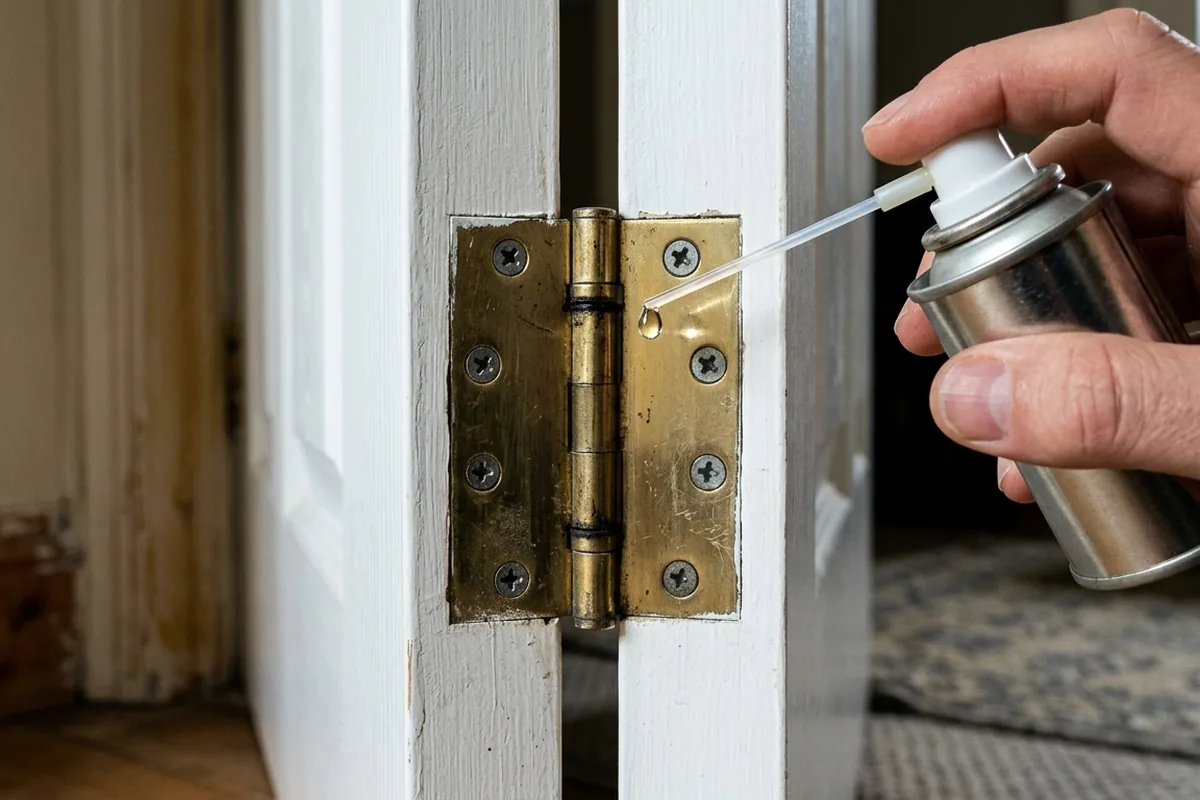
That long, drawn-out squeak every time you open the living-room door is usually coming from the hinges, not the handle or the latch. The fastest fix is almost always a tiny bit of lubricant on the hinge knuckles and pin, worked in by opening and closing the door a few times. That will often quieten it in seconds. The reason the noise keeps coming back is that dust, old paint and worn metal are still there, so the quick spray only masks the problem for a while.
The quickest ways to silence a squeaky door
Most squeaks start where the metal hinge pin turns inside the hinge knuckles. Friction builds up, the metal dries out or corrodes slightly, and you hear that familiar screech, especially on heavier fire doors in flats or older panel doors in terraced houses.
If you just want it quiet now and are not doing a full overhaul, these are the options that usually help:
- Silicone spray or light oil (like 3‑in‑One): Best quick fix. Spray or drip a very small amount on the top of each hinge where the pin sits, and along the moving joint. Open and close the door 10–15 times to work it in, then wipe any drips with a cloth so they do not stain paint, laminate flooring or carpet.
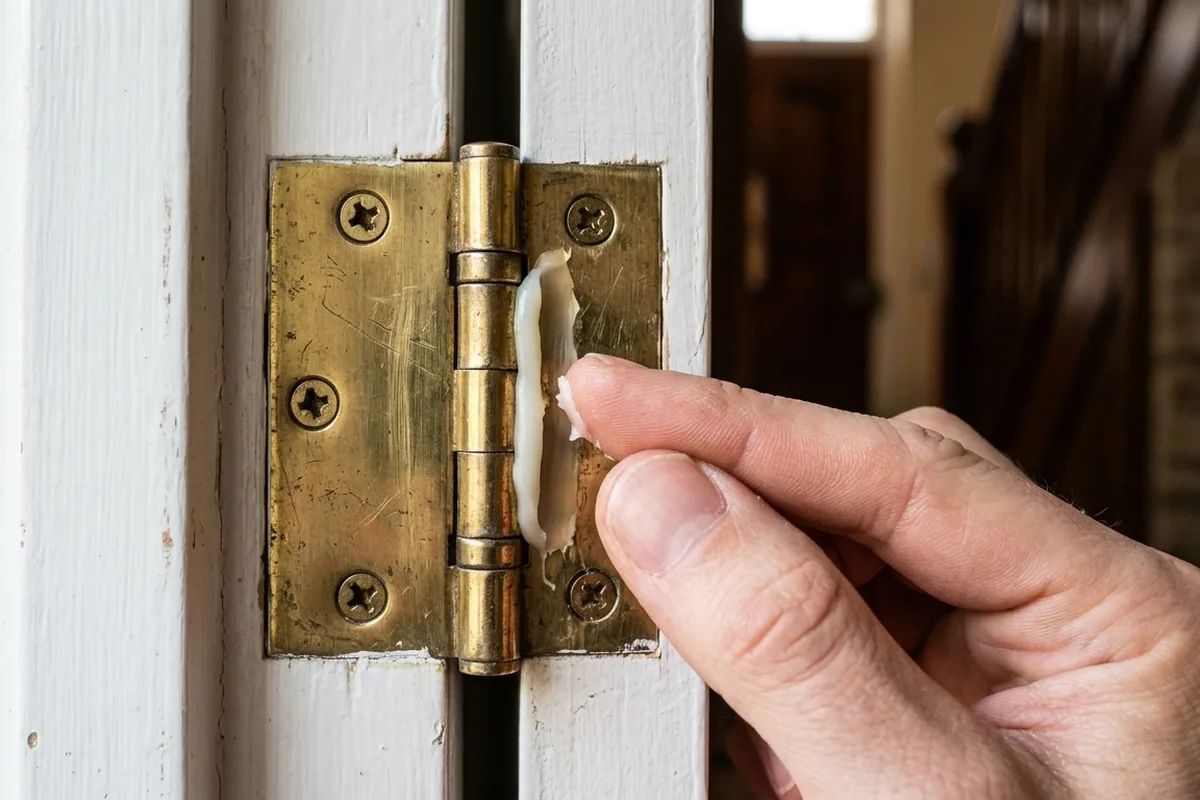
- Petroleum jelly: Smear a little on the visible hinge joints. It is thicker than oil so can last longer, but you will need to open and close the door a few times to spread it.
- Bar soap or candle wax: In a pinch, rubbing dry soap or a candle into the hinge joints can quieten a squeak, but it is rarely a long-term fix.
Use only a small amount of lubricant. Overdoing it can cause drips, collect dust and sometimes even make the hinge feel sticky.
If the door still squeaks after lubrication, try gently lifting it a few millimetres by the handle as you open it. If the squeak changes or goes away, the door may be slightly misaligned and putting extra pressure on one hinge.
Why the squeak keeps coming back
If you have already sprayed the hinges and the noise returns after a few days or weeks, the problem is usually one of three things: dirt, damage or movement.
Over time, hinges collect:
- old, dried-out oil or grease
- dust from the hallway or landing
- tiny flakes of paint from when the frame or door was painted shut
All of that acts like a gritty paste. A fresh squirt of lubricant can quieten it briefly, but it is just sitting on top of the muck.
Door movement is the other common culprit. In many UK homes, doors swell slightly in damp weather, then shrink back when the heating goes on. That can:
- twist the door very slightly, loading one hinge more than the others
- cause the door edge to rub on the frame or carpet, which can sound like a hinge squeak
- make screws work loose in the soft timber behind the hinge
If the hinge screws are loose, the metal parts are not aligned properly and you get metal-on-metal rubbing in places that lubricant cannot reach well. Tightening the screws carefully with a hand screwdriver (not over-tightening) can often help the lubricant do its job.
Occasionally, the hinge itself is worn: you might see black or rusty streaks down the hinge, or feel a lot of side-to-side play when you lift the door slightly. In that case, no amount of oil will be a permanent cure and the hinge will probably need replacing.
When to go beyond the quick fix
A quick spray is fine if the door was quiet for years and has just started complaining. If the squeak is a regular visitor, it is worth doing a slightly deeper but still simple check.
Stand with the door half open and:
- Listen carefully: is the sound clearly from the hinge area, or is it more like rubbing at the top or bottom of the door against the frame or carpet?
- Watch the hinges as someone else opens and closes the door. If one hinge jumps, flexes or moves away from the frame, that is the likely trouble spot.
- Check the screws: if any are visibly proud of the hinge face or spin freely, they are loose. Tighten them gently. If a screw will not tighten, you may need a slightly longer screw of the same gauge, or to pack the hole with a sliver of wooden matchstick and wood glue before re‑screwing.
If you are comfortable doing a bit more, you can clean a stubbornly squeaky hinge:
1. With the door closed, support it gently with a wedge under the bottom so it does not drop.
2. Tap the hinge pin upwards with a hammer and small nail or punch, just enough to pull it out. Do not do this on heavy fire doors in blocks of flats; leave those to a professional or the building’s maintenance.
3. Wipe the pin clean with a cloth and a bit of washing-up liquid solution if it is greasy, then dry it thoroughly.
4. Apply a thin film of light oil or petroleum jelly to the pin and the inside of the hinge knuckles.
5. Reinsert the pin, tap it back down and work the door back and forth.
This deeper clean removes the grit that made the squeak come back. It is usually enough for internal doors in a typical semi or terrace.
If after cleaning and lubricating the hinges the door still squeaks, sticks badly, or rubs the frame so hard you see bare wood, you are into adjustment or trimming territory. That can mean easing the door edge with sandpaper or a plane, or refitting a hinge slightly higher or lower, which is best left to a competent DIYer or joiner if you are unsure.
A door that suddenly starts catching and squeaking after you notice cracks in the wall, doors not latching, or sloping floors could point to a structural movement issue. In that case, do not force the door or start shaving wood off; speak to a professional for advice.
If your door is now opening quietly, check it again over the next few days. If the squeak returns quickly, there is still an underlying issue such as loose screws, a twisted door or a worn hinge that needs more than a quick squirt.