That stale, old-house smell that hits you when you sit down on the sofa in March is usually not about dirt, it is about trapped moisture and poor winter ventilation. Cold rooms, condensation on windows and wet coats drying over radiators all raise indoor humidity. Your sofa fabric and cushions quietly soak it up, then sit in a cool room for weeks. By the time you notice the musty odour, it is often a sign of mild mould growth or deeply absorbed moisture, not just “stale air”, which is why a quick fabric freshener spray often only hides it for a day.
Why your sofa smells musty after winter
In a British winter, we shut windows, block draughts and dry laundry indoors. Moist air then looks for somewhere to go. Upholstery, cushions and throws act like sponges, especially on a fabric sofa or one pushed against a cold outside wall in a terraced house or flat.
Common reasons the smell appears after winter:
- The room stayed cool and shut up, so the sofa never really dried out between uses.
- Condensation on nearby windows and cold walls kept the air damp.
- Pets, spills or wet coats on the arm of the sofa added extra moisture.
- A leather or faux-leather sofa with fabric cushions trapped stale air in the gaps.
That “old cupboard” or “wet dog” note is usually light mould spores and bacteria feeding on skin oils, dust and old spills in the fabric. Spraying freshener straight on top can:
- Lock more moisture into the fibres.
- Add perfume that briefly masks the smell, then mixes with it.
- Make it harder to notice if there is a proper damp problem behind or under the sofa.
If the smell is strongest when you first walk into the room after it has been shut, and you can’t see obvious staining, it is almost always a ventilation and moisture issue rather than a one-off spill.
Checks to make before you reach for fabric freshener
Before you spray anything, treat the smell as a small damp warning. A few quick checks can stop you sealing a bigger problem into the upholstery.
1. Check where the smell is strongest
Move along the sofa and press your nose gently to:
- Seat cushions
- Back cushions
- Armrests
- The gap down the back
- The fabric underneath the front edge
If one area smells much worse, you may be dealing with a local spill, pet accident or hidden damp patch, not an overall “old sofa” smell. That needs targeted cleaning, not just fragrance.
2. Feel for hidden damp and cold
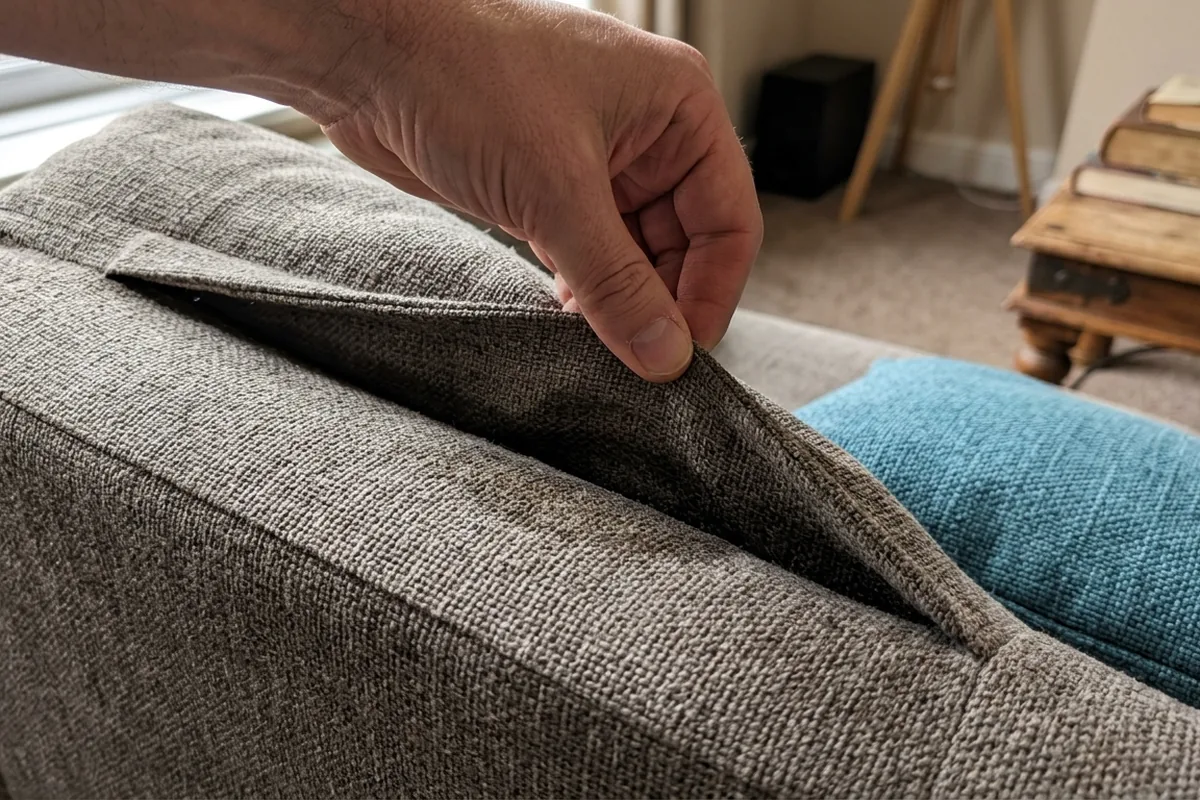
Run a dry hand slowly over:
- The back of the sofa where it touches the wall
- The underside of seat cushions
- The fabric along the bottom edge near the skirting board
If anything feels clammy, cool and slightly tacky, there is still moisture present. Spraying freshener on top will only feed mould. You need to:
- Pull the sofa slightly away from any cold outside wall.
- Let air circulate behind and underneath.
- Open a window or trickle vent for a bit, even if it is chilly.
3. Look underneath and behind
Use a torch or your phone light. You are checking for:
- Grey or black specks on the fabric base or dust cover.
- White, fluffy patches on wooden feet or frame.
- Damp skirting boards, peeling paint or black mould on the wall behind.
Any of those mean you have actual mould, not just a stale smell. In that case, avoid soaking the area. Lightly vacuum with an upholstery tool and consider a specialist fabric-safe mould and mildew cleaner, following the label. If the wall behind is affected or the skirting feels soft, that is a wider damp issue and may need a professional opinion.
4. Check care labels and fabric type
Before any spray, read the small care label under a cushion or on the base:
- “W” usually means water-based cleaners are ok.
- “S” or “dry clean only” means stick to solvent-based or professional cleaning.
- Leather and faux leather need dedicated leather cleaner, not standard fabric freshener.
Always patch-test any product on a hidden area first to avoid water marks or colour change.
5. Think about what else is in the room
If you also have:
- Streaming bedroom-style condensation on the window most mornings
- A cold external wall just behind the sofa
- A laundry airer in the same room
then the sofa is a symptom of high room humidity. A dehumidifier, better extractor use in the bathroom and kitchen, and short bursts of window opening will do more than any spray.
How to freshen a musty sofa safely (and when to stop)
Once you are sure there is no active damp patch or visible mould, you can tackle the remaining odour more confidently.
Start with dry methods first:
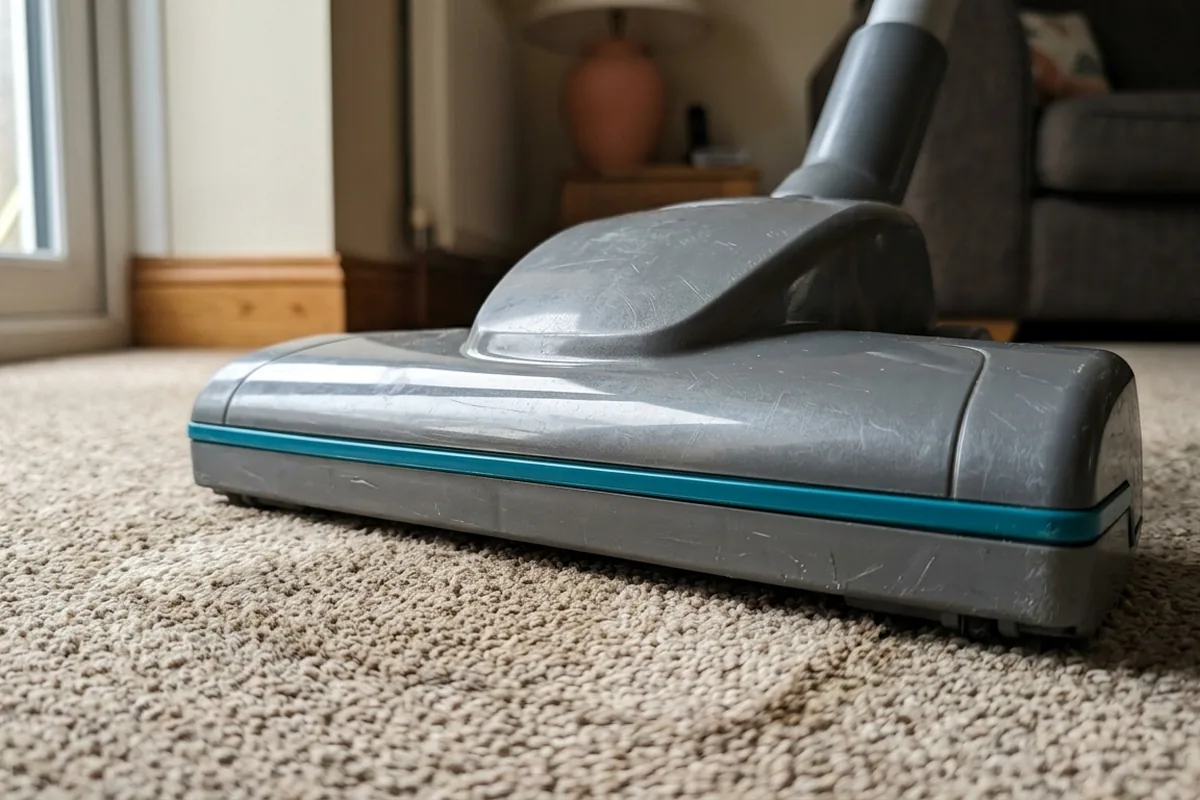
- Vacuum the sofa slowly with the upholstery tool, including seams and under cushions.
- Wash removable covers following the care label if allowed.
- On dry, colourfast fabric, lightly sprinkle bicarbonate of soda over the seats, leave for an hour or two, then vacuum off. It can help absorb odours but will not fix real damp.
If the sofa now smells faintly but not unpleasant, you may not need a freshener at all. Often, a couple of breezy afternoons with the window cracked and the radiator on low will finish the job.
If you still want to use a fabric freshener:
- Choose one labelled as safe for upholstery.
- Lightly mist from a distance, do not soak.
- Keep the room ventilated while it dries.
- Avoid using it daily; if the smell keeps returning, the moisture source is still there.
Do not use bleach-based products on upholstery, and never mix bleach with any other cleaner in a spray bottle. Avoid vinegar directly on sofa fabric: it can leave its own lingering smell and may mark some materials.
If, after all this, the sofa still smells musty every time the room is closed up for a few hours, you are likely dealing with deeply saturated foam or a continuing damp source. At that point, it is safer to look at professional upholstery cleaning or, if the frame or wall is affected, getting proper damp advice rather than layering on more fragrance.
A good sign you are winning is when the room smells neutral the next morning with the door closed overnight, and the sofa just smells of its fabric, not of winter.