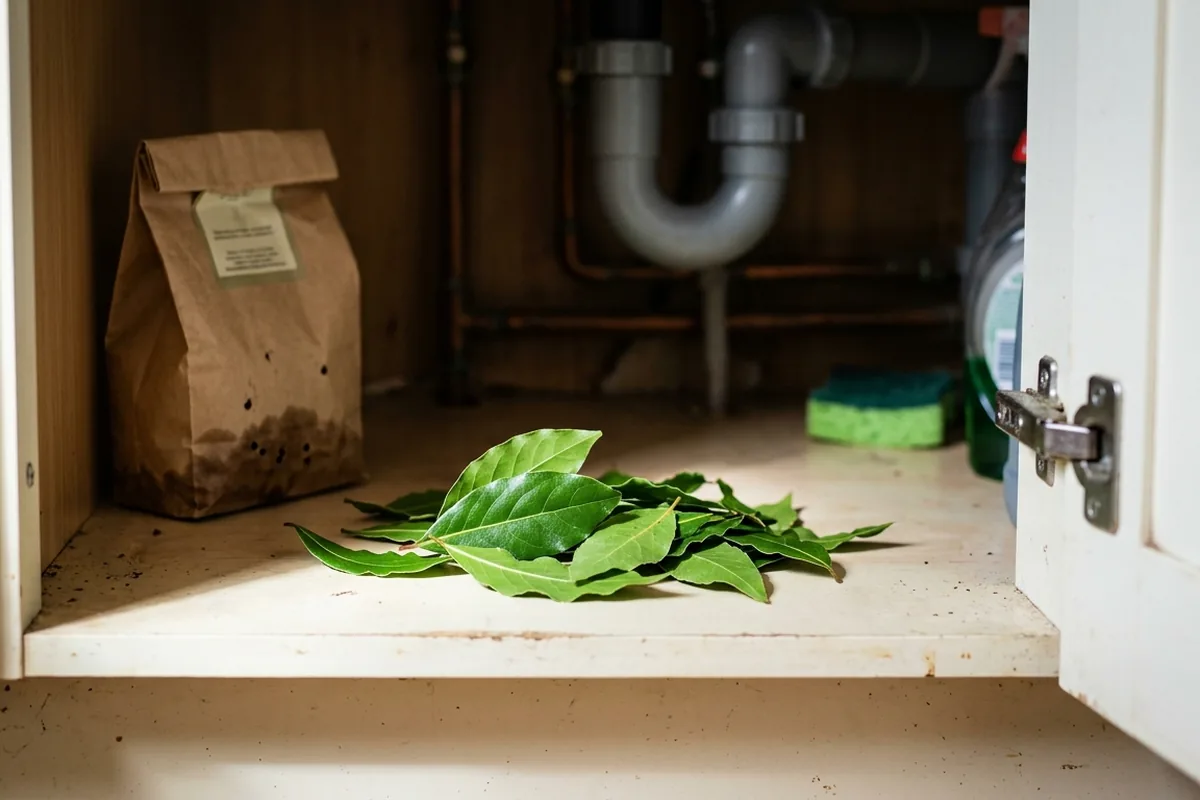
The little green leaves usually appear when someone is fed up with tiny beetles in the flour, mystery droppings in the back of a cupboard or that faint musty smell from the spice shelf. Bay leaves in the corners of kitchen cupboards are sold online and on social media as a neat way to repel insects and freshen the space. They can help a bit with very light insect pressure in a clean, dry cupboard, but they will not solve a real infestation or fix damp, and sometimes they just mask that something is going off at the back.
Why bay leaves ended up in cupboards – and what they actually do
The idea is simple: bay leaves have a strong, slightly medicinal smell. The theory is that this smell discourages pantry pests such as weevils, flour beetles and pantry moths, and that the leaves will lightly deodorise stale cupboards at the same time.
There is some logic to it. Many insects dislike strong aromatic oils, and dried bay leaves do release a scent, especially when they are fresh from the packet and slightly crushed. In a small, reasonably clean cupboard, that smell may make it less inviting to wandering insects and can take the edge off a stale odour.
But there are clear limits:
- Bay leaves do not kill insects or eggs.
- They will not protect food that is already infested or poorly sealed.
- They do nothing about damp, mould, leaks or condensation in or behind the cupboard.
So think of bay leaves as a mild deterrent and air-freshener, not a pest control treatment or damp cure.
Checks to make before you scatter bay leaves everywhere
Before you start tucking leaves under jars and behind cereal boxes, it is worth checking what is really going on in the cupboard. This is where most people skip ahead and then wonder why the trick “doesn’t work”.
If you are worried about insects
If you have seen tiny brown beetles, moths or wriggling larvae in a cupboard, start by emptying it completely. Check:
- Open bags of flour, rice and pasta
- Cardboard cereal boxes, especially the corners
- Nuts, seeds and dried fruit
- Old spice jars and stock cubes
Anything with visible insects, webbing or holes in the packaging is best binned, taken straight outside to the wheelie bin. Wipe shelves with hot water and a drop of washing-up liquid, then dry thoroughly with a microfibre cloth.
Only once everything is clean and all food is in sealed containers (glass jars, clip-top tubs, screw-top jars) does adding a few bay leaves make sense. They may help discourage new visitors finding your dry goods, but clean storage is doing the real work.
If you keep getting pests back even after a good clear-out, it is usually time to look beyond bay leaves and consider proper pantry moth traps or, in stubborn cases, a pest control professional.
If the cupboard smells musty or “old”
If the main issue is smell rather than insects, bay leaves can soften it slightly, but again they are not the fix. First, work out if the odour is:
- Damp and earthy, like a wet cloth left too long
- Stale and dusty, from old packaging and crumbs
- Food-related, such as spices, onions or oils that have leaked
For damp or earthy smells, feel the back panel, sides and base of the cupboard. In many UK kitchens, under-sink cupboards and corner units on outside walls can be slightly cool and prone to condensation. If surfaces feel cold and clammy, or you see specks of mould on the chipboard or silicone, you need to improve dryness and airflow, not just perfume it.
A better sequence is:
1. Empty the cupboard and clean with hot water and washing-up liquid.
2. Dry all surfaces fully; leave the doors open for a few hours.
3. Check for leaks from pipes, the sink trap or worktop joints above.
4. Only then consider a mild deodoriser: a small open jar of bicarbonate of soda, a few coffee grounds in a dish, or a couple of bay leaves on a saucer.
If the cupboard repeatedly smells damp or you see swollen chipboard, peeling laminate or black mould, that points to a moisture problem that needs attention, not more leaves.
How to use bay leaves safely and sensibly in the kitchen
Once you have tackled any real problem, bay leaves can still be a handy finishing touch, especially in a small flat kitchen where cupboards are packed and you want things to feel a bit fresher.
A few practical points:
- Use clean, food-grade dried bay leaves, not old dusty ones that have been sitting open for years.
- Place them on small saucers or in breathable muslin bags, rather than directly on slightly damp shelves, so they do not go soggy or leave marks.
- Swap them out every month or two; once they have lost their smell, they are just decoration.
- Keep them away from direct contact with unwrapped foods, as they can transfer a strong flavour.
- If you have pets or small children, avoid leaving loose leaves where they could be chewed or played with.
For many homes, a combination works best: airtight containers for dry goods, regular quick wipe-downs, checking for leaks under the sink and a small bowl of bicarbonate of soda to absorb lingering odours. Bay leaves can then sit alongside that as a gentle, low-effort extra, not the main defence.
If you ever reach the point where you are adding more and more bay leaves but still seeing insects or smelling damp, that is the sign to pause and look for the real source again, rather than doubling down on the trick.