That cheap paint scraper in the decorating aisle looks perfect for getting specks of plaster, silicone or burnt-on food off your windows, shower screen or tiles. The problem is that the wrong scraper, or the right one used badly, can scratch glass and ceramic so deeply that it never fully polishes out. Once you see grey, silvery lines or rainbow swirls that do not wipe away, the damage is usually permanent.
The key is simple: only use a sharp, flat razor-style scraper that’s designed for glass or tiles, keep it at a very low angle, and never drag grit under it. Avoid cheap “mystery metal” blades and multi-purpose wall scrapers on smooth glossy surfaces. If you’re not sure what the blade is made of, keep it away from your shower screen, hob and tiles.
The scraper mistake that ruins glass and tiles
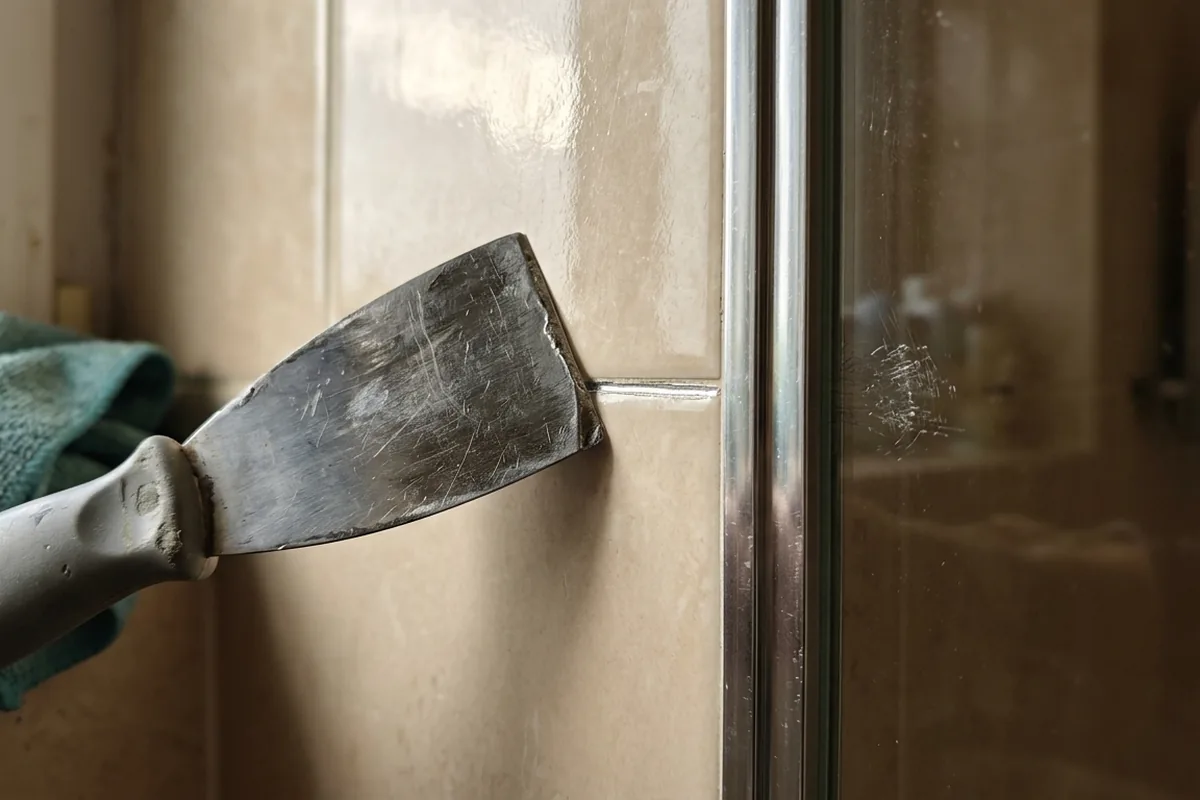
The big mistake is using a cheap, general-purpose scraper with a hard steel edge on delicate, glossy surfaces, especially when there’s dust or grit on them.
On a bathroom window, shower screen or glossy kitchen tiles, this usually looks like:
- a broad metal scraper meant for stripping paint off skirting boards
- a cheap pack of unbranded blades from a bargain shop
- the blade held too upright and pushed hard
Glass and glazed tiles are hard, but not as hard as some steels. A very sharp, purpose-made glass scraper blade will shave off paint or limescale residue cleanly. A cheap or damaged blade with tiny nicks will act like sandpaper, dragging micro-scratches across the surface.
The risk jumps when:
- there’s grit, plaster dust or tile adhesive still on the surface
- you scrape over dry debris instead of soaking it first
- you work quickly on a large area, like a patio door or shower screen
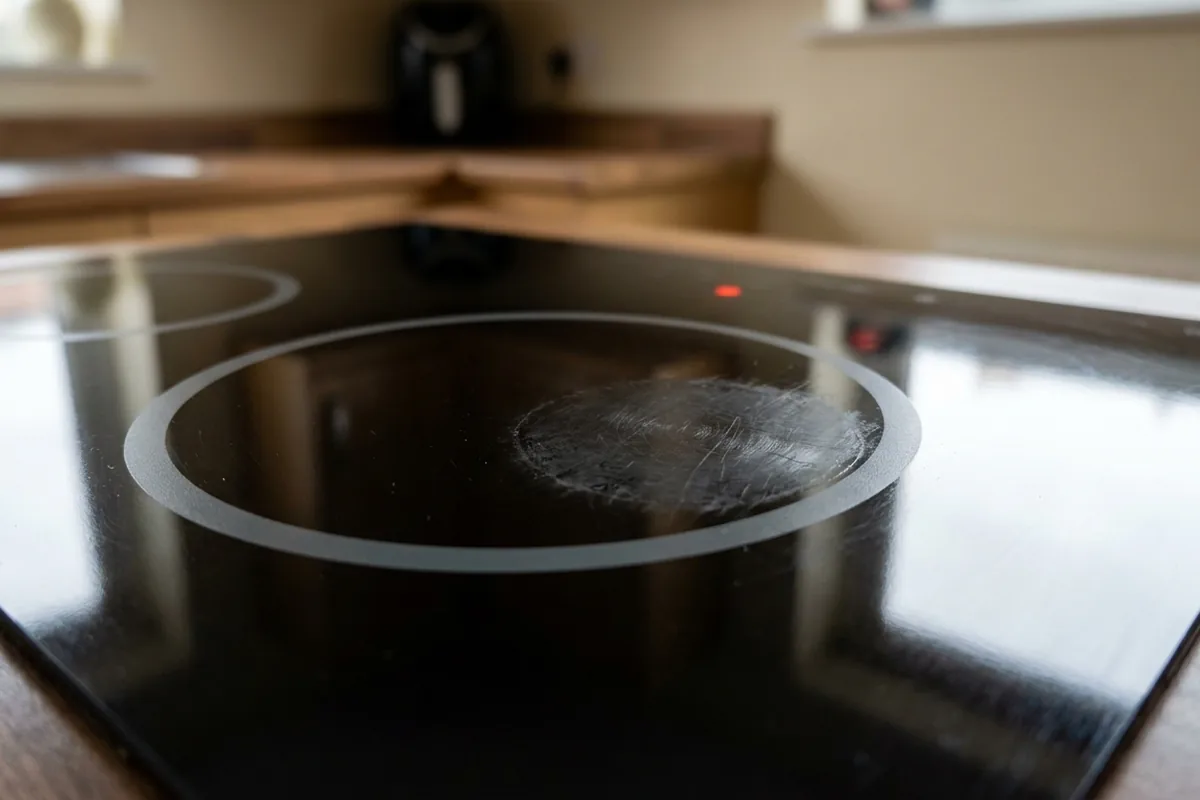
On glass you’ll often notice fine, curved scratches where you changed direction, or a hazy patch that catches the light when the sun hits the window.
On tiles you may see:
- dull tracks across glossy glaze
- fine lines that stay put even after cleaning
- a slightly “rainbow” sheen when viewed at an angle
Once those are in the glass or glaze, a normal household polish will not remove them.
How to scrape safely without leaving marks
You can still use a scraper on glass and tiles, but you need the right type and technique. Think of it as shaving, not chiselling.
Safer choices and checks before you start:
- Use a dedicated glass scraper with replaceable razor blades (often sold for hobs or glass).
- Make sure the blade edge is new, clean and not rusty or nicked.
- Soak the area first with warm water and a drop of washing-up liquid to soften splatters and lift dust.
- Wipe once with a microfibre cloth so you’re not dragging grit under the blade.
When you scrape:
- Hold the scraper at a very low angle (almost flat) to the surface.
- Push in one direction only, with light, even pressure.
- Work in small sections, wiping the blade frequently on a damp cloth.
- Stop and re-wet if you feel the blade start to drag or chatter.
If you hit something hard that doesn’t budge easily, don’t force it. Try re-soaking, or switch to a plastic scraper or a non-scratch pad that’s labelled safe for glass or ceramic hobs.
If you’ve already scratched the surface
If the marks are light and only visible in certain light, a glass polish kit or a specialist ceramic polish may improve them a bit on small patches, but it’s slow and still removes a tiny layer of material.
If you can feel the scratch with a fingernail, it is usually too deep for DIY polishing without risking distortion or a visible “dip”. On a shower screen or ordinary window you may choose to live with it. On toughened glass balustrades, oven doors or large patio doors, do not grind away at them: if the damage is serious or in a safety-critical area, speak to a glazier before attempting any heavy polishing.
Better options than a metal scraper on tricky jobs
Some jobs around a UK home tempt you to reach straight for a scraper: dried paint on a window board, silicone on bathroom tiles, burnt-on spills on a ceramic hob. In many cases a gentler method is slower but far safer.
For common situations:
- Dried paint on window glass: Soften with warm water and a little washing-up liquid, then try a plastic scraper or your thumbnail first. Only then move to a proper glass scraper, used wet and flat.
- Silicone on tiles: Trim the bulk away carefully with a sharp craft knife held almost flat, then roll the residue off with your thumb or a plastic scraper. Avoid digging into grout lines.
- Ceramic or induction hob: Use the manufacturer-approved scraper and cleaner. Avoid bargain scrapers or random blades, as hobs mark very easily.
- Cement or grout haze on tiles: Use a proprietary grout haze remover suitable for your tile type, plenty of water and a non-scratch pad. Avoid metal on natural stone and matt tiles, and never use vinegar on natural stone.
If you’re working in a rented flat or on expensive fittings, it’s usually worth spending a few pounds on a proper glass hob scraper from somewhere like B&Q or Screwfix, rather than gambling with a no-name wall scraper.
If you catch yourself thinking “I’ll just give it a quick scrape”, pause and check the blade, the angle and what’s underneath. A minute spent soaking and wiping first is far cheaper than living with scratched shower glass or dulled tiles for years.