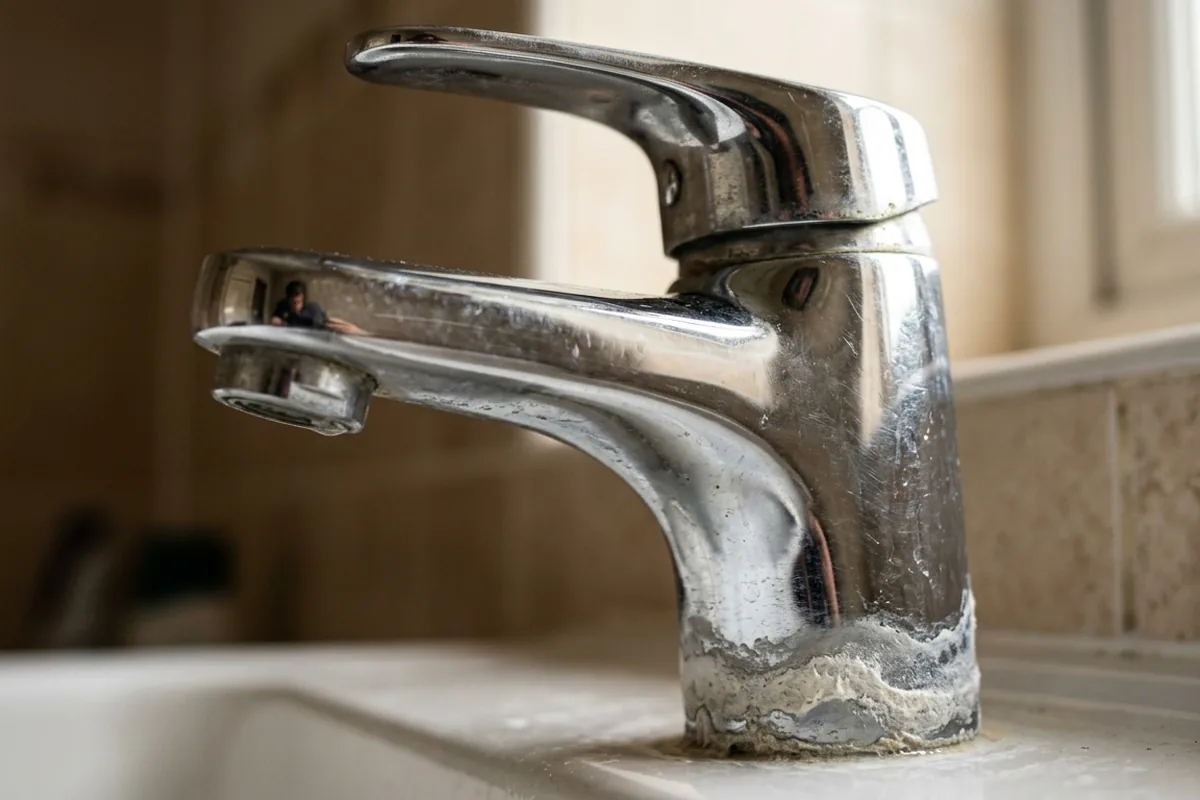
The white crust around taps in a hard-water area is annoying, so it is tempting to soak the whole fitting in strong descaler and walk away. The catch is that leaving descaler on too long can strip the finish, pit the metal and damage rubber seals. Most household descalers are acidic: they dissolve limescale, but if they are left sitting, they start reacting with the tap itself. The safe window is usually a few minutes, not hours, so always follow the label and rinse thoroughly.
What actually happens when descaler sits on a tap
Most kitchen and bathroom taps in UK homes are not solid chrome or stainless steel. They are usually brass underneath, with a thin decorative coating on top. That coating might be:
- chrome plating
- brushed nickel
- coloured or “black” finishes
- lacquer over a metal surface
Descalers work because they are acidic (often citric, formic or similar acids). Acid does not stop working once the limescale has gone. If it is left in contact, it starts to:
- attack the thin plated layer, causing dull patches or “rainbow” staining
- expose the brass below, which can show as yellowish or pinkish areas
- roughen the surface so limescale grabs on faster next time
- creep into joints and damage rubber O-rings or silicone seals
On older taps, or cheaper fittings from DIY packs, the finish can be especially thin. Leaving a soaked kitchen roll or descaler-soaked cloth wrapped round the spout overnight is a common way to wake up to patchy, permanently etched chrome.
Even “gentle” homemade descalers like vinegar or citric acid can do this if they are left sitting for too long, especially on:
- black or coloured taps
- brushed or satin finishes
- taps with any existing scratches or chips
So the risk is not that descaler is “bad”, but that time and concentration matter.
How to descale taps safely without ruining the finish
You can still get rid of stubborn limescale on a bathroom basin tap or shower mixer, but you need to control contact time and where the liquid goes.
Start with the mildest option that will work:
1. Mechanical first
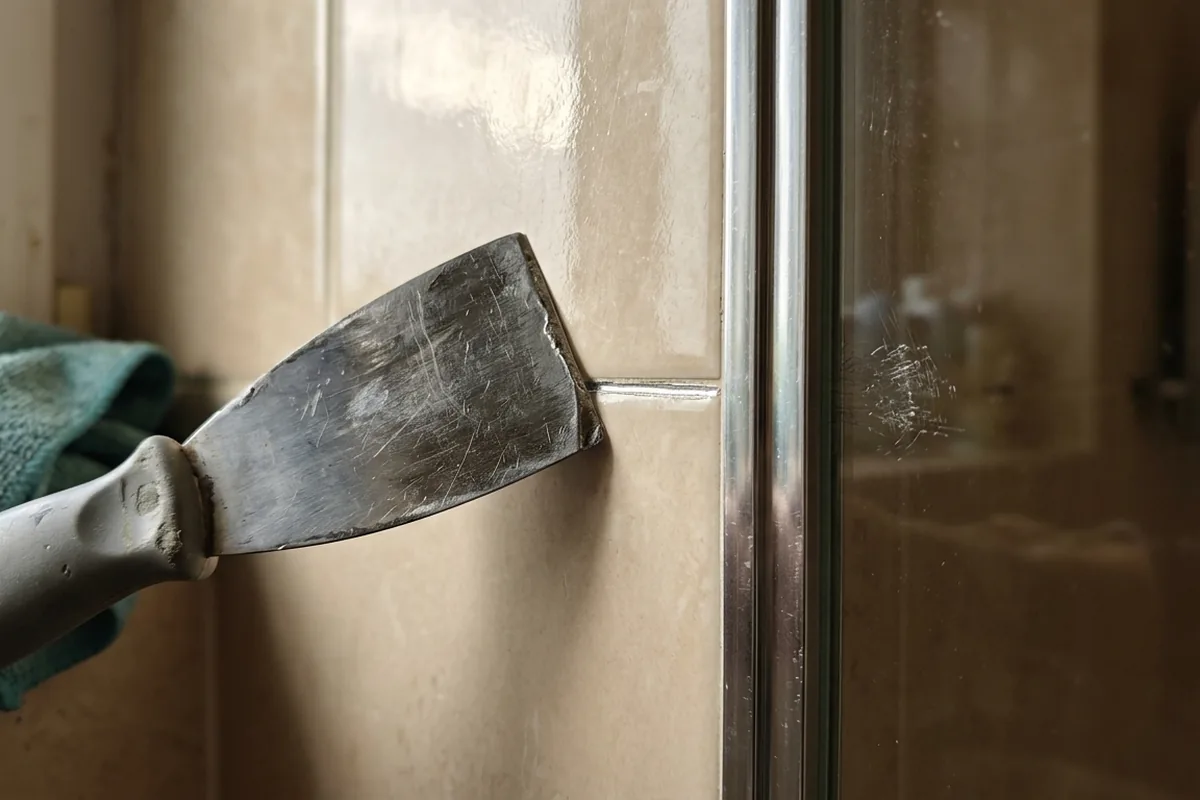
Use a microfibre cloth and a plastic scraper (an old loyalty card works) to remove loose limescale. This means less chemical is needed.
2. Dilute and limit the time
- Mix a small amount of descaler with water as per the label.
- Apply with a cloth or sponge directly onto the limescale, not all over the tap.
- Leave for the short end of the recommended time (often 2–5 minutes).
- Never assume “longer is better”: it usually just means more risk to the finish.
3. Rinse thoroughly
Rinse with plenty of clean water, then wipe dry with a microfibre cloth. Any residue left around the base of the tap can keep nibbling away at the finish.
4. Protect seals and delicate surfaces
- Keep descaler off rubber seals, flexible hoses and silicone sealant where possible.
- Avoid letting it run onto natural stone worktops (like marble or limestone) as acid can etch them badly.
- If you are in a rented flat, be especially careful: damaged finishes are very obvious on check-out.
If you prefer household products, diluted white vinegar or a weak citric acid solution can remove light limescale, but the same rules apply: short contact, controlled area, thorough rinse. Do not use any acid-based cleaner on natural stone, and never mix vinegar with bleach.
Signs your tap has already been damaged and what to do next
If a descaler, vinegar wrap or strong limescale remover has already sat on your tap for too long, you may notice changes quite quickly.
Common signs include:
- Dull, grey or cloudy patches where the chrome used to shine
- Yellowish or pinkish spots where the brass underneath is showing
- A slightly rough or pitted feel when you run a finger over the spout
- Black taps looking patchy or streaked, especially around the aerator
- Persistent drips or leaks after a heavy descale, if seals have been affected
Once the finish is chemically eaten away, you cannot polish true chrome plating back on. Mild metal polish may improve the look of light hazing on plain chrome, but deep etching, exposed brass or damaged coloured coatings usually mean living with the mark or replacing the tap.
If the only problem is that limescale keeps returning quickly, focus on:
- wiping taps dry after showers or washing up
- using a gentler descale more often, for shorter periods
- checking the bathroom extractor fan is working so steam does not sit on fittings
If you notice a new leak around the handle or at the base after a strong descale, the acid may have hardened or shrunk a rubber O-ring. You can sometimes replace these on simple kitchen mixer taps, but if you are unsure how to isolate the water or dismantle the tap safely, it is better to get a plumber to sort it rather than risk a bigger leak.
For new or recently fitted taps, keep the original paperwork or box if you can. Many modern taps from places like Wickes or B&Q come with care instructions that specifically warn against strong or prolonged use of acidic descalers. Ignoring that can void any finish warranty.
A good rule of thumb: if you are about to wrap a tap in kitchen roll soaked in descaler and leave it “for a few hours”, stop and rethink. Multiple short, controlled treatments are far safer than one long soak that ruins the finish in a single night.