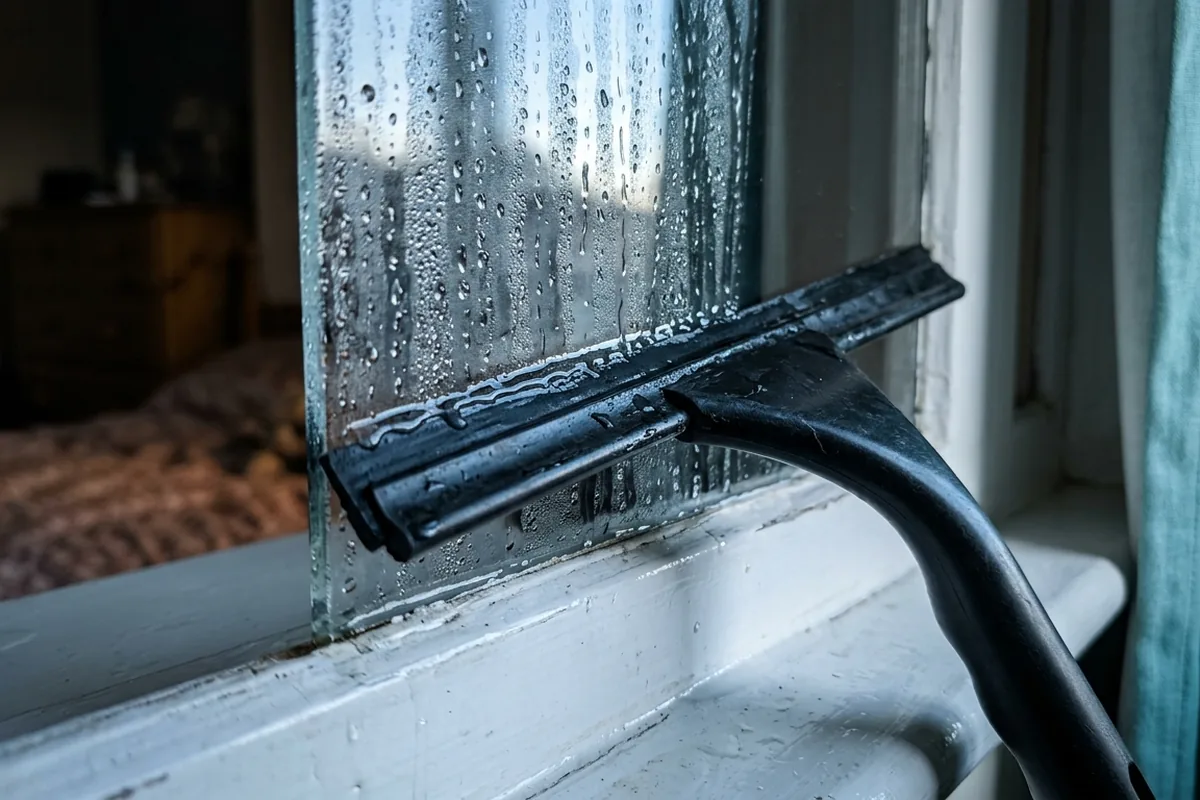
Cold bedroom windows dripping with water, damp window boards and that faint musty smell on the curtains are all signs of one thing: overnight condensation. Keeping a simple window squeegee within arm’s reach can make a big difference on cold mornings because it lets you remove that moisture quickly, before it soaks into paint, plaster, silicone sealant and timber. It will not fix the root cause of condensation by itself, but used every morning it can cut down on mould, peeling paint and swollen sills while you work on better ventilation and heating.
Why a squeegee helps with cold-morning condensation
On a cold night, warm moist air indoors hits the cold glass and turns into water droplets. By morning you may have running water on the panes, puddles on the window board and damp patches along the bottom of the frame.
A squeegee helps because it:
- Physically removes the water from the glass and frame instead of leaving it to evaporate back into the room or soak into surfaces.
- Lets you clear a whole window in seconds, which is far quicker than going through stacks of kitchen roll.
- Encourages a daily routine: if the squeegee is hanging by the window, you are more likely to deal with the moisture straight away.
The trick is simple: pull the squeegee down the glass, wipe the blade on a microfibre cloth or an old towel, and repeat until the pane is almost dry. Then quickly run it along the bottom of the glass and frame to pull off any remaining beads of water.
You are not “curing damp” by doing this. What you are doing is stopping that overnight moisture from sitting there for hours, which is when mould and staining really get going.
What this trick can and cannot do
Keeping a squeegee near the window is genuinely useful, but it has limits. It helps most in typical UK situations like a small bedroom in a terraced house, where you wake up to wet double-glazed units each cold morning.
A squeegee can help to:
- Reduce black mould around window seals and on silicone.
- Protect painted window boards and skirting from repeated wetting.
- Cut down musty odours in rooms where you dry laundry.
- Show you how bad the condensation really is, because you can see how much water you’re removing.
However, a squeegee cannot:
- Stop condensation from forming in the first place.
- Fix poor ventilation in a small bathroom or a sealed-up bedroom.
- Deal with deeper problems like penetrating damp, leaking gutters or failed seals in the wall.
If you are having to wring out a cloth after every window, every day, it is a sign that you need to look at airflow, heating and moisture sources as well: extractor fans, trickle vents, drying clothes indoors, and how warm the room is overnight.
How to get the most from a window squeegee on cold mornings
To make this more than a one-off effort, treat it as a quick morning habit that takes a couple of minutes before you leave the room.
A simple routine that actually works
1. Open up the room slightly
As soon as you get up, crack the window or open the trickle vents if you have them. In a rented flat, even a small opening helps let moist air out while you work.
2. Squeegee the glass from top to bottom
Start at the top of each pane, pull straight down, then wipe the blade on a cloth or towel. Work across until the glass is clear of visible droplets.
3. Catch the bottom edge and frame
Run the squeegee lightly along the bottom of the glass and the inner frame where water collects. Then use your cloth to dry the window board and any obvious drips.
4. Let the room air for 10–15 minutes
Keep the door closed and the window slightly open for a short while so the remaining moisture can escape outside, not into the rest of the house.
Small checks to make alongside the squeegee
While you are there, it is worth a couple of quick checks that can make the squeegee less necessary over time:
- Is the radiator under the window clear? Heavy curtains or furniture in front of it can keep the glass colder and wetter.
- Are the trickle vents open and clean? Dust can block them; a quick wipe can help airflow.
- Are you drying washing in that room? If so, move the airer to a better-ventilated space or use an extractor/dehumidifier if you can.
If you notice persistent damp patches below the window, crumbling plaster or a cold, clammy wall, that is beyond what a squeegee can solve. In those cases you may be dealing with a wider damp issue and it is worth speaking to a surveyor or your landlord before it worsens.
A squeegee by the window is not a magic fix, but on cold British mornings it is a cheap, low-effort way to stop overnight condensation turning into mould, flaking paint and musty smells. If you still wake up to streaming windows after improving airflow and using the squeegee daily, the moisture source is still there and needs tackling, not just wiping away.