The giveaway is often subtle: a damp patch on a bedroom wall, water dripping from a window board or a mini waterfall over the front door in a downpour. Before the next band of British rain arrives, the single most useful thing you can do is check that your gutters can actually carry water away. You do not need to climb on the roof or strip anything apart: from ground level, you are mainly looking for blockages and sagging sections that will overflow when the heavens open.
If, standing in your garden or on the pavement, you can see plants growing in the gutter, a section that is visibly lower than the rest, or staining down the brickwork below a joint, that is your cue. If it looks clear and straight all the way along, heavy rain is far less likely to end up on your walls, in your loft or dripping onto your patio doors.
The one check to make before the rain starts
The simple pre‑rain check is this: walk slowly around your home and look along every run of gutter from the side, not just from underneath.
You are checking three things from the ground:
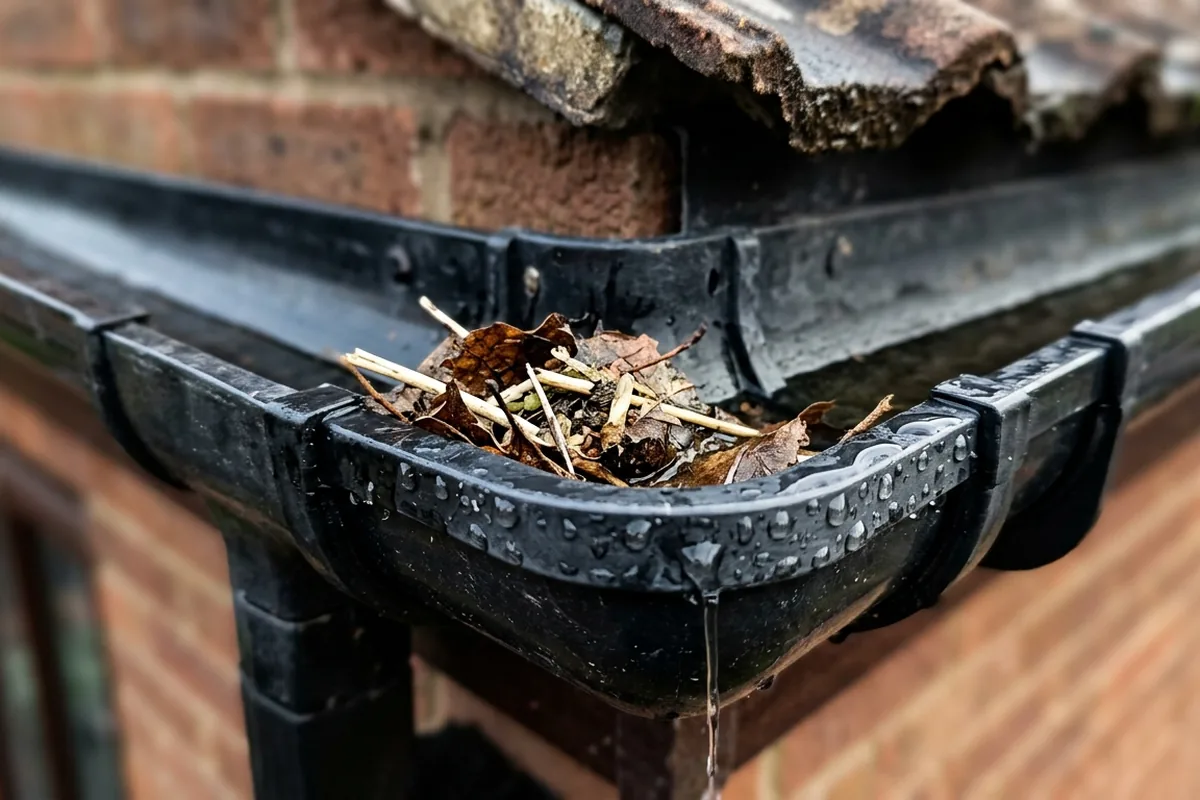
- Does the gutter look clear, or can you see leaves, moss, twigs or grass sitting in it?
- Is the gutter line straight, or is any section bowed, twisted or pulled away from its brackets?
- Is there any dirty streaking or green algae directly below a joint, bracket or corner?
If you can see obvious debris or a section that dips, that part is likely to overflow once the gutter fills. If you see dirty trails down the wall under a joint, it often means it has already been overflowing or dripping in previous showers.
This simple look‑along check is usually enough to decide whether you can leave things for now, get someone to clean the gutters or, if you’re confident and it is safe, use a ladder or a long‑reach gutter cleaning tool.
What overflowing gutters actually do to your home
From the ground, a bit of water spilling over the edge can look harmless. The problem is where that water ends up.
Overflowing gutters often lead to:
- Damp patches on outside walls, especially above and below windows.
- Mouldy skirting boards or musty smells on the inside of external walls.
- Water pooling on paths, steps or a patio, making them slimy with algae.
- Water constantly splashing against timber fascias, soffits or the top of a shed roof.
If you notice a recurring damp corner in a bedroom, or mould on the wall near the ceiling in a terraced house, it is worth going outside when it is raining and checking whether water is spilling over the gutter at that point. You do not need to stay out for long: a quick look from the doorway or under an umbrella will usually show if water is pouring over the edge or running neatly to the downpipe.
If the gutter is overflowing in several places, or water seems to be running behind the gutter onto the brickwork, that is beyond a quick fix from ground level and is a good moment to call a roofer or gutter specialist rather than attempting risky ladder work.
Safe next steps if your check finds a problem
If your quick look‑along check shows clear, straight gutters with no streaking on the walls, you can usually leave things alone and simply repeat the check once or twice a year, especially after autumn leaves or a spell of stormy weather.
If you do spot trouble:
- Obvious blockage but safe access: On a single‑storey section like a garage or ground‑floor extension, some people are comfortable using a stable ladder on firm, level ground with someone footing it. If you are not completely confident, do not do it. A long‑reach gutter cleaning tool that connects to a hose or vacuum can let you clear light moss and leaves from the ground on bungalows and lower roofs.
- Sagging or loose sections: A bowed run or a bracket that has come away needs refixing, not just clearing. That usually means working at height and is best left to a professional, especially above a first floor.
- Downpipe issues: If water is pouring over near a downpipe, the pipe itself may be blocked. Sometimes gently tapping the pipe from the ground will tell you if it is full of wet debris, but unblocking usually needs proper access.
Whatever you do, avoid climbing onto the roof or leaning out of upstairs windows to reach gutters. A small damp patch is irritating; a fall is far worse. If access is awkward, get quotes from a local roofer or gutter cleaning service and use your quick check to show them exactly where the problem is.
Once the rain has passed, a final walk round to see if there are any new dirty streaks or damp patches on the wall will tell you whether your gutters are now coping or whether there is still a section that needs attention.