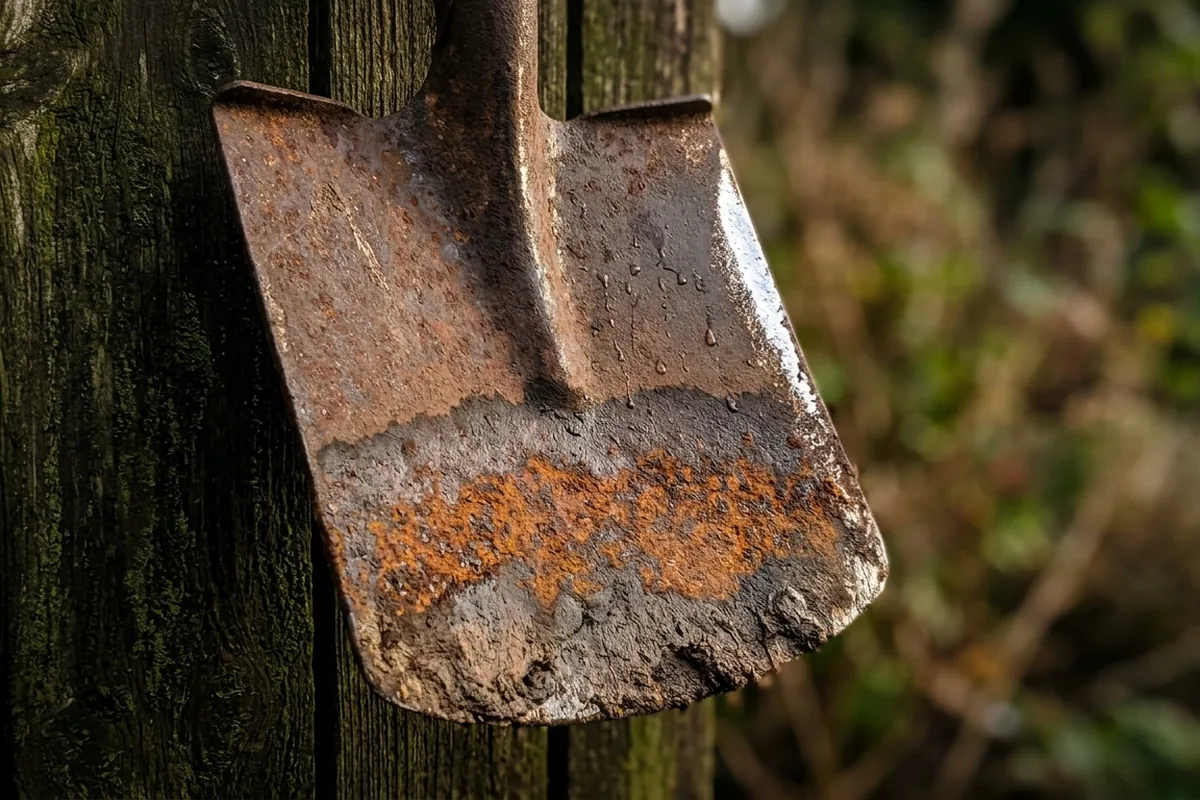
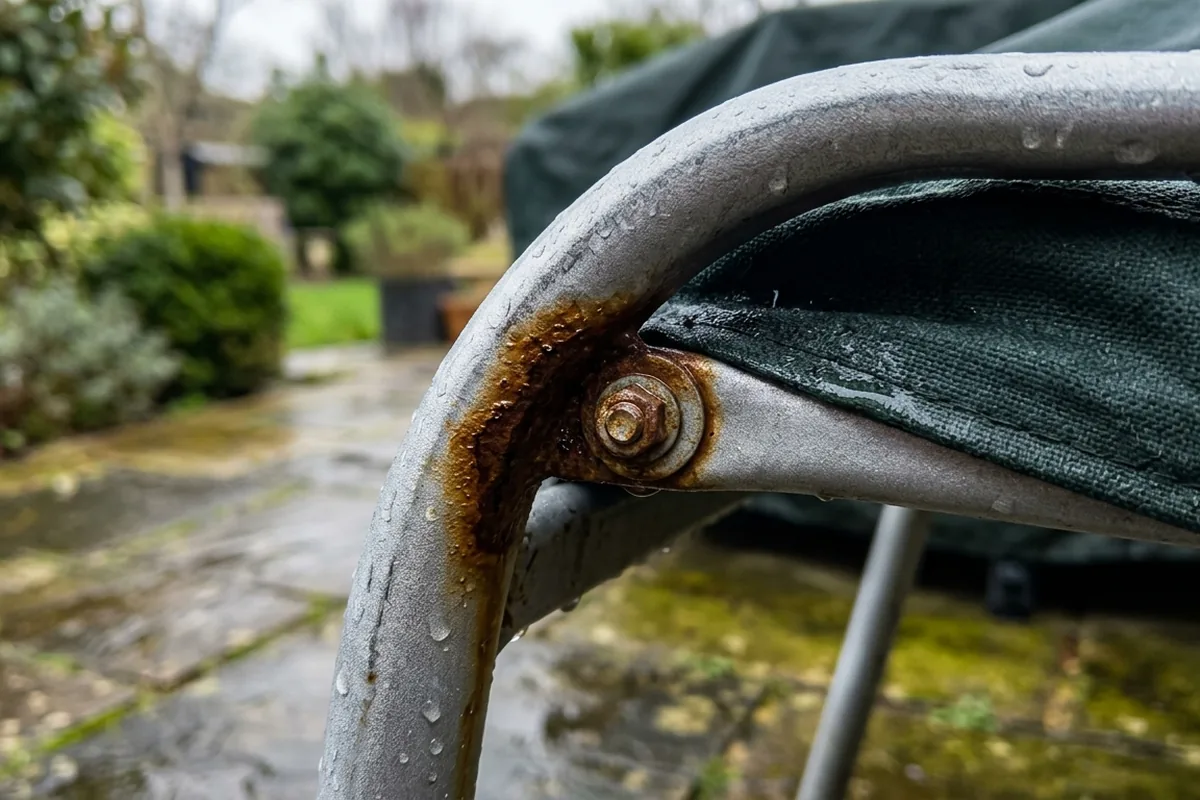
You pull the cover off your garden table in April and find brown spots, flaking paint and rust rings on the patio slabs, even though the set has been “protected” all winter. It feels like the cover has caused more damage than the rain would have.
The short answer is: rust needs water and oxygen, not direct rain. Most covers trap moisture and condensation around the metal, especially in British weather, so the furniture quietly sits in a cold, damp tent for months. If the metal isn’t well coated or has tiny chips, rust will start even under an expensive cover.
Why rust still forms under a patio cover
Patio covers are good at keeping off leaves, bird mess and direct downpours. They are much worse at dealing with moisture in the air and condensation.
When the temperature swings between mild days and cold nights, the metal and the air under the cover cool down. Water vapour turns into droplets on the furniture and on the inside of the cover, just like condensation on bedroom windows. With most covers, that moisture has nowhere to go.
Common reasons your “protected” furniture still rusts:
- Trapped condensation: Waterproof covers often have poor ventilation, so any damp air from the garden, wet slabs or even wet cushions stays inside.
- Wicking from the ground: If legs sit on damp paving, water can creep up and sit against bare metal at the feet.
- Tiny coating damage: A small chip in the paint or powder coating lets water reach the steel underneath. Under a damp cover, that patch never properly dries.
- Salt and grime: In coastal areas or near busy roads, salt and pollutants on the metal speed up corrosion, especially when they stay damp.
- Wet furniture before covering: Putting the cover on straight after rain or a hose-down locks in a film of water.
So the issue is rarely “bad furniture”. It is usually constant dampness and poor airflow under the cover.
Simple checks to see what’s really causing your rust
Before blaming the cover completely, it helps to see where the rust starts and how damp the set actually gets under there.
Do this on a dry day when you can leave the cover off for a bit.
1. Check where the worst rust is
- Mostly on feet and lower legs: often from standing in damp or on algae-covered slabs.
- Along edges and screw holes: likely coating damage or poor protection at joints.
- On flat surfaces and arms: usually condensation and water pooling under the cover.
2. Look at the inside of the cover
If you see mould spots, water droplets or a musty smell, the air under there has been staying wet for long periods. The same moisture has been sitting on your furniture.
3. Feel the paving under the furniture
Cold and slightly damp, even after a dry spell, means the feet have been in a humid micro-climate. Rust rings on the slabs are a giveaway.
4. Check the coating closely
Any chips, scratches or bubbles in paint or powder coating are weak points. Rust often starts there first, then creeps underneath.
If the cover is clammy, the paving is often damp and rust is worst at joints and feet, your problem is trapped moisture and poor ventilation, not just rain.
How to reduce rust while still using a cover
You don’t have to ditch the cover, but you do need to let the furniture breathe and keep water off bare metal as much as you can.
Improve airflow under the cover
Good covers usually have vents. If yours doesn’t, or they’re tiny:
- Leave the cover slightly raised at the bottom using bricks or plastic pots at a couple of corners, so air can move through.
- Avoid cinching straps so tightly that the cover is shrink-wrapped to the furniture.
- On dry winter days, pull the cover off for an hour or two to let everything dry out.
Keep water away from bare metal
- Touch up chips and scratches with a suitable outdoor metal paint before winter. Even a small dab helps.
- For steel sets, a thin wipe of car wax or a light oil on hidden areas and fixings can slow rust, but avoid making seating surfaces slippery.
- If your feet are rusting, consider plastic or rubber caps, or stand them on small plastic spacers rather than directly on damp slabs.
Use the cover at the right time
- Never cover when wet. Let rainwater dry or wipe off with a microfibre cloth before putting the cover back on.
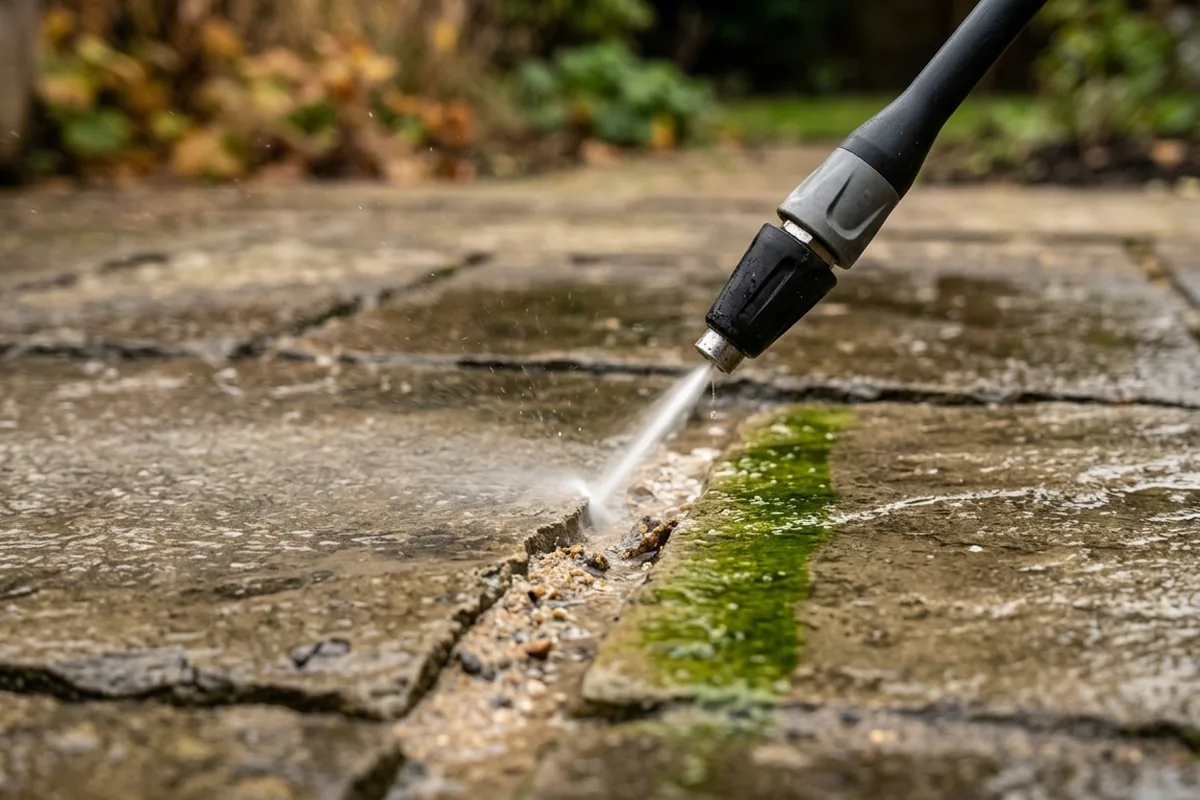
- Avoid covering straight after you’ve washed the patio with a pressure washer or hose, when the paving is still steaming slightly.
When the rust is already there
Light surface rust on painted or powder-coated furniture can often be slowed down:
- Gently sand back loose rust with fine sandpaper.
- Wipe off dust, let it dry fully.
- Apply a rust-inhibiting primer to bare metal if the instructions recommend it.
- Touch up with outdoor metal paint in thin coats.
If the rust is deep, flaking heavily or affecting structural parts (like thin tubular legs that feel soft), that is usually beyond a quick home fix. In that case, treat sharp flakes so they don’t cut anyone, then look at replacing the worst pieces.
On the next dry spell, look at how damp the furniture feels under the cover after a night outside. If it still feels clammy by mid-morning, your main job is to improve ventilation and stop covering it while wet, not to keep buying thicker covers.