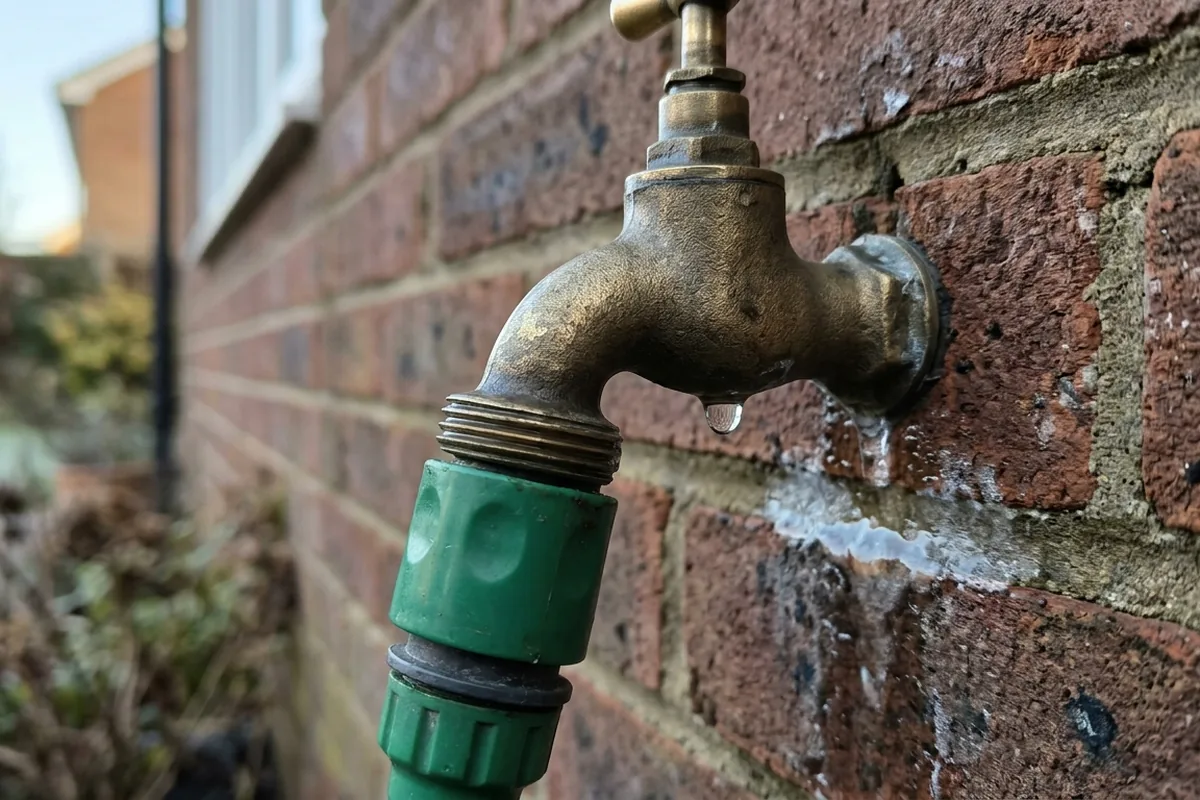
The easy thing to miss is that an outdoor tap can look perfectly fine on a chilly autumn evening, then leave you with a split pipe and a soaked under-sink cupboard after the first hard frost. The mistake is simple: leaving the outside tap pressurised and full of water when temperatures drop. Water in the exposed pipework freezes, expands and can crack the pipe or fittings, even inside the wall.
The quick fix is just as simple: before cold nights arrive, turn off the indoor isolation valve feeding the outside tap and drain the line by opening the outdoor tap fully. If you do only one thing, do that.
The one mistake: leaving the tap “on” inside and full of water
Outdoor taps in UK houses are often fed by a short run of pipe from under the kitchen sink or utility room. That bit of pipe, plus the tap body itself, is usually the section most at risk in freezing weather.
The mistake is assuming that shutting the outside tap handle is enough. It is not. The water is still sitting in the pipe between the indoor supply and the tap, so when it freezes, it has nowhere to expand.
The safe routine before the first frost is:
1. Find the isolation valve on the pipe that feeds the outside tap, usually a small lever or screwdriver slot under the kitchen sink.
2. Turn that valve off so no more water can reach the tap.
3. Go outside and open the garden tap fully so the trapped water drains out.
4. Leave it slightly open over winter, or at least during cold spells, so any small remaining amount can expand without pressure.
If you only close the outside tap and walk away, the pipe is still full, and that is what leads to hidden cracks that only show up as leaks once everything thaws.
How to winter‑proof your outdoor tap in a few minutes
Most homes can do a basic winter shut-down in under ten minutes, with no tools beyond a flat-head screwdriver if needed.
First, make sure you can turn the water off safely at the main stopcock if anything goes wrong. In many UK homes this is under the kitchen sink or near the front door. You probably will not need it, but it is good to know where it is.
Then focus on the outdoor tap line:
- Isolation valve off
Look for a small brass valve on the pipe going to the outside wall. A quarter-turn lever should sit across the pipe when off. A slotted type usually turns a quarter or half turn with a screwdriver.
- Drain the line
With the isolation valve off, open the outdoor tap. Water should run for a few seconds then stop. A brief dribble is fine. If nothing comes out at all and you know the tap worked recently, the head may be blocked with limescale or debris, which is worth sorting in milder weather.
- Lag exposed pipework
If you have any copper pipe visible on the outside wall, slide on some foam pipe insulation and tape the joints. It is cheap from places like Screwfix or B&Q and can make a big difference on a north-facing wall.
- Fit a tap cover if needed
A simple insulated tap jacket helps, especially in very exposed spots. It does not replace draining the pipe, but it gives a bit of extra protection.
If you live in a rented flat or house and are unsure which valve feeds the tap, it is worth asking the landlord or agent now, not after a pipe bursts and you are mopping up under the units.
What happens if you ignore it – and warning signs to watch for
When an outdoor tap line freezes, the damage is often inside the wall or under the sink, where you cannot see it. The tap may still work in spring, but a hairline split in the pipe or fitting can slowly leak into the back of cupboards or down into the floor.
Common signs after a cold snap include:
- Damp or swollen kitchen units at the back of the under-sink cupboard
- A musty smell under the sink or on the wall behind the washing machine
- Flaking paint or bubbling plaster on the inside wall behind where the tap is outside
- The outdoor tap dripping constantly even when turned off, suggesting internal damage
If you spot any of these after a freeze, do not keep testing the tap. Turn off the indoor isolation valve for the tap, or the main stopcock if needed, and call a plumber. Water damage to units, laminate flooring and skirting boards can end up costing far more than the pipe repair.
One more quiet risk is hosepipes left connected. A hose full of water acts like an ice plug on the end of the tap, stopping water draining out even if you do shut the indoor valve. Before winter, always:
- Disconnect hosepipes and spray guns
- Let them drain and store them in a shed or garage
- Leave the bare tap to drain freely
A drained, isolated outdoor tap with no hose attached is usually trouble-free, even in a sharp frost. If you check it once now, you are far less likely to be dealing with wet cupboards and emergency towels on the kitchen floor in January.