That sharp little squeak every time you open the bedroom or cupboard door is usually coming from dry metal rubbing on metal at the hinge. The instinct is to grab WD‑40 or a thick oil, but that can leave the hinge greasy, attract dust and mark the paintwork or carpet. To quieten a squeaky door without leaving it oily, you’re looking for either a dry lubricant (like graphite or PTFE spray) or a simple clean and tighten of the hinges.
Most squeaks in a typical UK internal door are caused by dirt, slight rust or loose screws, not a lack of thick oil. So the quickest non-greasy fix is: clean around the hinges, tighten the screws, then use a dry lubricant sparingly on the moving pin area. If the squeak persists after that, the hinge may be slightly twisted or worn and might need refitting or replacing.
The quickest non-greasy way to silence the hinge
You do not always need to take the door off. Start with the easiest checks that avoid mess on carpets and laminate flooring.
1. Tighten the hinge screws
Often the squeak is a tiny movement between the hinge and the frame.
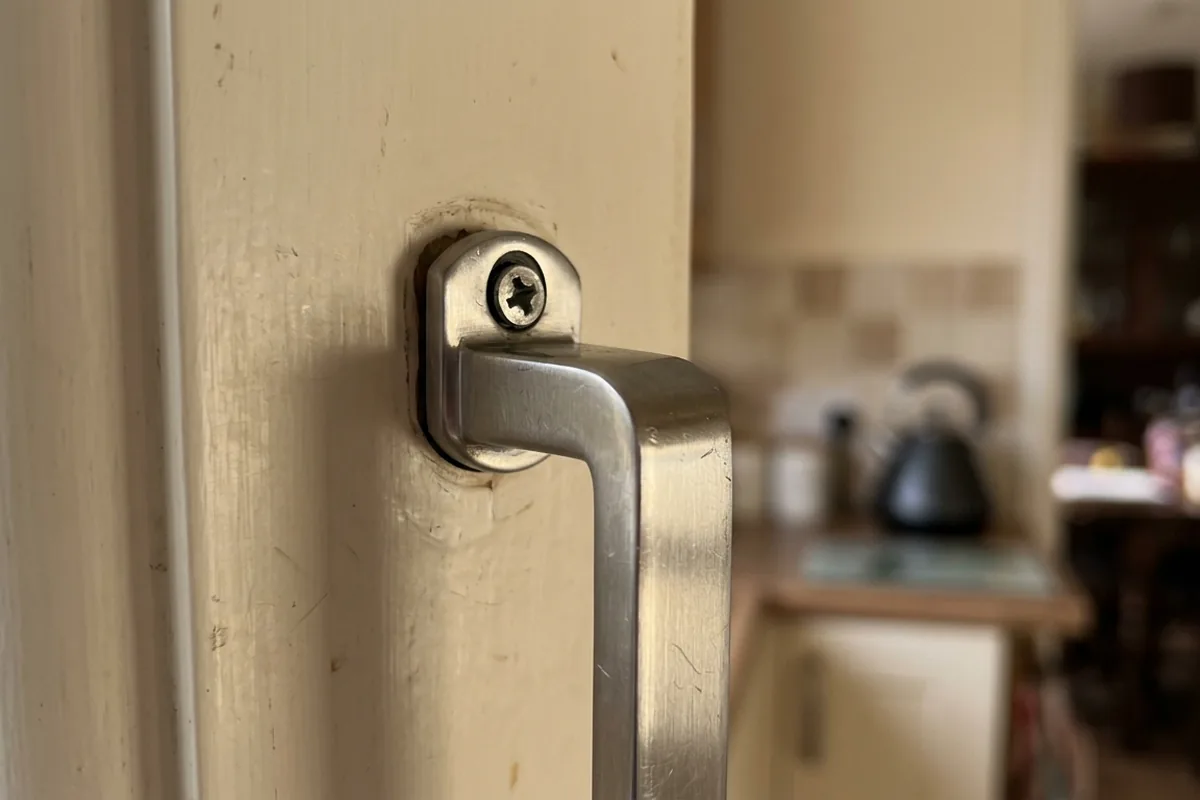
- Use a suitable screwdriver and gently tighten each screw on the hinge leaves (both on the door and the frame).
- Do not overtighten on older doors, as you can strip the screw holes in soft wood.
- Open and close the door a few times and listen. A surprising number of squeaks stop here.
2. Clean away dust and paint flakes
Painted hinges in older terraced houses and rented flats often crack and rub.
- Wipe the hinge with a slightly damp microfibre cloth to remove dust and loose paint.
- If there are obvious paint ridges on the moving parts, gently scrape them away with a plastic scraper or an old store card. Avoid gouging the metal or surrounding paintwork.
- Dry the area well.
3. Use a dry lubricant, not oil
To avoid a greasy finish, you want something that dries to a fine film or powder.
Good non-greasy options:
- Graphite powder (often sold for locks)
- PTFE (Teflon-type) dry lubricant spray
- Silicone spray that dries clear and non-tacky
How to apply safely:
- Hold a cloth or piece of kitchen roll behind the hinge to catch any overspray.
- Aim at the pin area where the hinge knuckles meet.
- Use short bursts only, then swing the door back and forth to work it in.
- Wipe away any excess immediately so the surface feels dry, not slick.
Avoid using:
- Cooking oil, butter or petroleum jelly: they go sticky, attract dust and can stain carpets and paint.
- Heavy general-purpose grease: unnecessary for an internal door and messy.
If the hinge feels dry to the touch afterwards but the squeak has gone, you have achieved the goal: quiet, without greasiness.
When cleaning and dry lube are not enough
If the noise is still there after tightening and lubricating, the hinge or door might be slightly out of line.
A few things to check:
- Does the door scrape the floor or frame? A door catching on laminate or carpet can twist the hinges slightly and cause a squeak.
- Is one hinge doing all the work? On some doors the middle hinge is loose or poorly fixed, leaving the top and bottom to carry the load and creak.
- Is the sound more of a creak from the timber? Sometimes the noise is from the frame or architrave moving, not the metal hinge itself.
If the door is scraping, easing the door slightly (planing the edge or adjusting the hinges) is more involved and may be best left to a competent DIYer or joiner, especially on heavy fire doors in flats.
If the hinge itself is worn
On older doors, especially in damp hallways or near a bathroom, hinges can rust or wear so the pin is no longer smooth.
Signs include:
- Visible rust on the knuckles
- Door dropping slightly when you lift the handle
- Squeak plus a gritty feel when moving the door
In this case, replacing the hinge is often the cleanest long-term fix rather than piling on more lubricant. For most internal doors:
- Choose like-for-like size hinges so existing screw holes line up.
- Support the door with wedges or a helper if you do remove a hinge.
- If you are unsure or the door is heavy (e.g. solid oak or fire door), it is safer to get a carpenter or handy person in.
Simple dry alternatives if you have no specialist products
If you do not have graphite or PTFE spray to hand and you want a quick, low-mess option, there are a couple of household stand-ins that are drier than oil, though they are usually more temporary.
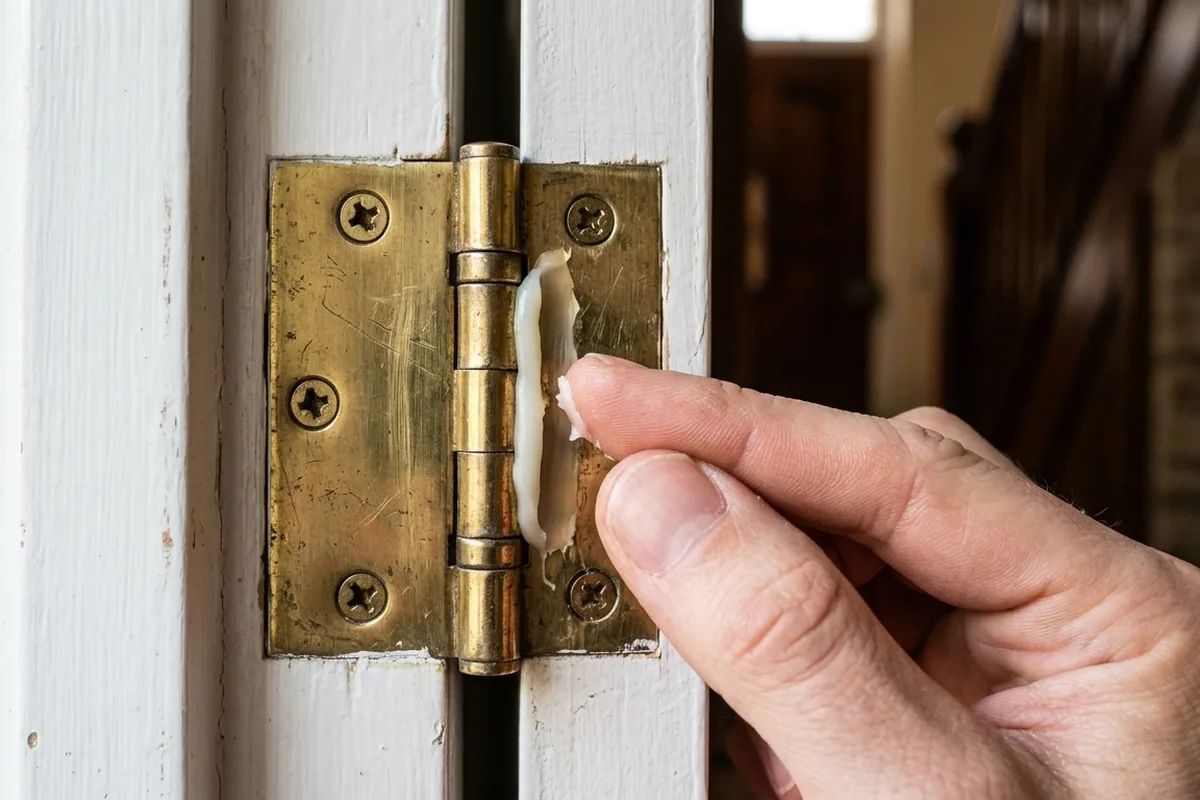
- Pencil graphite: Rub a soft pencil (HB or softer) along the exposed hinge pin or into the gaps between the knuckles, open and close the door to work it in, then wipe away any loose dust. This is basically DIY graphite powder.
- Dry soap sliver: A very small rub of a hard bar of soap on the hinge pin area can quieten a squeak. Use sparingly and wipe off any visible residue so it does not feel slimy.
These are short-term fixes but can tide you over without making the hinge obviously greasy or staining nearby paintwork.
If the squeak keeps returning within a day or two, that is usually a sign the hinge needs a proper clean and a purpose-made dry lubricant, or that the hinge is misaligned and putting itself under stress.
Once the door moves smoothly and quietly with a light, dry feel around the hinges, you can leave it alone. If noise or stiffness starts again, repeating the quick tighten-and-dry-lube routine is usually enough, as long as the door is not dragging on the floor or frame.