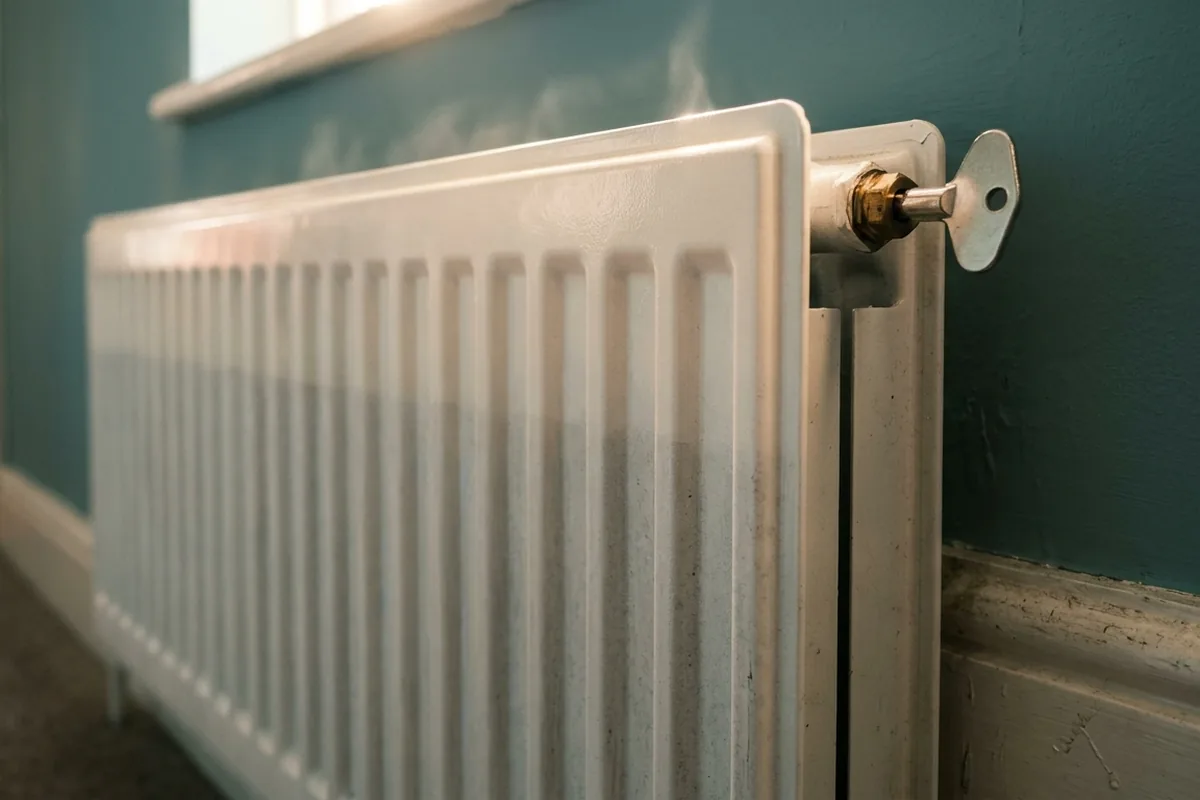
You turn the heating on and the radiator in the lounge feels hot across the top, but the bottom is stubbornly cool and the room never quite warms up. In most UK homes with gas central heating, this usually means sludge has built up in the bottom of the radiator, stopping hot water circulating properly. Bleeding won’t fix this because the problem is not trapped air at the top, it is heavy debris sitting at the bottom.
The practical answer is: top hot, bottom cold usually points to sludge, and the cure is cleaning the system, not just venting it. You can do a couple of simple checks yourself, but a full clean often needs a heating engineer.
What “hot at the top, cold at the bottom” is really telling you
When your boiler runs, hot water should flow evenly through the whole radiator. If the top is hot, the boiler and pump are probably working, and hot water is reaching the radiator. If the bottom is cold or much cooler, something is blocking or slowing the flow there.
In a typical UK system with steel radiators, that “something” is usually sludge: rust particles, limescale and other debris that settle in the lowest parts of the system. Over time, it forms a thick layer that insulates the bottom of the radiator and restricts water flow.
A quick way to think about it:
- Cold at the top, hot at the bottom: likely trapped air, bleed the radiator.
- Hot at the top, cold at the bottom: likely sludge, bleeding will not cure it.
If several radiators in the house feel like this, your whole system may be dirty. If it is just one, that radiator might be the worst affected or on a tricky part of the pipe run.
Simple checks you can safely do yourself
Before spending money, there are a few things you can feel and look for without dismantling anything.
1. Check the radiator valves are fully open
On modern radiators you usually have:
- A thermostatic radiator valve (TRV) on one side (numbered head).
- A lockshield valve on the other (often with a plastic cap or just a square spindle).
Make sure the TRV is turned up and not stuck on a low setting. You should hear or feel water flowing when the heating is on. If the TRV has been stuck off all summer, gently turning it back and forth can sometimes free it, but do not force it with tools.
If the lockshield has been heavily throttled back, the radiator may never get good flow. You can adjust these, but it is easy to unbalance the system, so if you are unsure, it is safer to leave them and focus on the sludge diagnosis.
2. Compare other radiators in the house
Feel a couple of other radiators when the heating has been on for at least 20–30 minutes:
- If most radiators are evenly hot top and bottom, and just one is cold at the bottom, that one is probably sludged up more than the rest.
- If several are hot at the top and cool at the bottom, the whole system is likely dirty and may need a proper clean.
3. Look for extra signs of sludge
These clues often go with a sludged system:
- Radiators that take ages to warm up, especially in rooms furthest from the boiler.
- Gurgling or odd noises from pipes, even after bleeding.
- Black or very dark water if you have ever bled a radiator and seen what comes out.
If you have a magnetic filter fitted near the boiler (quite common in newer installs), check its service instructions. A heating engineer cleaning it out and showing you the collected sludge can confirm the issue.
How to tackle sludge and when to call a professional
Once you are confident it is not just a closed valve, the fix is about removing the sludge so hot water can flow freely again. There are three common levels of action.
1. Chemical cleaner added to the system
A mild DIY option is to add a central heating cleaner to the system, run the heating for a week or two, then have the system drained and refilled with inhibitor.
This usually needs:
- A way to get the chemical in (filling loop, radiator, or a towel rail in the airing cupboard).
- Draining down and refilling afterwards.
You can buy cleaners and inhibitors from places like Screwfix or B&Q, but the draining and refilling stage is messy if you are not used to it. For many people, this is where a heating engineer earns their money.
2. Powerflush or mains flush by a heating engineer
For heavier sludge, engineers often recommend:
- A powerflush: a machine pushes cleaning chemicals and water through the system at speed.
- A mains flush or similar method on newer systems.
These are not DIY jobs. They involve connecting equipment to your heating circuit, isolating zones, and protecting the boiler. Done properly, they can bring old radiators back to life and help the boiler run more efficiently.
3. Removing and flushing a single radiator
If only one radiator is affected and you are confident with basic plumbing, it is possible to:
- Turn off and isolate that radiator at both valves.
- Protect the floor with dust sheets and a tray.
- Loosen the unions, remove the radiator and flush it out in the garden with a hose.
However:
- Do not attempt this if you cannot confidently isolate the radiator or if any valves look corroded or fragile.
- Old valves and joints can leak or fail when disturbed, leading to a bigger issue than a cold patch.
In many UK homes, especially flats where access to drain points is awkward, it is more sensible to pay a professional rather than risk a flood.
What about bleeding the radiator?
Bleeding is still important, but for a different symptom. If your radiator is:
- Cold at the top and warm at the bottom, bleeding is the first thing to do.
- Warm at the top and cold at the bottom, bleeding will release air but will not shift heavy sludge sitting in the bottom channel.
If you have bled a radiator several times and the top keeps getting cold again, that can also be a sign the system water is in poor condition and needs attention.
—
If the room still feels chilly and the bottom of the radiator stays cool after your simple checks, the next practical step is an honest conversation with a heating engineer about cleaning the system rather than just swapping parts. Once the sludge is dealt with and inhibitor is added, radiators in a typical terraced house or flat should heat more evenly, and you are less likely to be back at the same problem next winter.