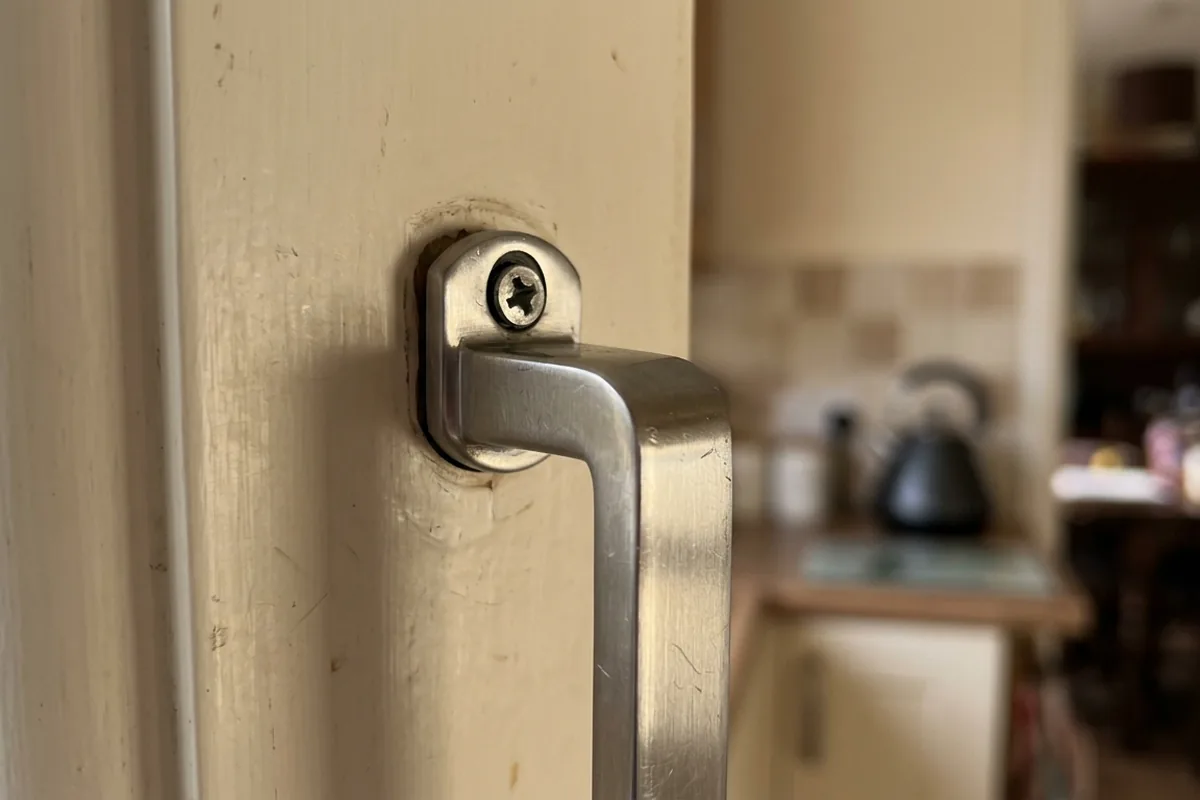
The wobble usually starts small: a kitchen cupboard knob that spins, a bedroom drawer handle that clacks every time you pull it. If you ignore it, the screw slowly chews out the hole, the handle tilts and you can end up with a split door or a drawer front that won’t sit straight. The fast answer is this: tighten the fixing while the hole is still sound, and if the hole has already worn loose, pack and refix it before cranking the screw harder.
The quickest way to secure a loose handle safely
Most loose handles on doors and drawers can be sorted in a few minutes with a screwdriver and a bit of care. The key is not to keep overtightening a damaged fixing, which is what usually causes cracks and crushed edges.
For a normal knob or bar handle held with a single machine screw from the back of the door:
1. Open the cupboard or drawer so you can reach the back.
2. Hold the handle straight with one hand.
3. With the other, gently tighten the screw using the correct screwdriver head (usually crosshead/PH2).
4. Stop as soon as it feels firm; you are aiming for snug, not “as tight as it will go”.
If it immediately loosens again, or the screw just spins, the hole or fixing needs attention rather than more force. That is the point where people often damage the door skin on a laminate kitchen unit or pull the screw right through a thin drawer front.
For door handles on an internal door, check both sides of the handle and the small screws on the backplate or rose. Tighten them evenly, a touch at a time, so the handle sits square and doesn’t pinch the latch.
If you feel any cracking, see the surface bowing, or the screw feels like it is about to strip, stop and move to a gentler repair.
When the screw won’t tighten: simple repairs that prevent damage
Once the screw has started to wear the hole, you need to give it something solid to bite into again. This is usually easy on timber doors and drawer fronts.
If the handle is fixed into wood
On a wooden cupboard door, drawer front or wardrobe:
- Remove the handle and screw.
- Check the hole: if it looks rounded out or crumbly, do not put a bigger screw straight in, as this can split the timber.
- For small worn holes, push in a wooden cocktail stick or matchstick dipped in wood glue, snap it off flush, then refit the screw once the glue has gone tacky.
- For larger holes, use a short piece of wooden dowel or even a tightly rolled sliver of timber glued in, then re-drill a pilot hole the same size as the screw core.
This “pack and refix” trick gives the screw something firm to grip, instead of relying on a ragged hole that will only get worse.
If a handle has two fixing points and one is badly worn, you can sometimes move the handle a few millimetres and drill a fresh pair of holes, filling the old ones neatly with wood filler.
If the handle is on a laminate or chipboard door
Kitchen cupboard doors and flat-pack furniture in rented flats are often chipboard with a thin laminate face. These can crumble around fixings if over-tightened.
For these:
- Take the handle off and clean out loose crumbs from the hole.
- Pack the hole with a matchstick or small sliver of wood and a dab of PVA wood glue.
- Let it set fully so the glue has hardened, then gently refit the screw, stopping as soon as it grips.
If the laminate has already blown out on the face, you can disguise it with a bit of colour-matched filler, but if the door is badly damaged or swollen (for example from damp under-sink cupboards), it may be more realistic to replace the door front.
Checks that stop repeat loosening and hidden damage
A handle that keeps working loose is usually telling you something. It might be the way the door or drawer is used, or another fault nearby.
Look for these simple signs before you keep tightening:
- Door or drawer misaligned: If a kitchen drawer scrapes one side of the cabinet, the handle gets pulled at an angle every time. Adjust the runners or the cupboard hinges so it opens straight.
- Heavy loading: Overfilled pan drawers or a bathroom cabinet crammed with bottles put extra strain on the front fixings. Lightening the load often stops handles working loose again.
- Wrong fixings: If a handle has been swapped and someone reused the original too-short screws, they may barely reach the timber. Measure the thickness of the door and buy screws 2–3 mm longer from somewhere like Screwfix or B&Q.
- Loose latch or spindle on door handles: On internal doors, a floppy handle can mean the square spindle is worn or the latch case is loose in the edge of the door. Tighten the latch faceplate screws and check the spindle isn’t rounded off before blaming the handle itself.
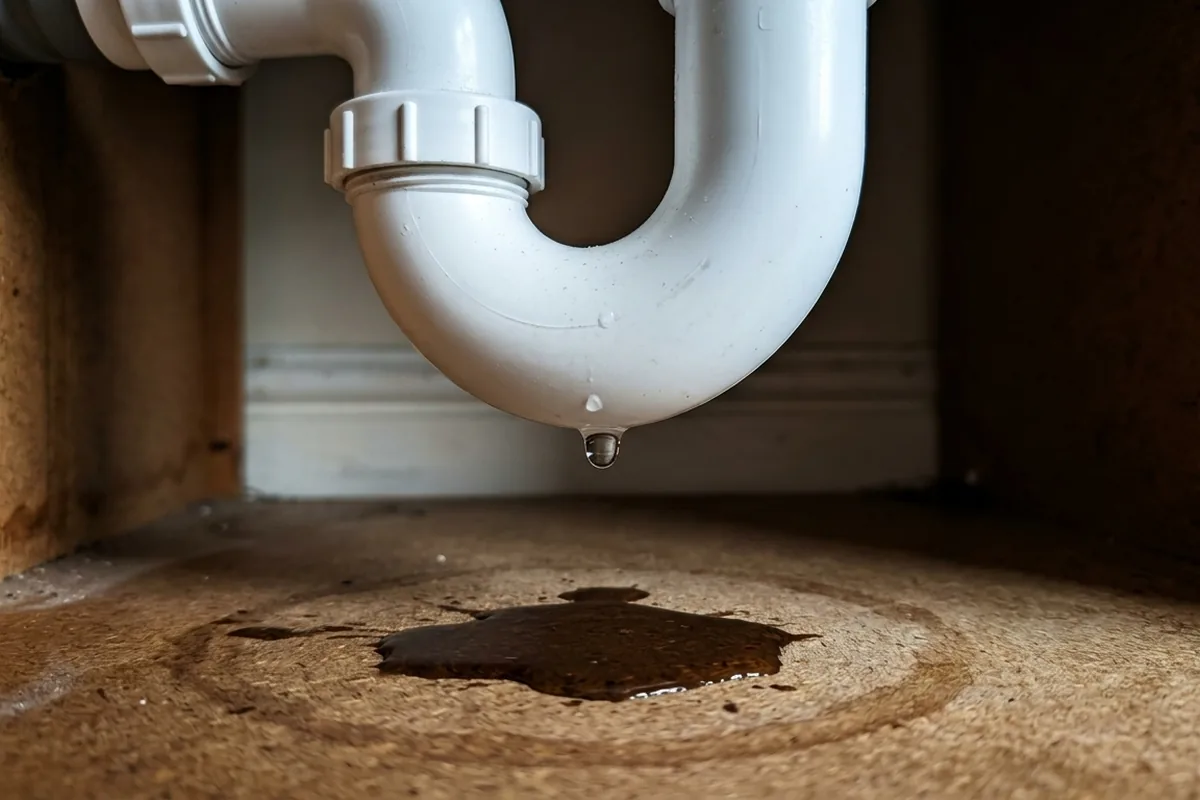
For bathroom and kitchen units, also keep an eye on damp around handles. Steam from a small bathroom or a leak in an under-sink cupboard can swell chipboard, which weakens fixings and leads to the laminate bubbling around knobs. Sorting the moisture problem and improving ventilation with an extractor fan or by leaving doors slightly ajar after showers will help the repair last.
If you find that wood around the fixing is soft, crumbly or blackened rather than just worn, you may be dealing with rot or long-term water damage. In that case, patch repairs to the handle are unlikely to hold for long and it is usually better to replace the affected panel or get a joiner’s opinion.
Once a handle feels firm, use it gently for a day or two and check again. If it stays solid and the door or drawer opens smoothly, you have caught it in time and avoided the cracked fronts and split panels that are much harder and more expensive to put right.