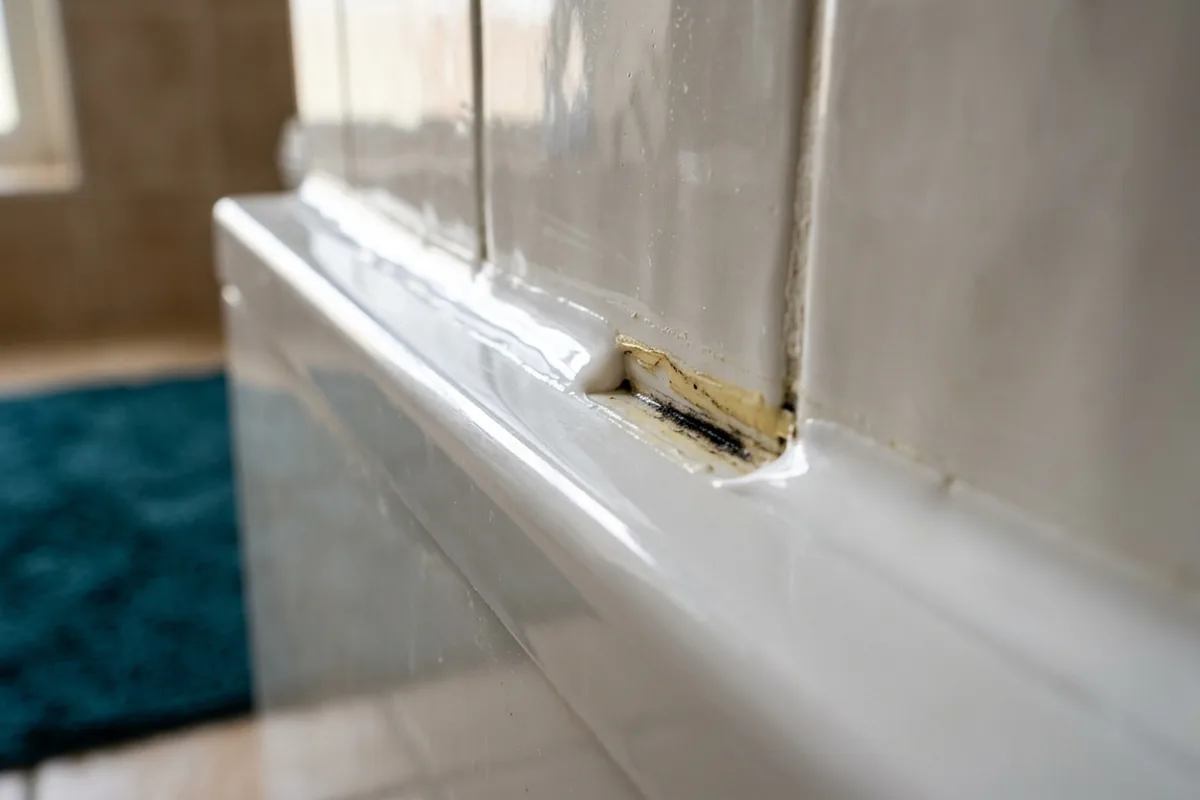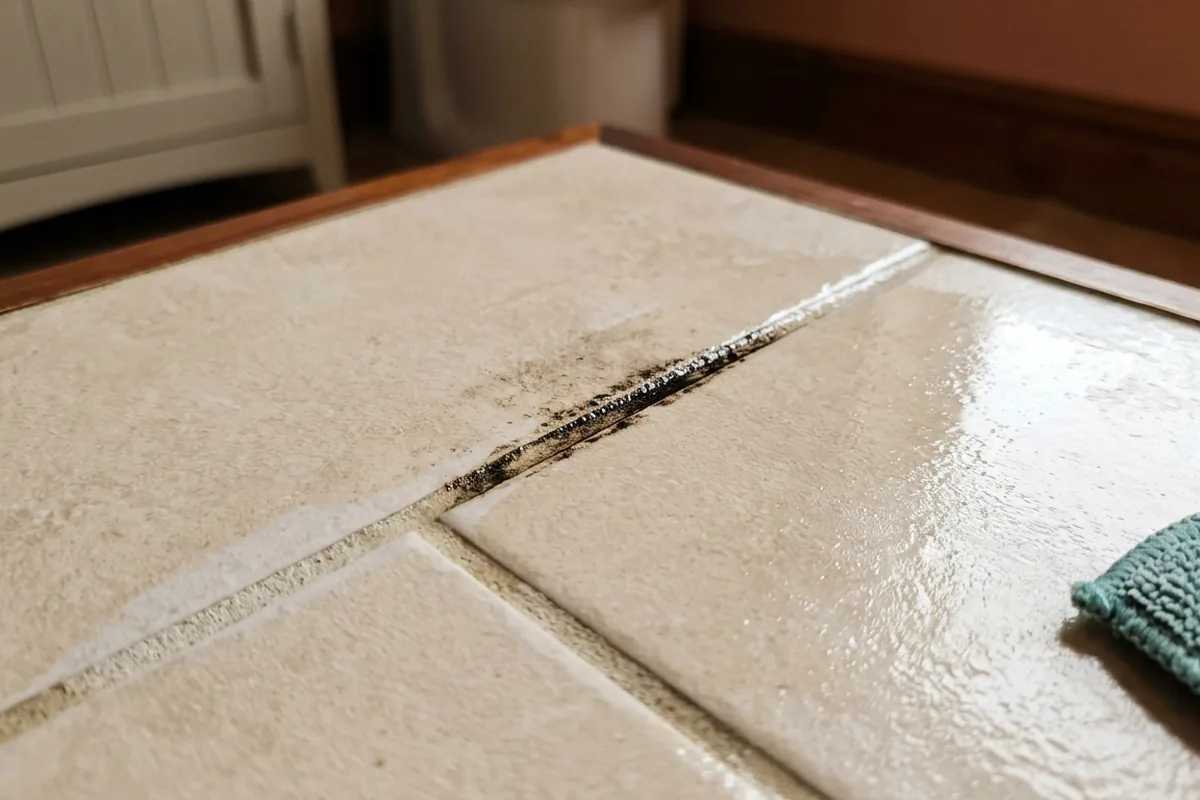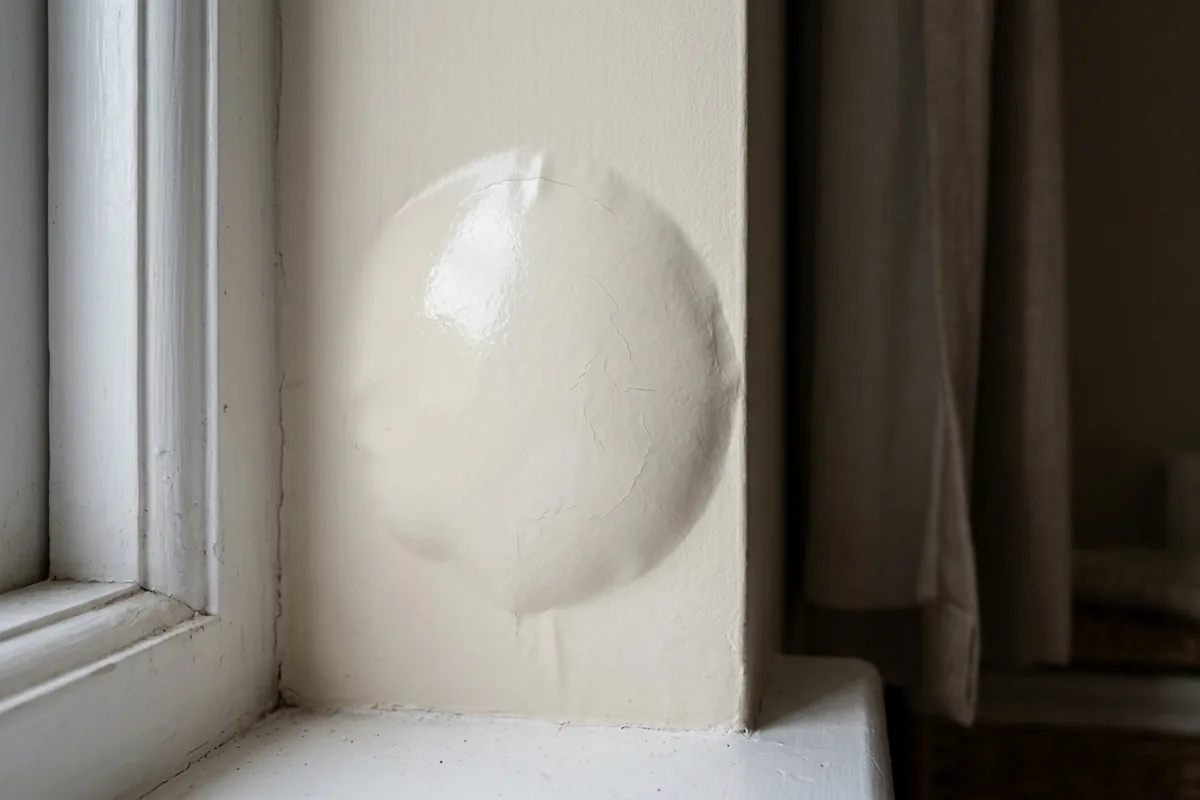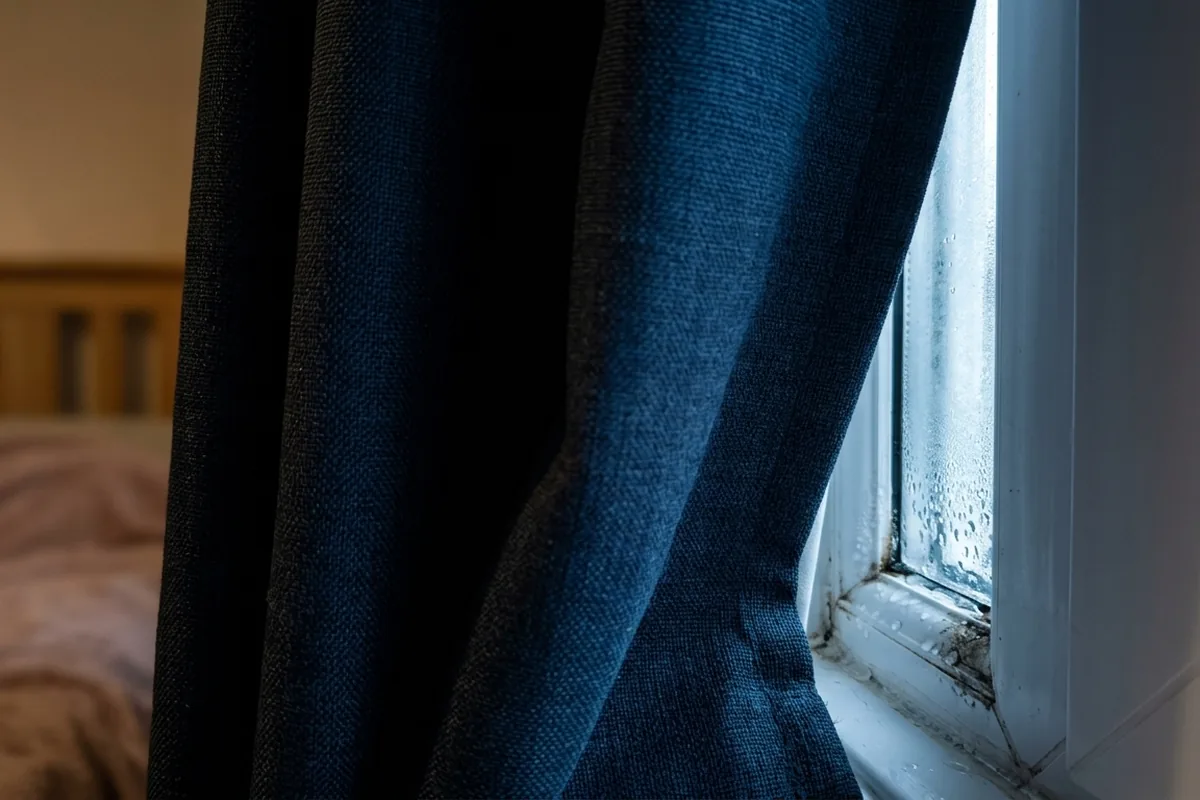
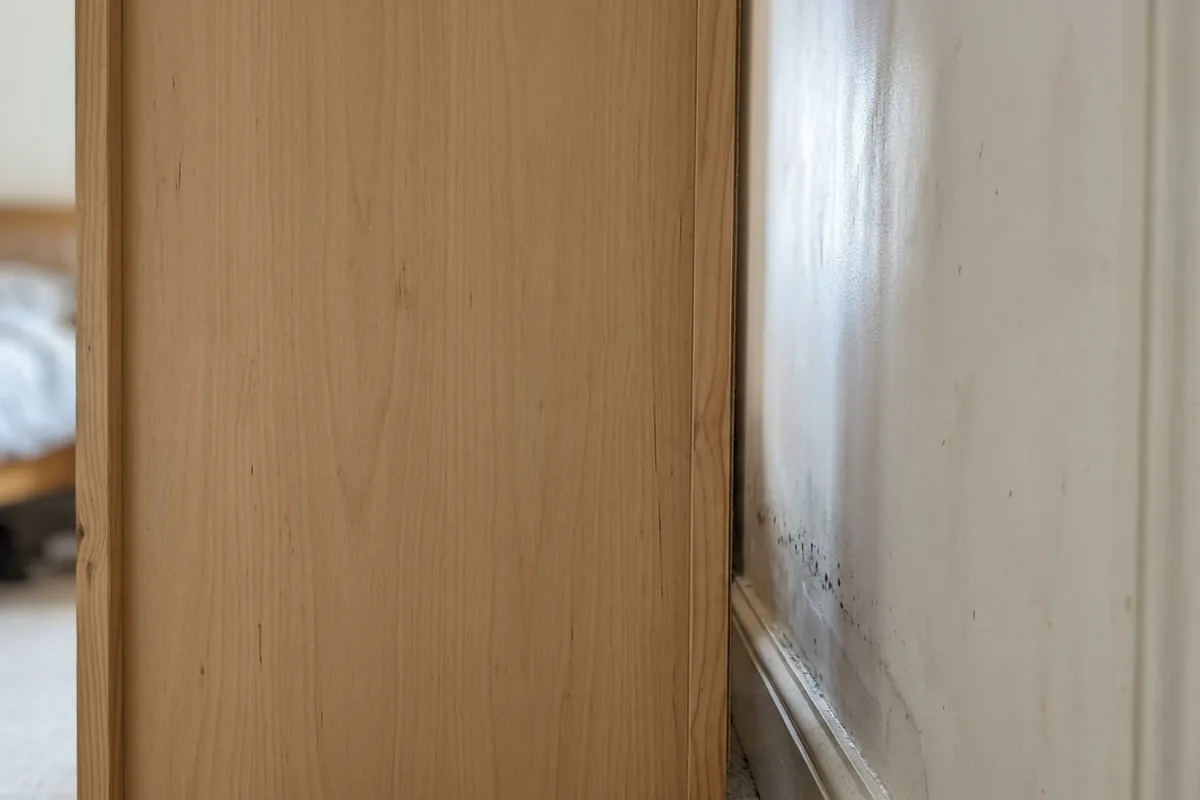
That first whiff of mustiness when you move a wardrobe or pull out the sofa is usually your warning sign. The reason you see mould there before it shows on open walls is simple: the surface behind big furniture is colder and has almost no air movement, so moisture lingers and feeds mould out of sight. By the time you notice it, the patch can be much worse than anything visible in the room.
Why hidden corners grow mould first
Behind a bed, wardrobe or sofa pushed tight to an outside wall, you create a little cold, still-air pocket. Warm, moist air from showers, drying clothes or cooking hits that cold wall, cools quickly and leaves condensation. Because furniture blocks airflow and heat from the radiator, the wall behind stays damp for far longer than exposed plaster.
On open walls, air can move, the surface warms up, and any light condensation usually dries between day and night. So mould often appears where the wall is coldest and least ventilated, not where you can see it most clearly.
A few things usually come together:
- Cold external walls in British winter weather, especially in older solid brick or poorly insulated houses and flats.
- Furniture tight to the wall, trapping a layer of cool, moist air.
- Everyday moisture from baths, showers, cooking without lids, drying washing indoors, or a busy family in a small space.
- Limited ventilation, like a bedroom window rarely opened, or an underused bathroom extractor fan.
The result is a perfect micro-climate for mould: cool, damp, dark and undisturbed.
What to check when you find mould behind furniture
Once you’ve spotted it, treat it as a damp warning, not just a cleaning job. The first thing is to work out if it’s mainly condensation or if there might be another damp source.
A quick way to think it through:
| Sign at home | What it may mean | First check |
|---|---|---|
| Mould only behind big furniture on external walls | Condensation and cold spots | Gap furniture out and improve airflow |
| Lower wall and skirting board feel damp or crumbly | Possible penetrating or rising damp | Check outside for leaks, high ground or blocked gutters |
| Bedroom windows streaming most mornings | High indoor humidity | Ventilate and reduce moisture sources |
| Mould in several rooms, including ceilings | General moisture and ventilation issue | Check extractor fans and consider dehumidification |
If it’s clearly just behind a wardrobe on a cold outside wall and nowhere else, it’s usually local condensation. If you have damp skirting boards, flaking paint, or a musty smell even when the room is aired, that can point to a wider damp problem which may need professional assessment.
For cleaning small areas of household mould on painted walls:
- Wear gloves and keep the room well ventilated.
- Use a mould-removal spray or a diluted bleach solution on wipeable painted surfaces only, following the label.
- Never mix bleach with vinegar or other cleaners.
- If mould covers a large area (more than about a square metre), keeps returning quickly, or anyone in the home has breathing problems, get advice from a qualified damp or mould specialist rather than tackling it all yourself.
Simple changes that stop it coming back
Cleaning the mould is only half the job. If the wall is still cold and damp, the mould will return, usually in the same spots behind furniture.
Focus on three things: space, warmth and ventilation.
1. Give the wall some breathing room
Try to keep:
- At least a 5–10 cm gap between the back of furniture and an outside wall.
- Wardrobes and big chests of drawers slightly off corners, where walls are coldest.
- Items off the floor if possible: avoid stuffed black bags or boxes wedged against a cold wall.
Even a small gap lets warmer air circulate and helps the wall dry after those steamy evenings or wet laundry days.
2. Reduce moisture in the room
You don’t have to turn the house into a wind tunnel, but small habits help:
- Use the bathroom extractor fan and leave it running for 15–20 minutes after showers.
- Keep kitchen doors closed when cooking and lids on pans where you can.
- Dry clothes in a well-ventilated room or use a heated airer with a window slightly open or a dehumidifier, rather than over radiators in a closed bedroom.
- Open bedroom windows a crack in the morning to clear condensation on the glass and window board.
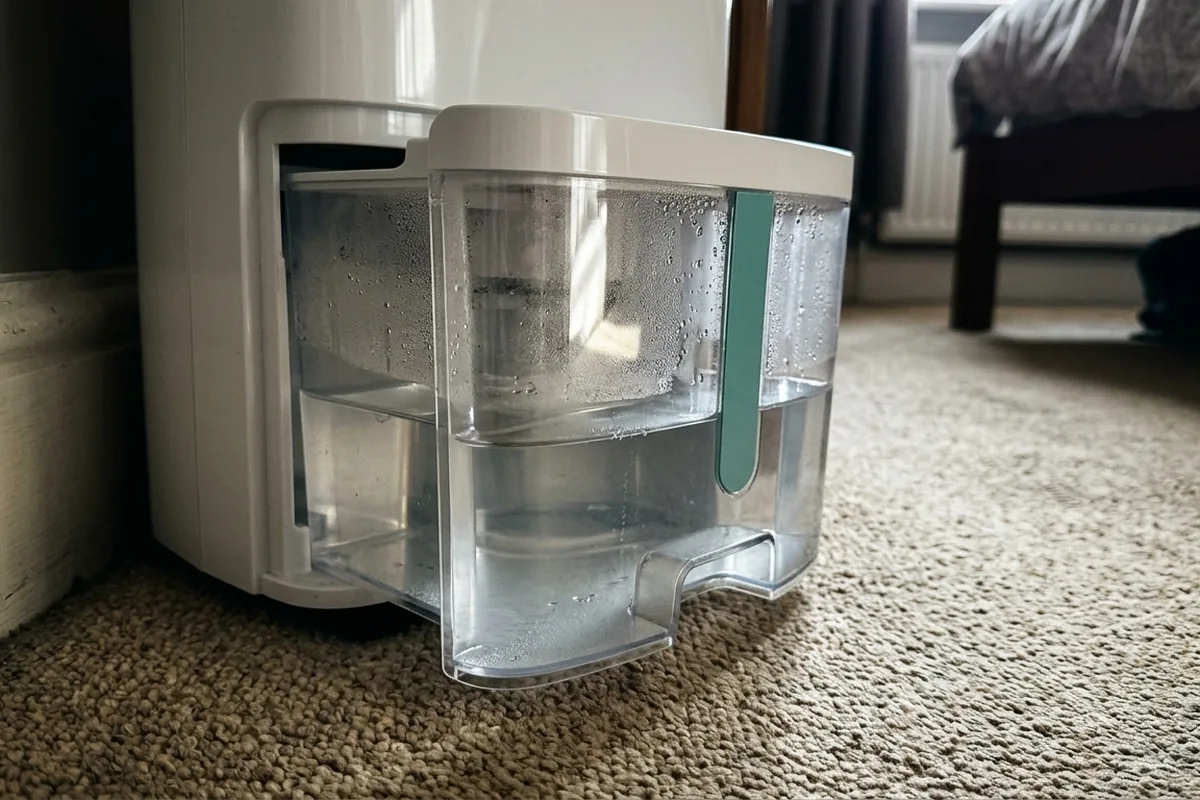
If the room is consistently damp or you see condensation on bedroom windows most mornings, a dehumidifier can make a noticeable difference, especially in small rented flats where you can’t change insulation.
3. Take the edge off cold walls
You don’t need tropical heating, but very cold external walls are more likely to grow mould. Keeping background heating on low in cold weather can help walls stay slightly warmer and dry out more evenly.
Other low-disruption options include:
- Hanging wardrobes on internal walls instead of external ones, where possible.
- Using a breathable lining paper or insulating liner on particularly cold walls, fitted properly so it doesn’t trap moisture.
If you’ve cleaned, spaced furniture out and improved ventilation but the same patch keeps reappearing, especially with peeling paint, damp plaster or a persistent odour, that’s a sign to pause and get proper damp advice rather than just scrubbing again.
In most UK homes the mould behind furniture is your early nudge that the wall is cold and the air is too moist. Deal with both, and the next time you pull that wardrobe out, the surprise should be dust, not black spots.