That whiff when you lift the kitchen bin lid is usually a mix of old food juices, coffee grounds and general bin slime that washing the liner alone never quite shifts. Spraying more fragrance over it only masks the smell. A simple layer of bicarbonate of soda in the bottom of the bin can genuinely help, but it only works while it’s fresh and dry, and it does need replacing regularly.
How the bicarbonate of soda trick actually works in your bin
Bicarbonate of soda (baking soda) is mildly alkaline and porous. It doesn’t “eat” rubbish, but it neutralises acidic odours and traps some of the smelly compounds that escape food waste and bin residue.
For a normal kitchen bin in a UK home (say 30–50 litres, used daily), the basic method is:
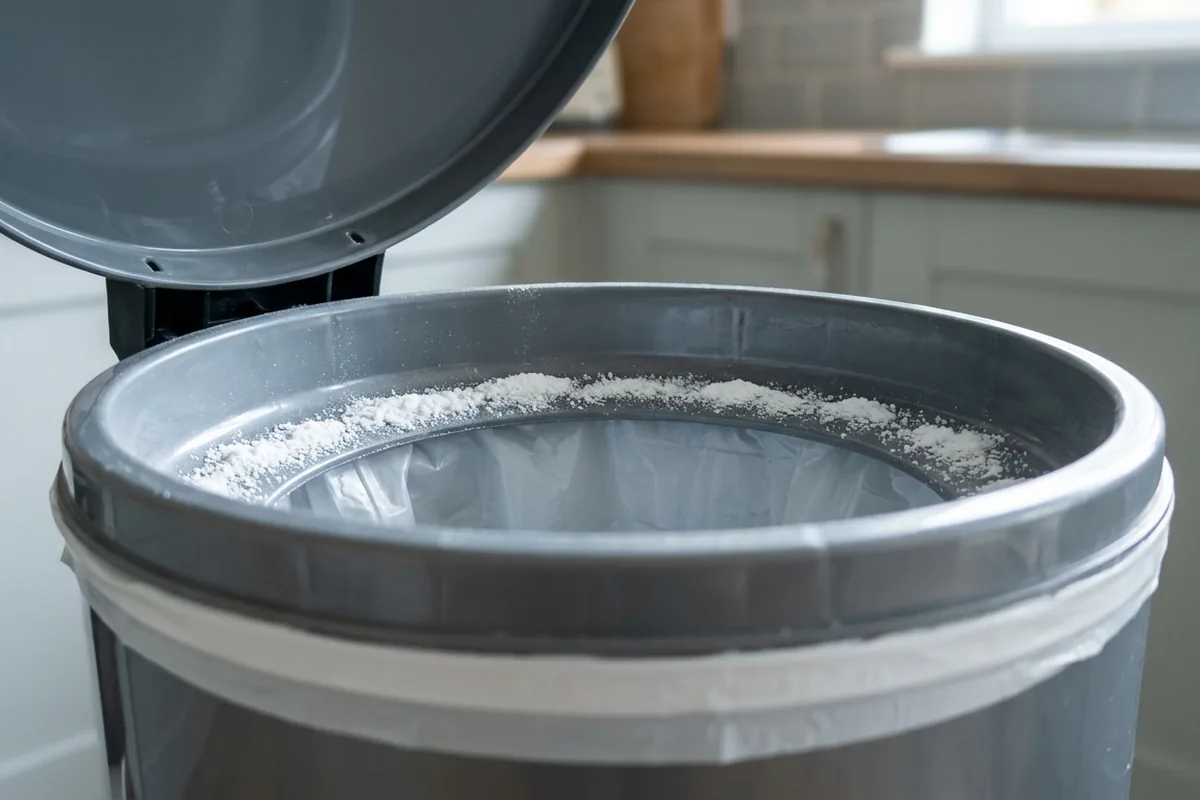
- After washing and drying the bin, sprinkle a thin, even layer of bicarbonate of soda over the clean, dry base. A tablespoon or two is usually enough.
- Fit your bin liner on top as normal.
- If you have a separate food caddy, you can do the same inside that once it’s clean and dry.
This works best when:
- The bin itself is reasonably clean, not coated in sticky residue.
- The bicarbonate stays dry, not soaked in leaking food liquid.
- The lid closes properly so smells aren’t constantly venting into the room.
If the bin still smells strongly even after a proper wash and fresh bicarbonate, the issue is usually trapped grime around the lid, hinges or under the rim, or food waste sitting too long in a warm kitchen.
When to replace the bicarbonate of soda in your bin
Bicarbonate doesn’t suddenly stop working on a set date, but it does slowly become loaded with absorbed odours and moisture. Once that happens, it’s more or less “spent”.
For a typical family kitchen bin in a terraced house or flat, a good rule of thumb is:
- Every 2–4 weeks for the main kitchen bin.
- Every 1–2 weeks for a food caddy, especially in warmer weather.
- Immediately if it becomes wet, clumped or discoloured.
Signs it is time to replace it:
- The bin smells again even though you’ve just changed the bag.
- The powder has turned into hard, damp clumps or a paste.
- You can see greasy marks in the bicarbonate layer.
- Fruit fly activity increases around the bin despite regular emptying.
To replace it:
1. Take the liner out.
2. Tip the old bicarbonate into the used bin bag (or into the general waste).
3. Wash the bin with hot water and a small amount of washing-up liquid, paying attention to crevices and the underside of the lid.
4. Dry thoroughly with a microfibre cloth or leave it to air-dry.
5. Sprinkle a fresh layer of bicarbonate before putting in a new liner.
If you find you’re needing to replace it more often than every couple of weeks, check for leaks in the bin liner or very wet waste (e.g. food scraps going in without draining). A small folded piece of kitchen roll in the bottom, under the liner, can help soak up the worst of the liquid so the bicarbonate stays dry and effective for longer.
Where bicarbonate helps with bin odours – and where it doesn’t
Bicarbonate of soda is helpful, but it’s not magic. It’s best seen as a support act, not the main cleaner.
It works well for:
- Mild, lingering odours in a clean bin.
- Keeping on top of smells between proper washes.
- Small indoor bins in bathrooms or bedrooms where you don’t want strong chemical fragrances.
- The base of an under-sink bin where air flow is poor.
It will not fix:
- Heavy, rotten-food smells from waste that’s been left for days in warm weather.
- Mould or slime growing in the bottom of the bin or around the lid seal.
- Odours coming from nearby drains, not the bin itself.
- A cracked bin that traps liquid and can’t be properly cleaned.
If you’re battling strong odours, tackle these first:
- Clean the bin thoroughly: hot water, washing-up liquid, and a soft brush around seams and hinges. Rinse and dry.
- Check the rim, pedal mechanism and lid joints; these often hold grime in a kitchen bin or bathroom pedal bin.
- Make sure liners are the right size so they don’t slip and let food run down the sides.
- In summer, empty food waste more often, even if the bin isn’t full.
Once those basics are sorted, bicarbonate is very effective at keeping the smell down between cleans, especially in a small kitchen or rented flat where the bin lives close to where you sit.
If you prefer, you can also:
- Put a tablespoon of bicarbonate into a small, open jar or yoghurt pot with holes punched in the lid and sit it in the bottom of the bin or under the sink. This keeps the powder contained and makes it easier to swap out when it’s “full” of odours.
The key is to treat bicarbonate as consumable. If the smell is back and the powder looks tired or clumpy, it’s time to change it. A quick refresh takes seconds and is usually more effective than another blast of air freshener.