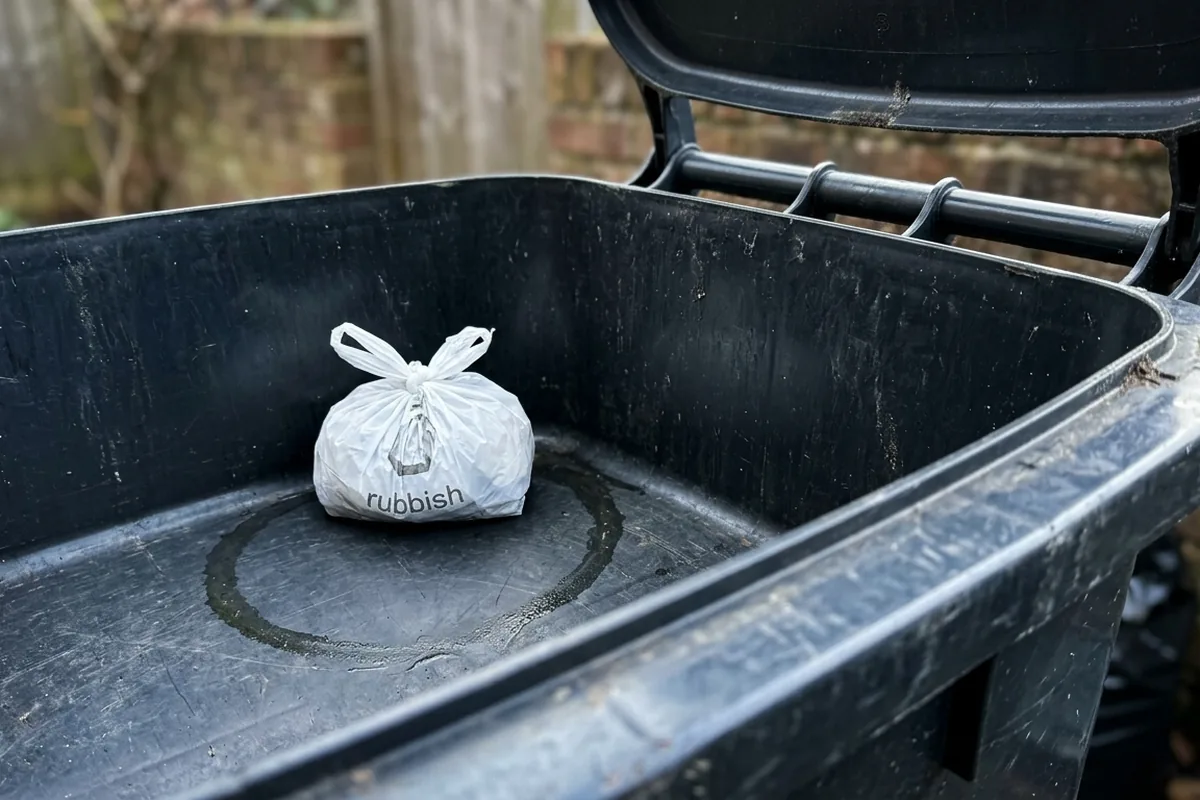
That whiff when you open the kitchen bin lid, even after you have scrubbed it, usually means something is still trapped: either liquid in a hidden seam, residue in the lid or a liner that is holding on to odour. A quick rinse rarely reaches the areas that actually smell, and if the bin then sits closed and slightly damp, bacteria carry on working.
In many UK kitchens the main fixes are: dry the bin fully, clean the lid and pedal mechanism properly, check under and around the rim and switch how you bag and store food waste. If the smell returns within a day or two, the source is usually still there, not “in the plastic”.
Why the smell lingers after you have washed the bin
A bin that still smells after washing is almost always about missed grime, trapped moisture or the wrong bags, not that the bin is permanently ruined.
The most common hidden culprits are:
- Liquid and sludge in seams: Around the base rim, under the inner lip and in any grooves where an inner bucket sits. Thin grey “tea” from old food waste collects here and keeps smelling.
- Lid and hinge area: On flip-top and pedal bins, the underside of the lid, hinge pins and the pedal linkage often have splashes of food, tea, milk or bin juice that never get a proper clean.
- Porous or scratched plastic: Old bins, especially in rented flats or shared kitchens, may have knife scratches or wear inside. Grease and food bacteria cling to these tiny grooves and survive a quick wash.
- Damp, closed bin: If you wash the bin and then close the lid while it is still damp, you have given bacteria warmth, moisture and time. The smell can seem to “come back” overnight.
- The smell is not the bin at all: Sometimes it is actually the food waste caddy, a slow-draining kitchen sink, or spilt bin juice under the bin on the vinyl or laminate flooring.
The fastest test is simple: smell different parts separately. Take the liner out, smell inside the empty bin, then the lid, then the outside and finally the floor where it stands. That usually tells you which bit needs proper attention.
What to check and clean properly
Once you know the smell is really from the bin, go a bit deeper than a quick swill. You do not need fancy products, but you do need to be thorough and let it dry.
If the smell is from inside the bin
Use hot water, washing-up liquid and a soft brush or old washing-up sponge. For a stubborn, sour odour, bicarbonate of soda can help.
Key checks:
- Under the rim and in grooves: Run your fingers (in gloves) around the top rim, under any lip and around the base seam. If it feels slimy or gritty, that is the source.
- Inner buckets and collars: Many pedal bins have a removable inner bucket or ring that holds the liner. Pull it out and clean underneath and around it.
- Scratches and scuffs: If the inside is badly scratched, sprinkle a thin layer of bicarbonate of soda on the damp surface, leave it for 15–20 minutes, then scrub and rinse. It helps absorb odour, but it will not fix a cracked bin.
Let the bin dry completely with the lid open, ideally outdoors on a dry day or near an open back door. A slightly sunny patio or balcony is ideal; even a few hours helps.
When the smell is coming from the lid, bags or the area around the bin
Often the worst smell is at nose height when you lift the lid, not down in the bin itself. That points to the lid, the liner or nearby surfaces.
If the lid or pedal area smells
Flip the lid right back and look closely at the underside, hinges and any rubber seals. You may see dried splashes or greasy marks, especially if you scrape plates into the bin.
Clean with hot, soapy water and a microfibre cloth. For a disinfecting boost, a mild disinfectant spray or diluted bleach can be used on white plastic, but:
- Never mix bleach with other cleaners, especially anything acidic like vinegar.
- Ventilate the kitchen and wear gloves.
- Avoid bleach on metal parts, as it can corrode hinges over time.
Dry the lid thoroughly, including the hinge area. A dry cloth or a bit of kitchen roll works fine.
If the smell is more “bin bag” than bin
If the plastic itself smells fine but the liner stinks as soon as you open the lid, look at how you are bagging rubbish:
- Thin bags in a busy family kitchen bin often leak liquids into the bottom.
- Overfilling bags means they tear and leave residue.
- Warm weather or a heated kitchen speeds up smells if food waste sits for days.
Try:
- Using stronger or slightly thicker bin liners.
- Double-bagging food waste in hot weather or taking it out more often.
- For council food caddies, a bit of newspaper or kitchen roll in the bottom can soak up juices and reduce odour.
If the smell is from the floor or nearby
Sometimes a ring of dried bin juice under the bin is the real issue. Slide the bin aside and check the vinyl, tiles or laminate. If it feels tacky or looks stained, clean the floor with hot soapy water or your usual hard-floor cleaner and dry it.
If the bin sits near a warm radiator, smells can intensify. Moving it slightly away from direct heat can make a noticeable difference.
—
If, after a proper deep clean, full drying and a change of liners, the bin still smells strongly within a day, the plastic may simply be too old and porous, especially on cheap, thin bins that have lived in damp sheds or garages. At that point, a replacement is often easier than throwing more products at it.