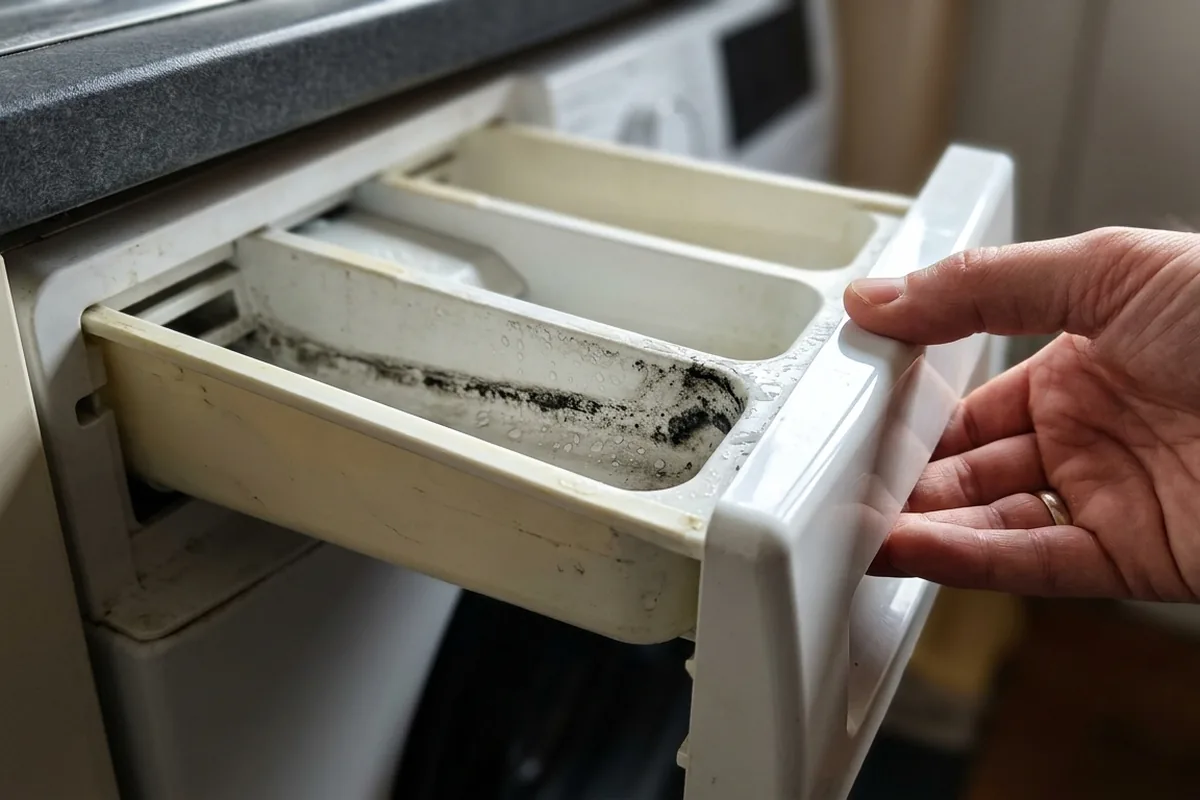
That sour washing machine smell and the black slime in the drawer usually start with one simple thing: water sitting where it cannot drain. The quickest check that helps stop black mould building up is to pull the drawer right out and look behind it at the water channels and plastic cavity. If you can see water pooling, thick detergent gunk or grey slime, your drawer is not draining properly, and mould will keep returning no matter how often you wipe the front.
Fixing that small drainage issue, plus keeping the drawer area dry between washes, does far more than another hot “cleaning cycle” on its own.
The one drawer check that actually slows black mould
The key check is whether water can escape freely from the drawer cavity after each wash.
Slide the drawer out as normal, then press the release catch and pull it fully out. With a torch or your phone light, look inside the empty slot where the drawer sits. You are checking three things:
- Is there standing water sitting in any corner or channel?
- Is there thick, rubbery detergent residue or fabric softener slime?
- Are the small holes and channels at the back blocked or narrowed?
If water is left behind here, the inside of the cavity stays damp and slightly sticky. That is exactly what black mould and biofilm like. Every time you shut the drawer in a cool utility room or small kitchen, you are effectively giving it a dark, moist cupboard.
If the cavity looks fairly clean and dry, mould is more likely coming from elsewhere in the machine, such as the rubber door seal or the drain, and this particular trick will only help a bit.
How to clear the drawer drainage safely
Once you have spotted where water is getting trapped, you can usually sort it with a simple clean, no tools and no dismantling.
Take it step by step and keep it gentle:
1. Clean the drawer itself
Fill a washing-up bowl or sink with warm water and a squirt of washing-up liquid. Pop the whole drawer in and soak for 10–15 minutes. Use an old toothbrush to scrub around the compartments, especially the softener section where a blue or green jelly often builds up. Rinse well so no thick residue is left.
2. Deal with the cavity and channels
With the power off at the socket for safety, use a damp microfibre cloth and toothbrush to loosen gunk from the plastic surfaces inside the drawer slot. Focus on the small channels and holes where water flows into the drum. Do not force anything metal into them, as you can damage the plastic.
3. Use a mild mould cleaner if needed
If you can see black mould spots, a light spray of a mould and mildew remover or diluted bleach can help, but ventilate the room and wear gloves. Do not mix bleach with any other cleaner you have already used. Wipe off thoroughly with a clean, damp cloth so no strong chemical sits on the plastic.
4. Dry it properly
Once cleaned, pat the cavity and drawer dry with kitchen roll or a clean cloth. Leaving it wet invites mould straight back. This is the part most people skip.
If at any point you feel you are having to tug hard on parts that seem fixed, stop. Anything beyond the removable drawer and visible plastic cavity is best left to an appliance engineer.
The habits that keep the drawer from going black again
The real mould prevention comes from what you do after that first deep clean. A few small habits in a typical UK kitchen or utility room make a big difference.
Keep the drawer slightly open between washes
Just leaving the drawer open a couple of centimetres lets the cavity dry out instead of staying steamy. This is especially helpful in small flats where the washing machine is tucked in a tight cupboard.
Run fewer cold, heavily dosed washes
Constant 20–30°C cycles with lots of liquid detergent and fabric softener create more residue. Use the dosing lines on the cap, not a guess. Every so often, run a hot maintenance wash (60–90°C, empty drum) after you have cleaned the drawer and seal. The hot wash alone will not fix a blocked drawer, but it does help keep the internals clearer once the gunk is gone.
Switch product type if the slime keeps returning
In some hard water areas, liquid detergent and thick softener leave more build-up than powder. If you are constantly scraping jelly-like residue from the drawer, it can be worth trying:
- A powder detergent in the main wash compartment
- Softener only when you actually need it, and at the lowest recommended dose
Watch for other mould signs around the machine
If, even after cleaning the drawer cavity, you have:
- Persistent black mould on the rubber door seal
- A musty smell from the drum even when empty
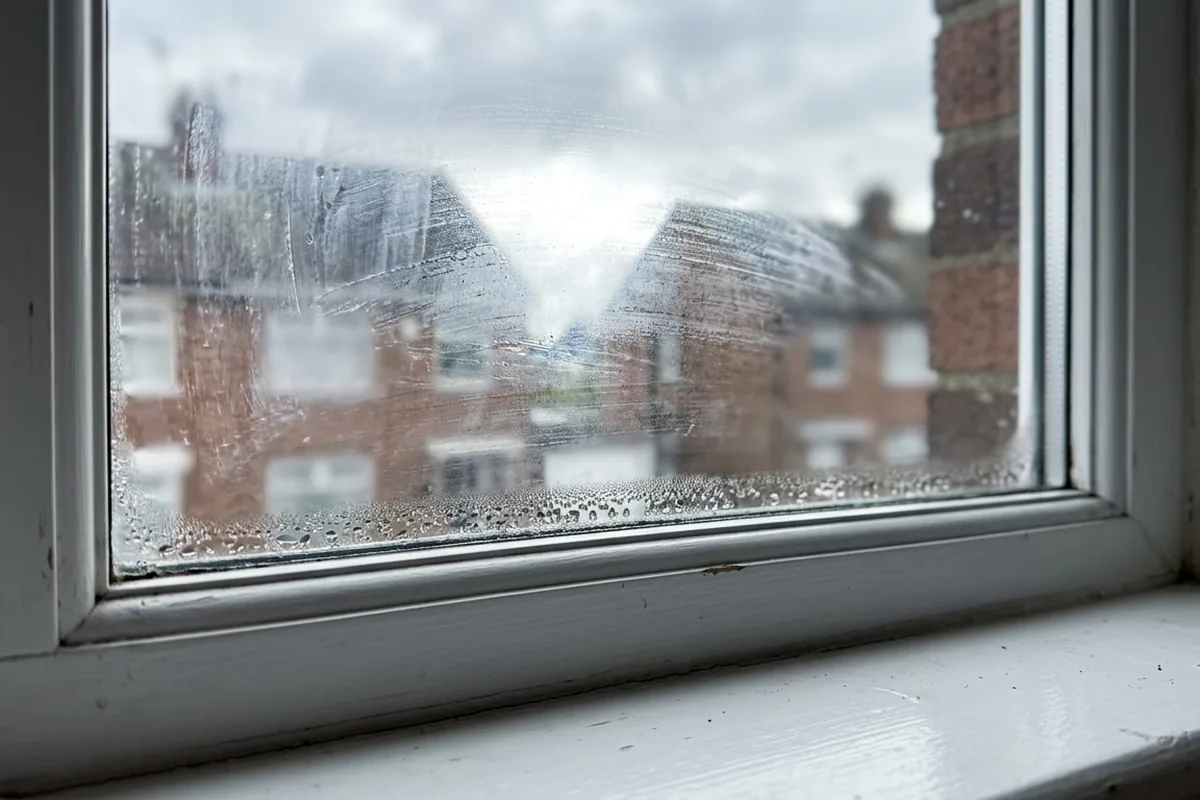
- Condensation on nearby walls or window boards in the utility room
then you may have a wider moisture or drainage issue, not just a drawer problem. In that case, it is sensible to clean the door seal, check the filter according to the manual and, if smells persist, consider a service visit to check for hidden lint and sludge in the system.
If the drawer cavity keeps filling with water even when clean, or you notice leaks down the front of the machine, that is beyond a simple home clean and is a good point to get an engineer involved rather than forcing parts and risking a crack in the housing.
Once you have done this one drainage check and clean, the drawer should dry quickly after each wash and any new marks should wipe away easily. If it turns black and slimy again within a couple of weeks, the moisture is still being trapped somewhere, and it is worth looking at your detergent use and how often the machine gets a proper hot run.