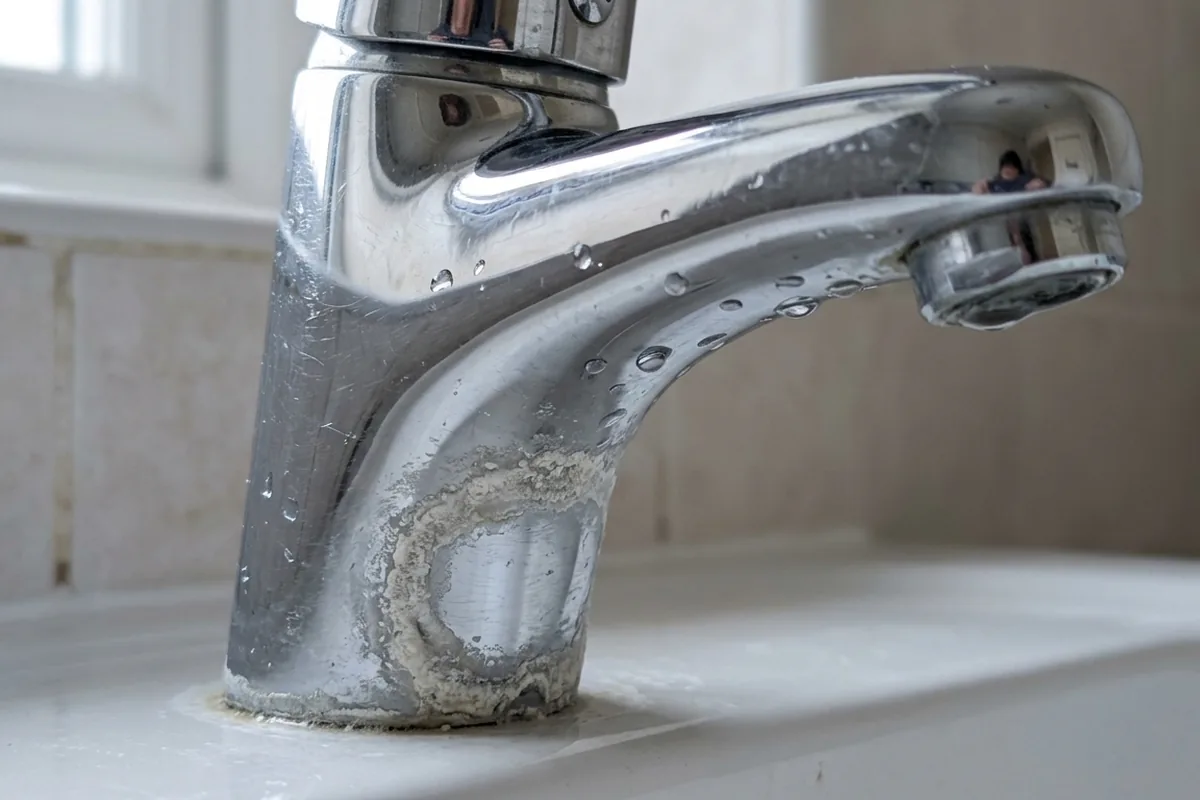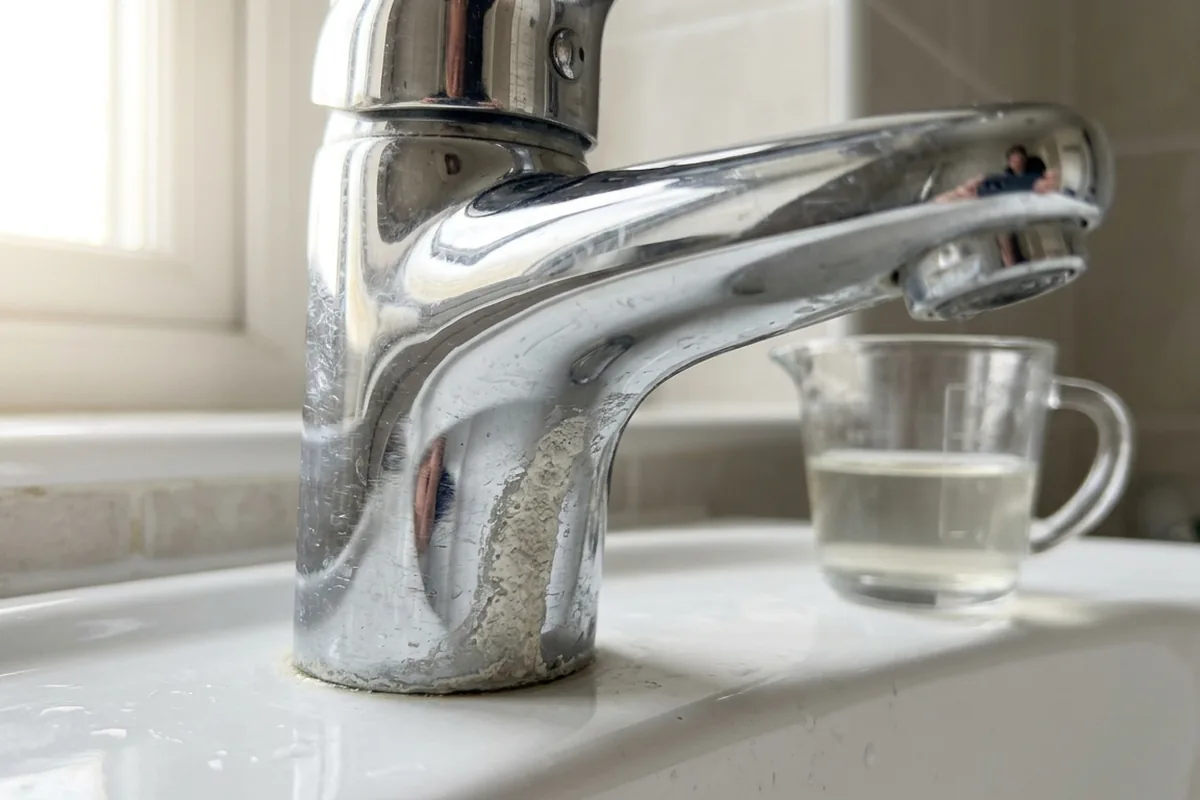
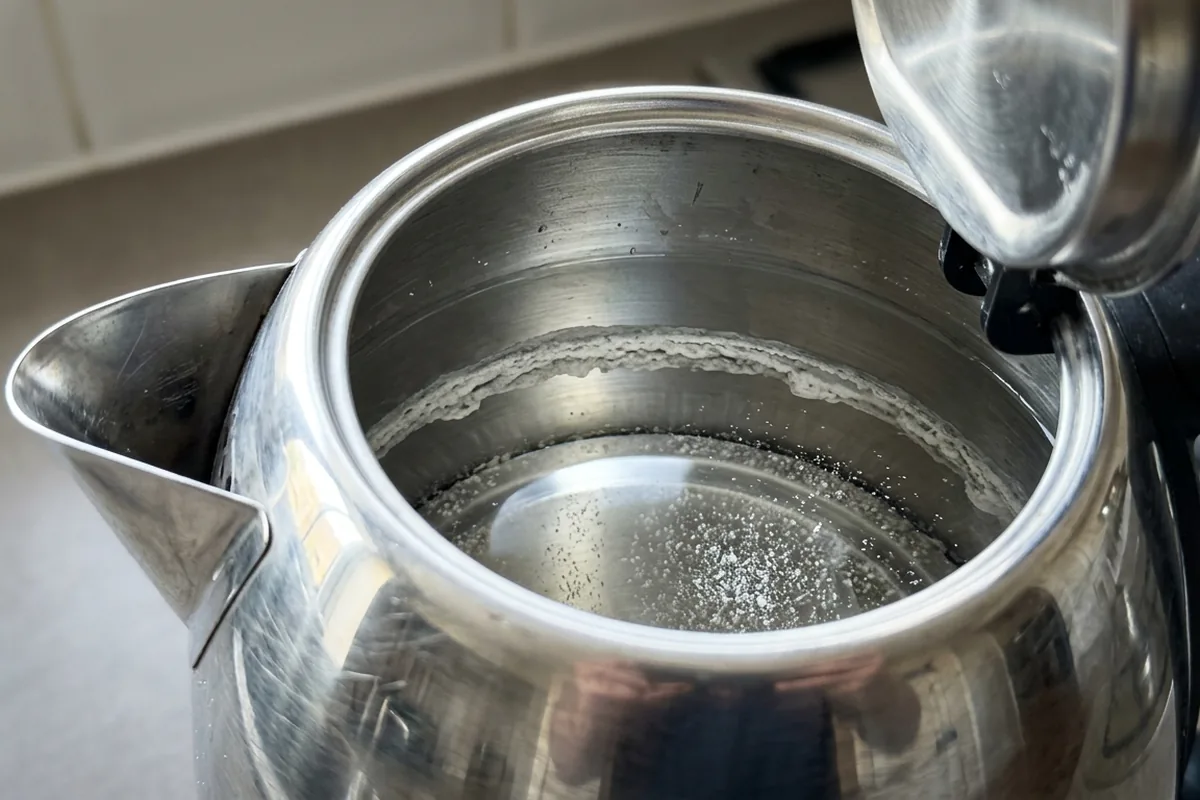
White limescale crust in the kettle and a faint odd flavour in your tea is a very normal UK problem, especially in hard-water areas. Citric acid is a brilliant, cheap descaler, but if you use too much or don’t rinse properly, the kettle can smell sharp and your next brew can taste slightly sour. The key is small amounts, short contact time and thorough rinsing. For a standard 1.7L electric kettle, 1–2 teaspoons of citric acid in a half-full kettle, left for 15–20 minutes, then boiled with clean water twice and emptied, usually leaves no taste at all.
The exact way to descale with citric acid and avoid taste
For most electric kettles in a UK kitchen, citric acid crystals are one of the safest and least smelly ways to tackle limescale, as long as you don’t overdo it.
1. Check the kettle first
Unplug the kettle and look inside. If there’s a very thick, flaky layer of limescale, plan to do two gentle descalings rather than one very strong one. If the element is badly corroded or the plastic is cracked, it may be time for a replacement instead of more acid.
2. Measure a mild solution
For a 1–1.7L kettle, use:
- 1–2 level teaspoons of citric acid
- About half a kettle of cold tap water
Swirl to dissolve. You do not need heaped spoonfuls. Too strong a solution is the main reason for lingering taste.
3. Warm, don’t hard-boil (optional but helpful)
You can either:
- Just leave the solution in a cold kettle for 20–30 minutes, or
- Bring it just to the boil once, then switch off and leave for 10–15 minutes
Avoid repeated boiling with the acid still inside; it’s unnecessary and can make the plastic or rubber seals smell odd for a while.
4. Check progress and pour out
Look inside. Most limescale should have softened or lifted. Gently swish with a plastic or wooden spoon handle if needed, then pour the solution down the sink, flushing with plenty of water.
5. Wipe out loosened residue
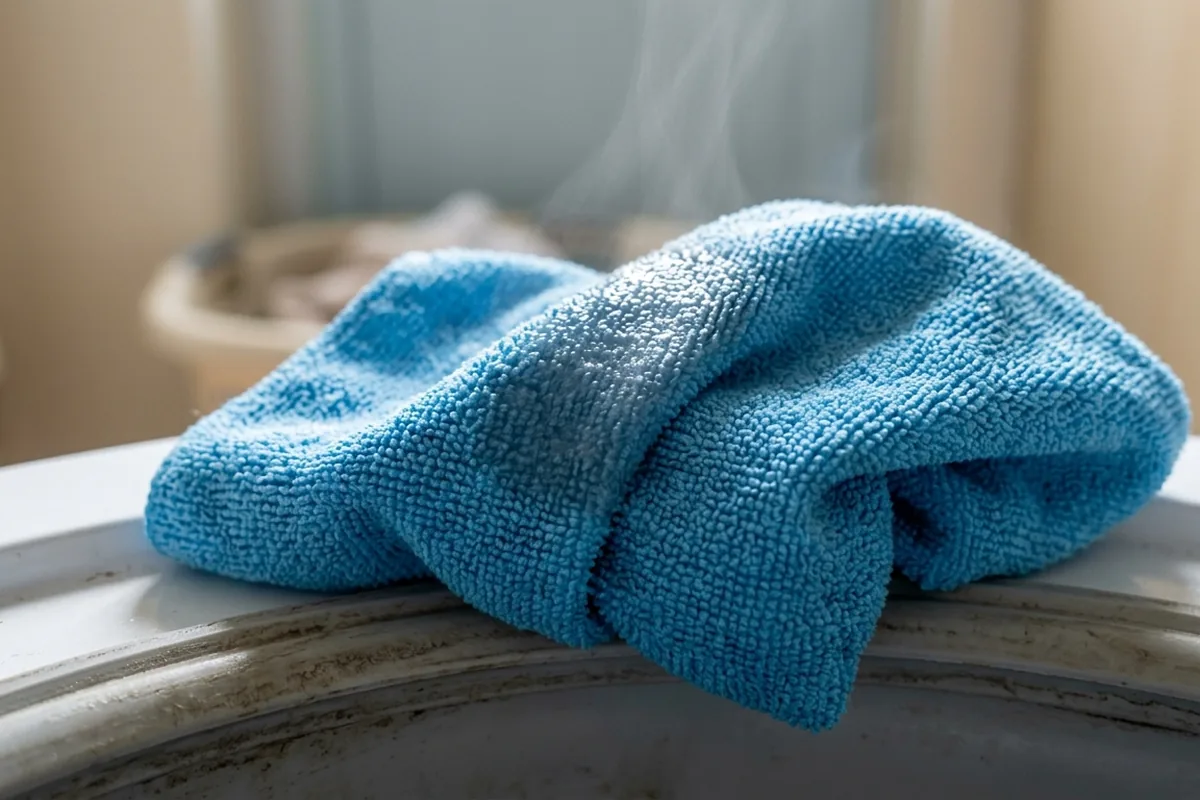
Use a soft sponge or microfibre cloth to wipe the inside, especially around the base and seam where limescale collects. Avoid anything very scratchy on stainless steel or coated elements.
At this point the limescale should be gone or much reduced. The next bit is what actually prevents the strange taste.
How to rinse so your tea doesn’t taste odd
Even a tiny trace of citric acid left on the element or spout can affect the first cup or two, especially if you drink plain hot water or herbal tea.
After emptying the descaling solution:
- Rinse the interior thoroughly
Fill the kettle with cold water to the maximum line, swish it round and tip it away. Do this twice. Pay attention to the spout: pour at different angles so water flushes that area properly.
- Boil and discard at least twice
Fill to the normal level you’d use for a round of tea, boil, then pour the water straight down the sink. Do this two full boils. For very sensitive taste buds, a third boil and discard is worth it.
- Wipe the spout and lid
Any splashes of citric acid solution on the lid, filter or spout can drip into later boils. Wipe them with a damp cloth, then a second time with a cloth dipped in plain water.
If you still notice a faint sharpness after this, repeat just the boil-and-discard step once more. Do not add more citric acid. At this stage it’s about flushing, not further descaling.
If there’s still a strange taste or stubborn limescale
Sometimes the kettle tastes off or the limescale doesn’t fully shift first time. That doesn’t mean you need a stronger acid straight away.
If the taste lingers
If you’ve rinsed and boiled a few times and hot drinks still taste odd:
- Leave the lid open to air
Let the kettle dry out with the lid open overnight on the worktop. This helps any remaining odour from seals or plastic parts to disperse.
- Do a plain-water “soak”
Fill with cold water, leave it for an hour, then pour away and boil fresh water twice. This dilutes any microscopic traces left on the surfaces.
- Check your tap water and mugs
Hard water in some parts of the UK can taste chalky or metallic on its own. Rinse your favourite mug well (old tea stains can affect flavour) and taste plain boiled water from another source if possible, just to be sure the kettle is the culprit.
If, after all of that, the kettle still gives everything a chemical or plastic taste, it may be ageing seals or the plastic body rather than the citric acid. In that case, descaling more aggressively will not help and a replacement is usually the only real fix.
If heavy limescale is still stuck on
For a kettle in a very hard-water area, especially in a rented flat where it hasn’t been descaled for ages, one mild citric acid treatment might not be enough.
You can safely repeat the same weak solution method a second time:
- Let the kettle cool fully.
- Mix the same 1–2 teaspoons of citric acid in half a kettle of cold water.
- Leave it to sit for up to 30 minutes.
- Empty, wipe gently, then rinse and boil fresh water twice again.
Avoid the temptation to triple the citric acid or leave it in for hours. Stronger is not better: it increases the chance of a lingering taste and can be harsh on seals and filters.
Once you’ve got the limescale under control, a quick mild descale every month or two, plus a regular rinse and wipe of the filter, usually keeps a kettle in a British hard-water kitchen tasting neutral and working efficiently.