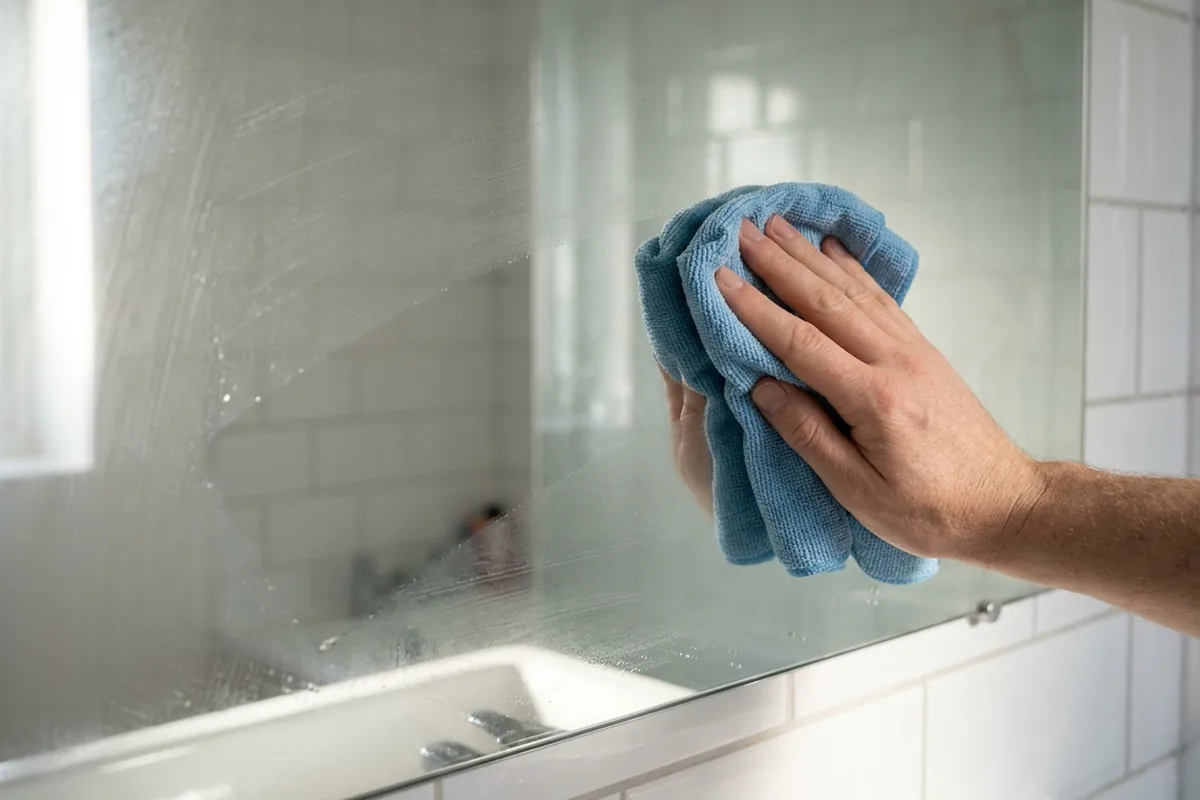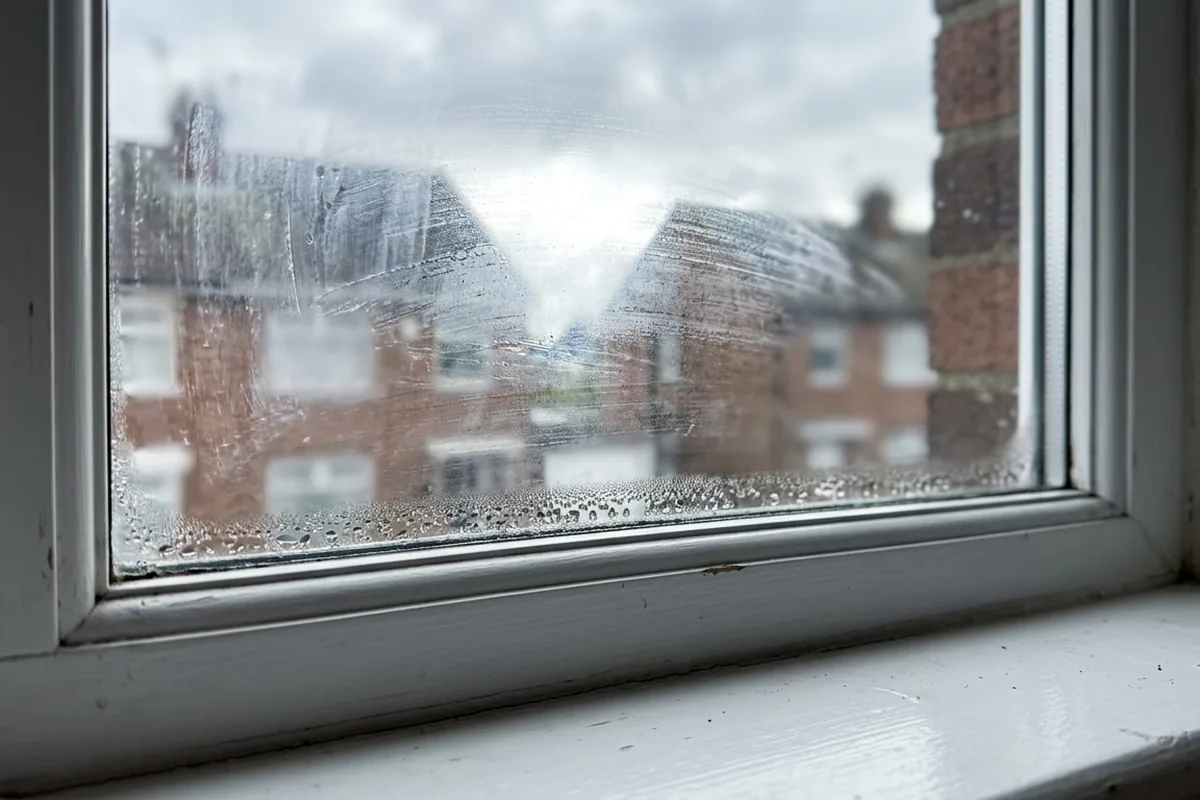
Before grabbing the vinegar spray for the cloudy shower screen or limescale on the taps, stop and check what the surface actually is. Vinegar is brilliant on glass and some metals, but on natural stone, some tiles and modern bathroom finishes it can quietly eat into the surface, leaving dull patches, rough spots and weakened sealant. The simple rule: use vinegar on glass, ceramic and stainless steel with care, but keep it away from stone, marble, travertine, some composites and plated or “brushed” finishes unless the manufacturer says it is safe.
The vinegar mistake that actually causes damage
The common mistake is assuming “natural” equals “gentle”. Vinegar is a mild acid, and acid dissolves the minerals in natural stone. That includes marble window boards, limestone or travertine tiles, granite worktops with a honed finish and many stone shower trays.
On these surfaces, regular vinegar use can:
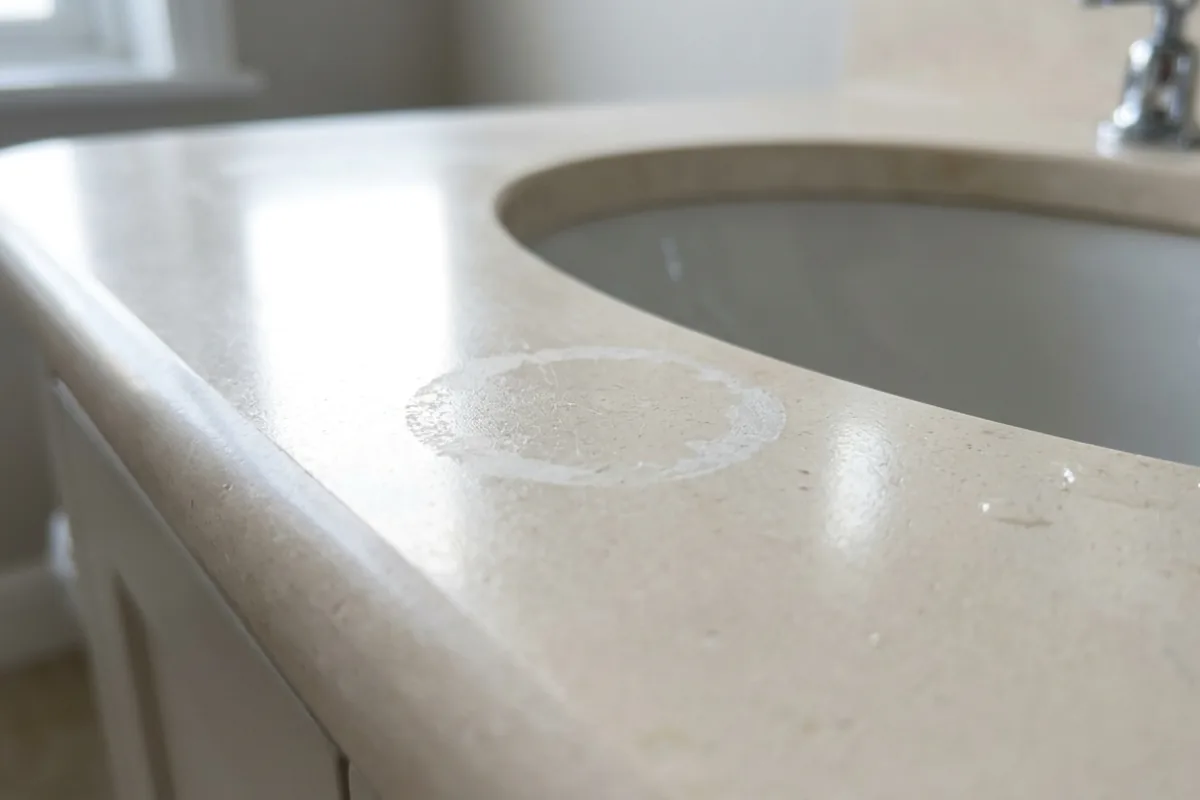
- Etch the surface, leaving cloudy or matt rings where it once looked smooth or polished
- Roughen grout lines so they hold more dirt and mould
- Dull plated taps and shower heads, especially “brushed brass”, “black” or “rose gold” finishes
- Soften or discolour silicone sealant around a shower tray or bath
You often notice it as patchy, permanent-looking dull spots that do not buff out with a microfibre cloth. That is not limescale; it is the stone or finish itself that has been eaten away.
If you are in a typical UK bathroom with a stone-effect floor, a shiny worktop and a glass shower screen, do not assume they are all the same material. The safest move is to identify what you are cleaning before spraying vinegar anywhere.
How to tell if vinegar is safe on your bathroom surface
Most people are looking at limescale on a tap or white marks on a shower screen and just want them gone. A quick surface check helps you avoid an expensive mistake.
| Surface or material | Safe first option | Avoid vinegar if |
|---|---|---|
| Glass shower screen | Vinegar diluted with water, wiped off quickly | Screen has special “easy-clean” coating and maker says no acids |
| Ceramic basin or toilet | Vinegar for light limescale, rinse well | Glaze is cracked, chipped or heavily worn |
| Natural stone tiles or worktops | Stone-safe cleaner, pH-neutral | Surface is described as marble, limestone, travertine or sandstone |
| Composite or “stone resin” shower tray | Mild bathroom cleaner, soft cloth | Care label says “no acidic cleaners” |
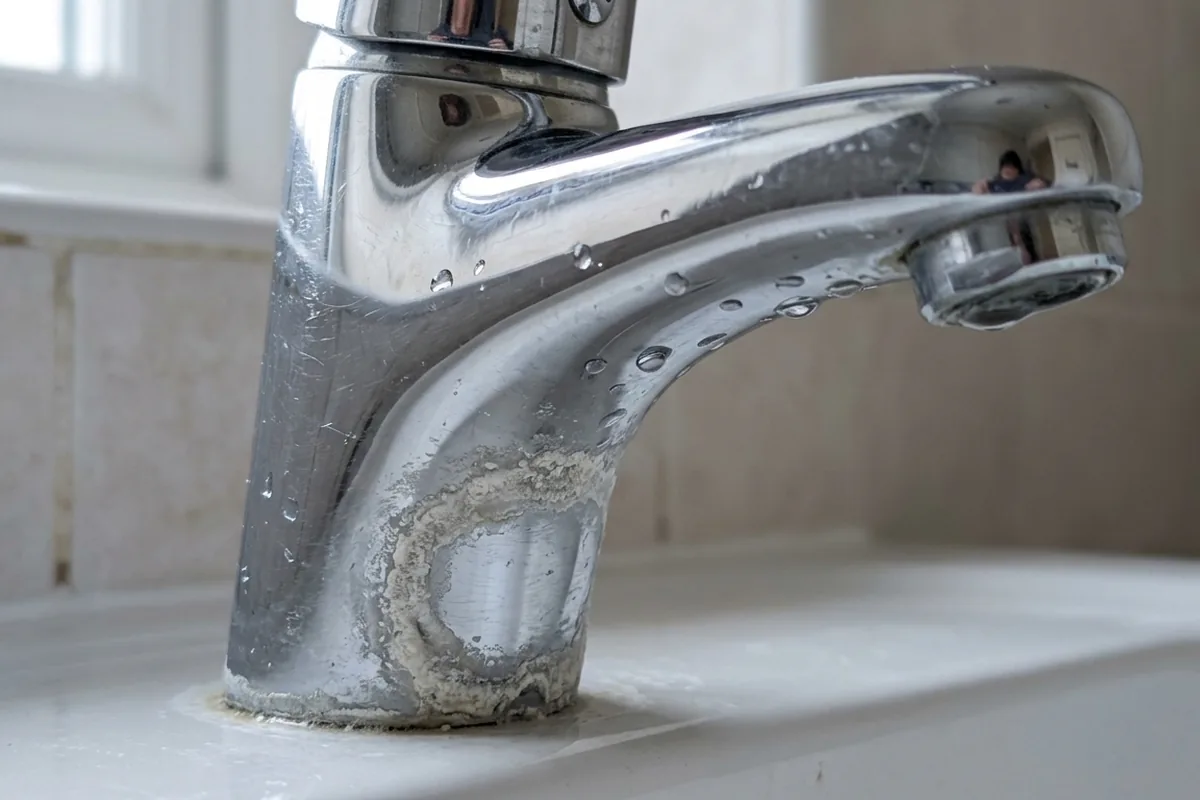
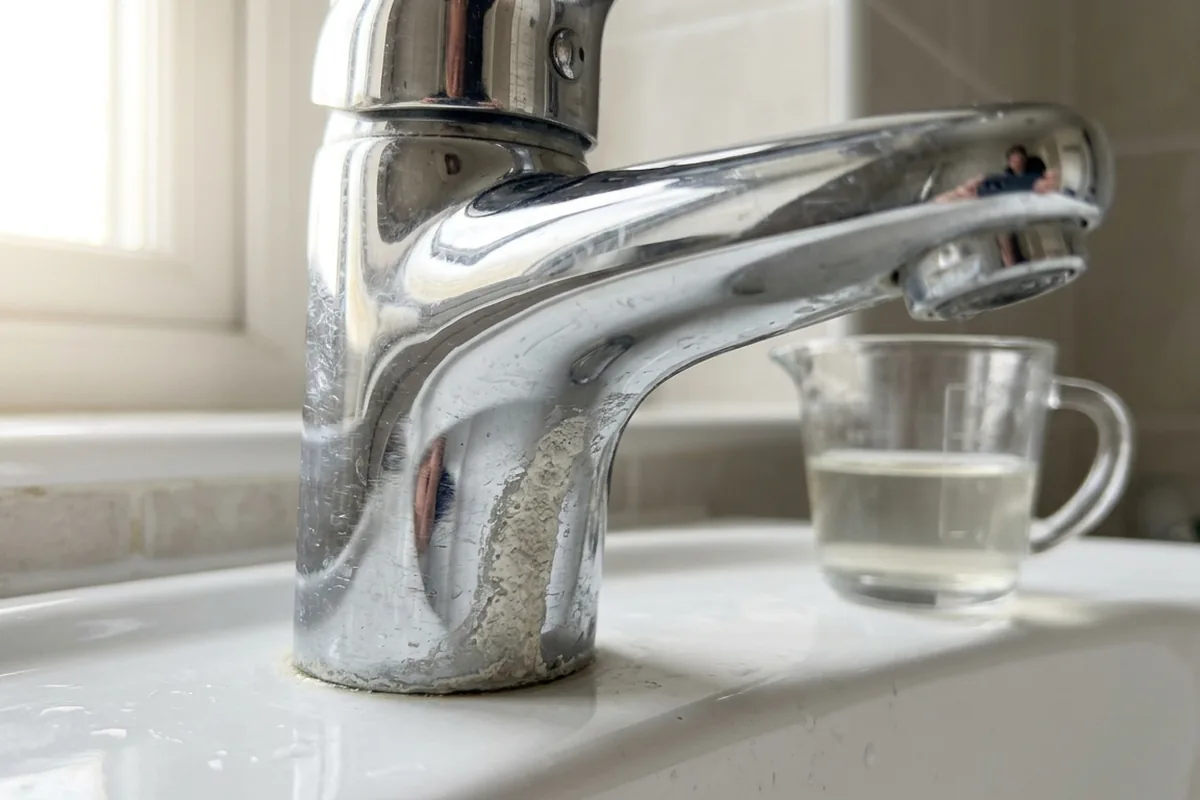
| Taps and shower heads | Mild limescale remover approved for that finish | Finish is coloured, brushed or “special finish” |
If you are unsure, look for a brand name or model (often on the underside of a tap, or on paperwork from when the bathroom was fitted) and check the maker’s cleaning advice online. Many specifically say not to use vinegar, lemon juice or “acidic descalers”.
A simple test on a hidden corner can also help: apply a tiny amount of diluted vinegar, leave for a minute, wipe and dry. If the sheen changes or it feels rough, stop immediately.
Safer ways to deal with limescale and soap scum
You can still tackle cloudy shower glass, chalky taps and ring marks in a hard-water area without risking your stone or finishes.
For glass shower screens and ceramic:
- Use diluted vinegar (about 1 part vinegar to 2–3 parts water) on a microfibre cloth, not sprayed everywhere
- Keep contact time short, then rinse and squeegee
- Avoid getting it on nearby stone window boards or tiled ledges
For natural stone or stone-effect surfaces:
- Use a pH-neutral stone cleaner or a mild solution of washing-up liquid in warm water
- Wipe with a soft cloth, not a scourer, and dry with a clean towel to reduce water marks
- For stubborn limescale, look for a cleaner labelled safe for marble/stone and follow the instructions closely
For taps and shower heads:
- If they are plain chrome or stainless steel, vinegar can help, but do not soak rubber seals or plastic parts for long
- For coloured or brushed finishes, use a non-acidic limescale remover the manufacturer approves, or mild washing-up liquid and patience
- Always rinse and dry to avoid streaks and water marks returning quickly
Whatever cleaner you use, never mix vinegar with bleach, as it can release dangerous fumes. If you have already used bleach in the loo or around the shower, rinse thoroughly with plenty of water and let it clear before trying anything else.
If you rent and are not sure what the surfaces are, it is safer to stick to mild, pH-neutral cleaners and a microfibre cloth, especially on floors and around the bath.
If you have already etched stone or dulled a finish
Once vinegar has etched natural stone, you cannot simply clean the mark away. You are looking at physical damage, not leftover limescale.
- Light etching on a honed stone floor may be less noticeable once the whole floor is cleaned and dried, but the texture change usually remains.
- Shiny marble or limestone with dull rings often needs professional polishing to restore the surface.
- Dull patches on plated taps or black shower fittings are usually permanent; more scrubbing will just make them worse.
If the damage is localised and minor, the most practical option is often to stop using vinegar there, switch to a gentle cleaner and live with the mark until you next refresh the bathroom. For expensive worktops or heavily damaged stone showers, it is worth speaking to a stone restoration specialist rather than experimenting with stronger products.
The safest habit from now on is simple: treat vinegar as a targeted cleaner, not an all-purpose spray. Use it where it shines – on glass, ceramic and some metals – and keep it well away from anything stone, unknown or “special finish”.