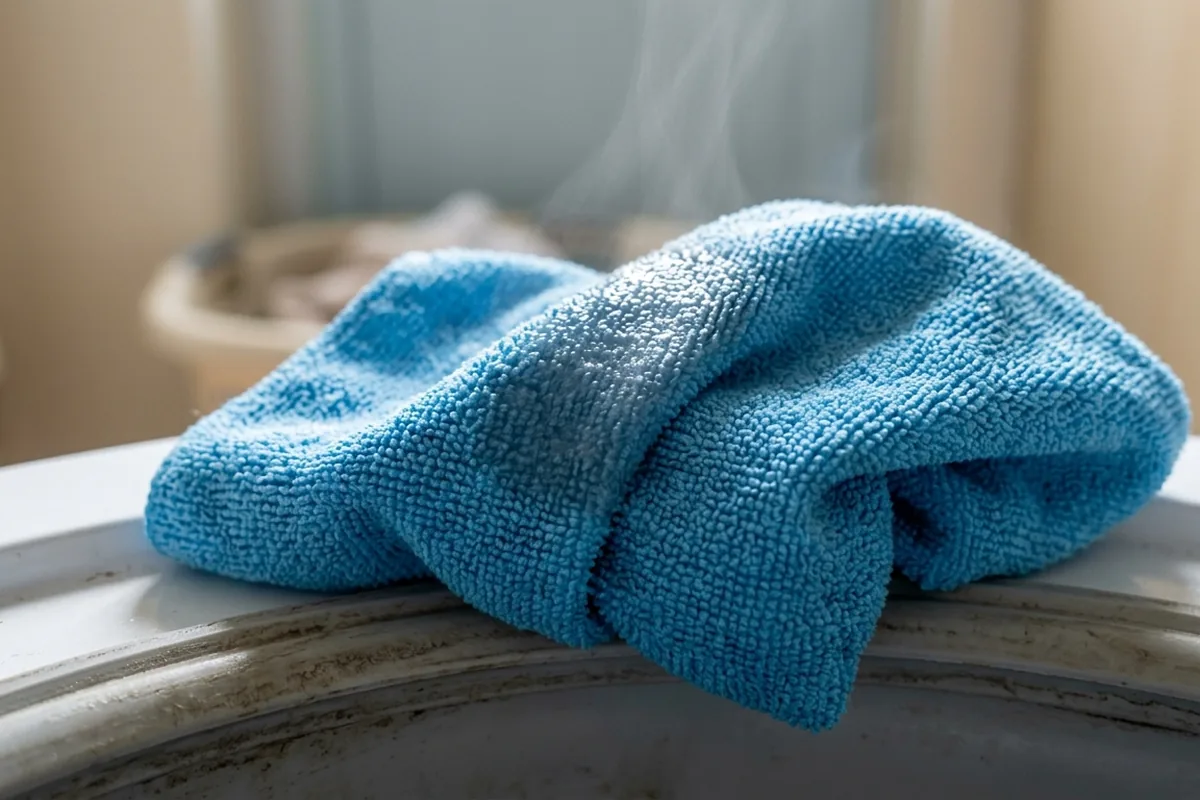
The smell usually appears when you pull “clean” microfibre cloths or dishcloths out of the machine and they already have a sour, damp odour. You might have used a hot wash and plenty of detergent, yet the smell clings on and comes back even faster once the cloths are wet again.
The simple mistake is leaving cloths wet or bunched up so bacteria stay active before and after washing. A good wash can’t fully undo hours or days of being crumpled in the sink, left in the washing-up bowl, or sitting in a cold machine drum. The fix is just as simple: rinse, wring out and air-dry properly between uses, and dry them fully straight after washing, instead of letting them sit.
Why “clean” cloths still smell after washing
When cloths smell bad straight from the wash, it’s rarely the detergent brand. It is usually that the cloths have spent too long wet, folded or piled up so bacteria have had time to grow and form a film in the fibres.
That film (a light biofilm) is what survives your normal wash and creates that sour, musty or “old dishcloth” smell. A hot cycle helps, but if the cloths go straight from the machine into a cold, airless laundry basket or stay in the drum for hours, the remaining bacteria wake up again quickly.
The main mistake has three parts that often happen together:
- Cloths left wet in the sink or on the side after wiping worktops or the hob.
- Cloths bundled in a heap (in a bucket, under the sink or in the laundry basket) instead of spread out to dry.
- Cloths not dried quickly after washing, for example left in the machine overnight or in a damp utility room with no airflow.
Once you break this “always wet, always bunched” cycle, the smell usually disappears without needing fancy products.
What to do differently so cloths stay fresh
Fresh-smelling cloths come from how you handle them between washes as much as the wash itself. Focus on getting moisture and bacteria under control.
After each use in the kitchen or bathroom:
- Rinse the cloth well under hot tap water to remove food, grease and cleaner residue.
- Wring it out firmly so it is damp, not dripping.
- Hang it flat or over a rail: on the oven handle, a radiator (not too hot for microfibre), a clothes airer or hooks inside a cupboard door that can stay ajar. Avoid leaving it scrunched on the worktop.
On wash day:
1. Wash cloths together, not mixed into a huge, overfilled load. Overloading makes it harder for water to flush smells out.
2. Use a proper detergent dose, and if they are very smelly, choose a 60°C wash if the label allows. Many microfibre cloths and cotton dishcloths can tolerate this, but always check.
3. Avoid heavy fabric softener on microfibre. It can coat the fibres and trap odours. If you like softener, keep it for towels and bedding.
4. As soon as the cycle finishes, take the cloths out of the drum. Do not leave them sitting in a closed washing machine.
Drying matters as much as washing. Line-dry outside when you can: sunlight and moving air are excellent at cutting smells. Indoors, use a heated airer or warm, ventilated room. A cold, steamy bathroom with the door shut will just slow everything down and encourage odours.
If the smell is stubborn or keeps coming back
If you’ve stopped the “wet heap” habit and the cloths still smell, you may need a one-off reset and a quick check of your washing machine.
For a deeper refresh of smelly cloths:
- Soak them in hot water with a scoop of oxygen-based laundry stain remover (the type used for whites/colours) for an hour before washing.
- Then wash as normal at the hottest temperature allowed on the care label.
- Skip fabric softener on this load and let them dry fully in good air.
Avoid mixing bleach with any other cleaner, and do not soak coloured microfibre in strong bleach, as it can damage fibres and fade colours.
It is also worth checking whether the smell is partly from the machine itself. A musty rubber door seal or slimy washing machine drawer can re-seed clean loads with odours:
- Run an empty maintenance wash at 60–90°C with just detergent.
- Wipe around the rubber door seal, pulling it back gently to remove trapped grime.
- Clean the detergent drawer and the recess with hot water and a small brush.
- Leave the door and drawer slightly open between washes so the drum can dry.
If, after all that, your cloths still smell strongly even when dry, they may simply be worn out. Old cotton dishcloths in particular hold onto grease and bacteria. At that point, retire them to very dirty jobs (like wiping garden tools) or bin them and start again with a small, manageable set you can wash and dry properly.
Fresh cloths that dry quickly and don’t live in a damp heap will usually come out of the wash smelling of very little at all, which is exactly what you want.