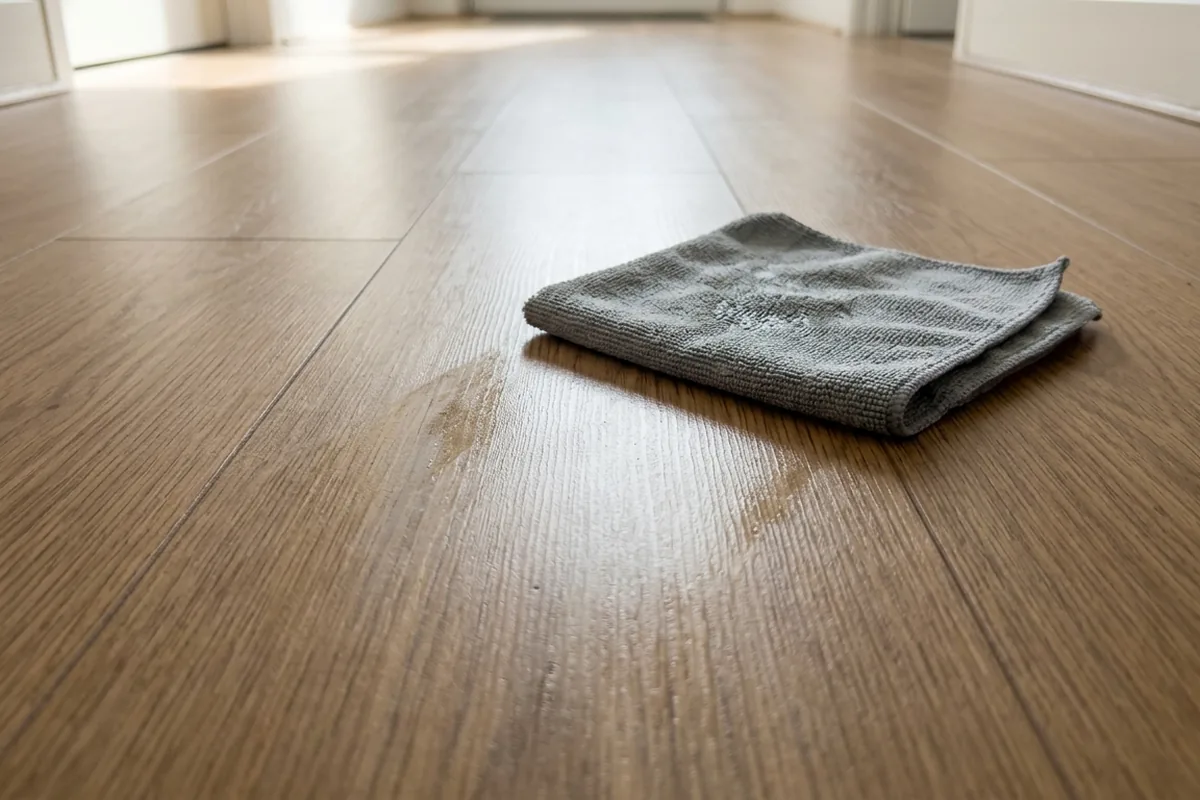
The streaky, cloudy look on laminate is usually from over-wetting, strong products or residue left behind, not from the floor “wearing out”. The gentlest, most effective way to clean laminate without dulling it is a barely-damp microfibre mop and a mild cleaner, then letting it dry quickly. Avoid soaking the floor, avoid steam, and avoid anything “polishing” or abrasive.
If you can see footprint shadows, smears or a grey film catching the light in your hallway or lounge, the fix is usually to strip off old residue with a weak solution of washing-up liquid, then stick to a light, regular routine rather than heavy “spring cleans”.
The safest everyday way to clean laminate without dulling
Laminate is essentially a printed decorative layer under a clear protective coating. Once that coating is scratched or worn, you cannot restore the original gloss with polish; you can only keep what you have in good condition. So the aim is low moisture, low residue, no abrasion.
For normal weekly cleaning in a typical UK home (hallway, living room, maybe a small dining area), this routine works well:
- Dry first: Use a soft broom, microfibre floor mop or vacuum on the “hard floor” setting. Grit and tiny stones from outside are what actually scratch the surface, so getting those up first matters more than fancy products.
- Mix a mild solution: In a bucket, use lukewarm water with just a few drops of washing-up liquid, or a capful of a laminate-safe floor cleaner from somewhere like B&Q or Homebase. You want the water to feel slightly slippery, not foamy.
- Use a flat microfibre mop, barely damp: Wring it out very thoroughly. If you can squeeze drips out, it is too wet. Standing water between boards is one of the quickest ways to damage laminate, especially in rented flats and older terraced houses.
- Work in small sections: Wipe with the grain if there is a visible pattern. Rinse and wring the mop often so you are not just spreading dirty water around.
- Let it air dry: It should dry within a few minutes. If there are wet patches ten minutes later, you used too much water.
Done this way, the surface keeps its original sheen without needing polish or wax.
How to remove existing dullness, streaks and residue
If your laminate already looks flat, smeary or patchy, you are often dealing with product build-up, not permanent damage.
A simple reset clean usually helps:
1. Do a proper dry clean first
Vacuum or sweep, including under radiators and along skirting boards where dust gathers.
2. Wash with a slightly stronger but still mild mix
Use lukewarm water with a small squirt of washing-up liquid. Again, keep the mop well wrung out. This helps cut through old cleaner residue and greasy footprints.
3. Rinse pass (optional but useful on very dull floors)
Go over the floor again with clean water and a fresh, well-wrung microfibre pad to lift away loosened residue. Work quickly so you are not leaving the floor wet.
4. Spot-check in good light
Once dry, look across the floor in daylight from a low angle. If the dullness is patchy and improves after cleaning, it was residue. If the dullness is in traffic lanes only and feels slightly rough, the top layer may be worn.
If the floor still looks dull after a reset clean
If cleaning does not help much:
- Check for fine scratches by shining a torch along the boards. Lots of micro-scratches will scatter light and make the floor look cloudy.
- If you can feel raised edges or swelling around joints, moisture damage is likely and no cleaner will fix that.
- Avoid trying to “revive” the floor with furniture polish, wax or oil. These products can make laminate dangerously slippery and even duller once they smear.
At this stage, all you can do is keep it clean and consider rugs in heavy-wear areas. Replacement is the only real cure for a worn laminate surface.
Products and habits that quietly ruin laminate’s finish
Most dull laminate is the result of small, repeated mistakes rather than one disaster clean. A few things are worth avoiding or changing.
Products to be cautious with
| Product or method | Helps with | Limit on laminate |
|---|---|---|
| Steam mop | Fast cleaning on tiles | Heat and moisture can cause swelling and dulling |
| Bleach solutions | Disinfecting hard, sealed surfaces | Too harsh; can discolour and damage the finish |
| Vinegar mixes | Limescale and glass cleaning | Occasional weak use only; too much can etch the surface |
| Wax or polish | Real wood or vinyl shine | Leaves build-up, streaks and slippery patches |
| Abrasive pads or powders | Tough marks on tiles or metal | Can scratch the protective layer permanently |
If you like a “homemade” approach, a very weak vinegar solution (for example, a small splash in a bucket of water) can help cut greasy films, but use it sparingly and not every week. Always test a hidden corner first, and never mix vinegar with bleach.
Habits that help laminate keep its sheen
- Shoes off at the door: Cuts down grit that scratches the surface, especially in rainy weather when bits of road salt and small stones get walked in.
- Door mats inside and out: A coarse mat outside and an absorbent mat inside the front door protect hallway laminate.
- Wipe spills immediately: In kitchens or dining areas, mop up water, tea, pet accidents or dropped drinks straight away so they do not sit in the joints.
- Use the right vacuum setting: Hard floor mode, with the brush roll off, stops the beater bar from scuffing the surface.
- Microfibre over cotton: Microfibre mops and cloths lift dirt with less scrubbing, so you are not tempted to use harsh products.
If you change the routine and the floor starts drying quickly to a clear, even finish, you are doing it right. Any lingering dull patches after a couple of weeks of gentle cleaning are usually either old wear or moisture damage, not something you can “polish out”.