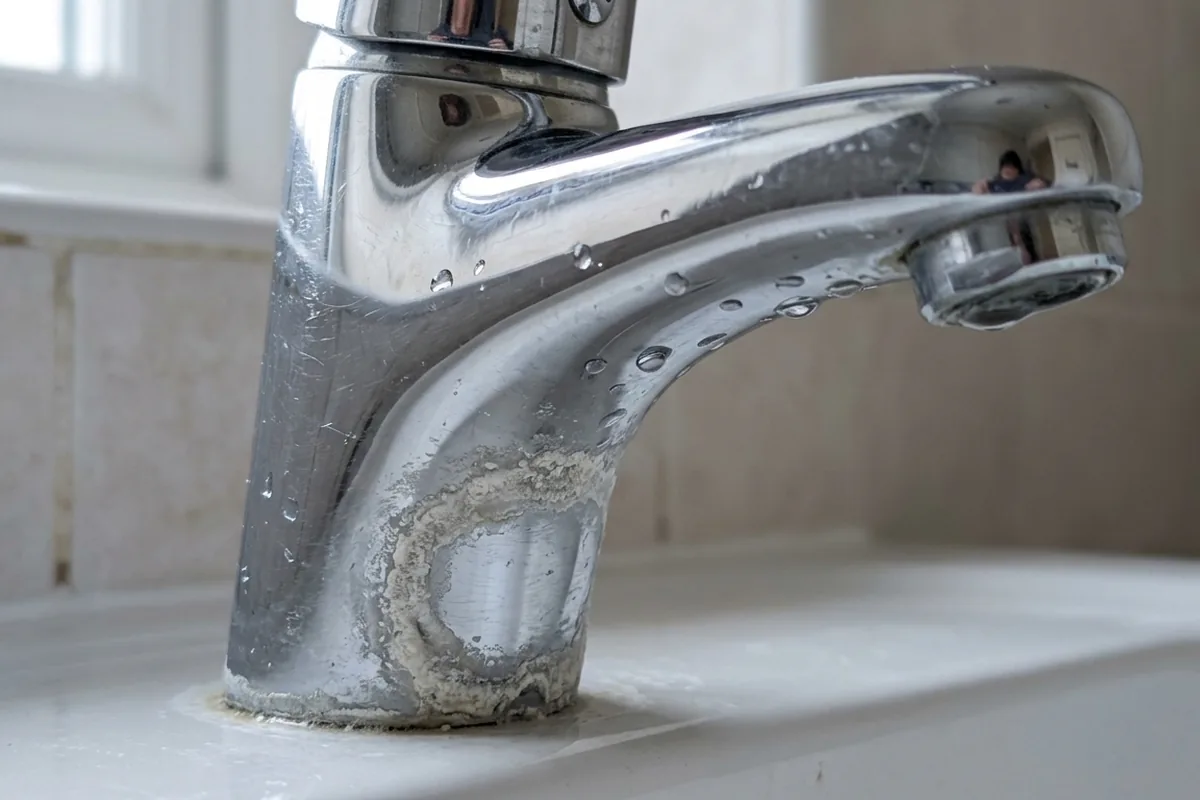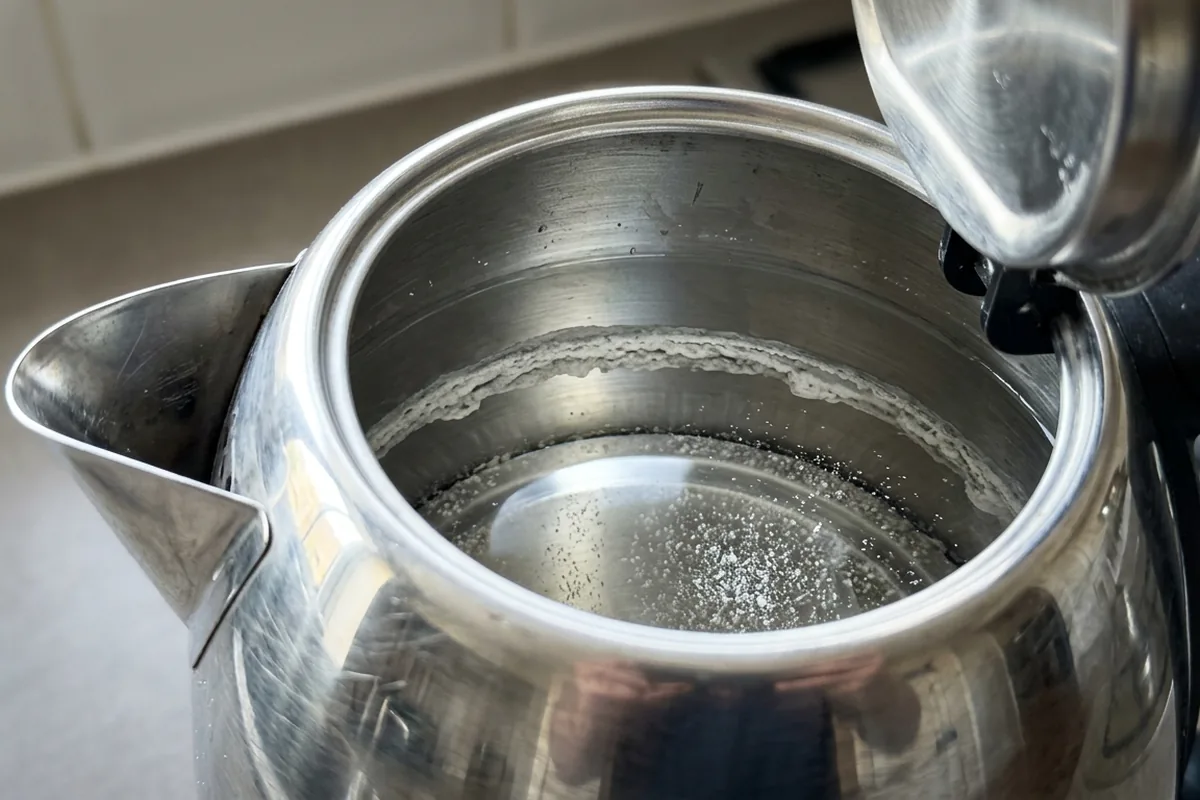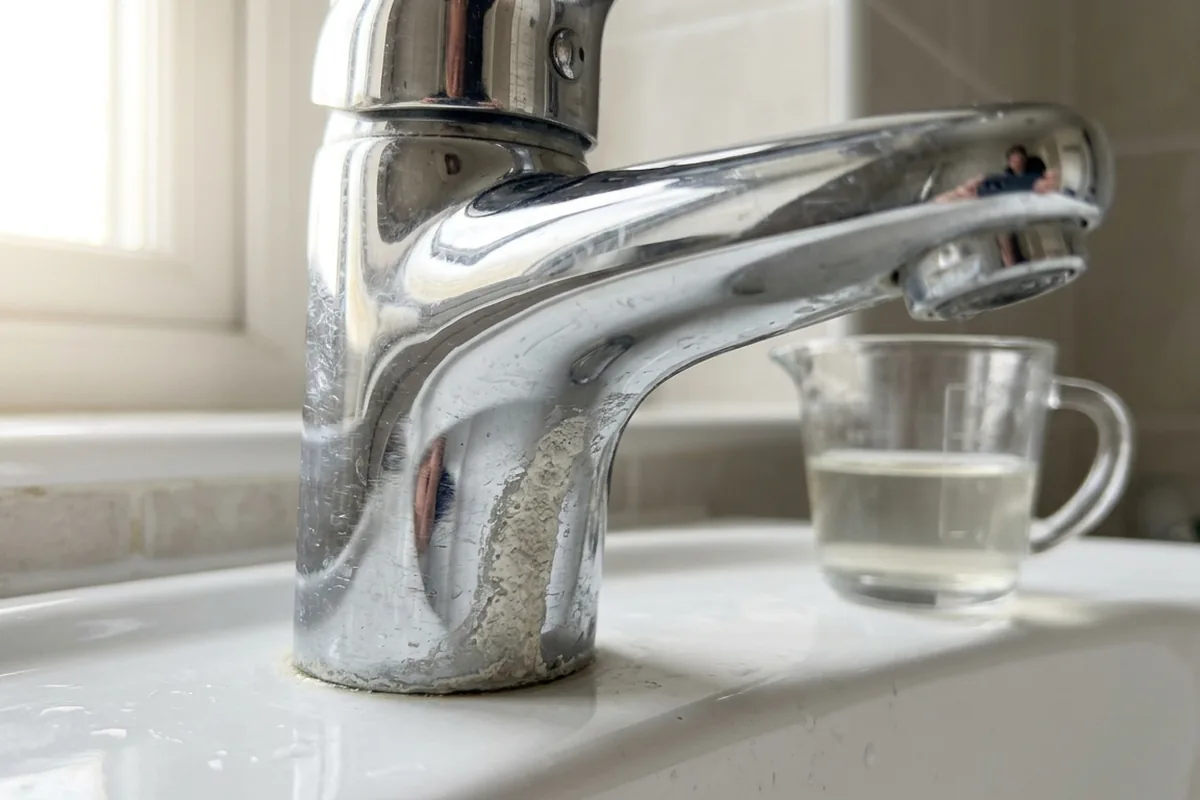
That chalky white crust around the base of your bathroom tap or on the spout in a small kitchen sink is almost always limescale. On shiny chrome or black taps it stands out badly, and a lot of people reach straight for vinegar or a harsh descaler. If you want a gentler option, fresh lemon works well on light to moderate limescale, as long as you keep it controlled and don’t leave it sitting for hours. The key is short contact time, keeping the area damp with lemon, then rinsing and drying thoroughly so you clean the scale without dulling or pitting the finish.
How to use lemon safely on limescale without harming the tap
Lemon works because its citric acid slowly dissolves limescale. The risk is the same as with any acid: too strong or too long and you can damage thin plated finishes such as cheap chrome, brass-look or matte black taps.
A simple, safe method for most modern taps:
1. Check the finish first
If your tap is old, already pitted, flaking, or has a special coating (brushed brass, matte black, coloured), be extra cautious. Test lemon on a small hidden area at the back or underneath the spout. If it dulls or discolours, rinse and avoid using it on visible areas.
2. Prepare the lemon
Cut a fresh lemon in half. For tight spots, squeeze some juice into a small bowl and dip in a folded piece of kitchen roll or a cotton pad so it’s soaked but not dripping.
3. Apply only to the limescale
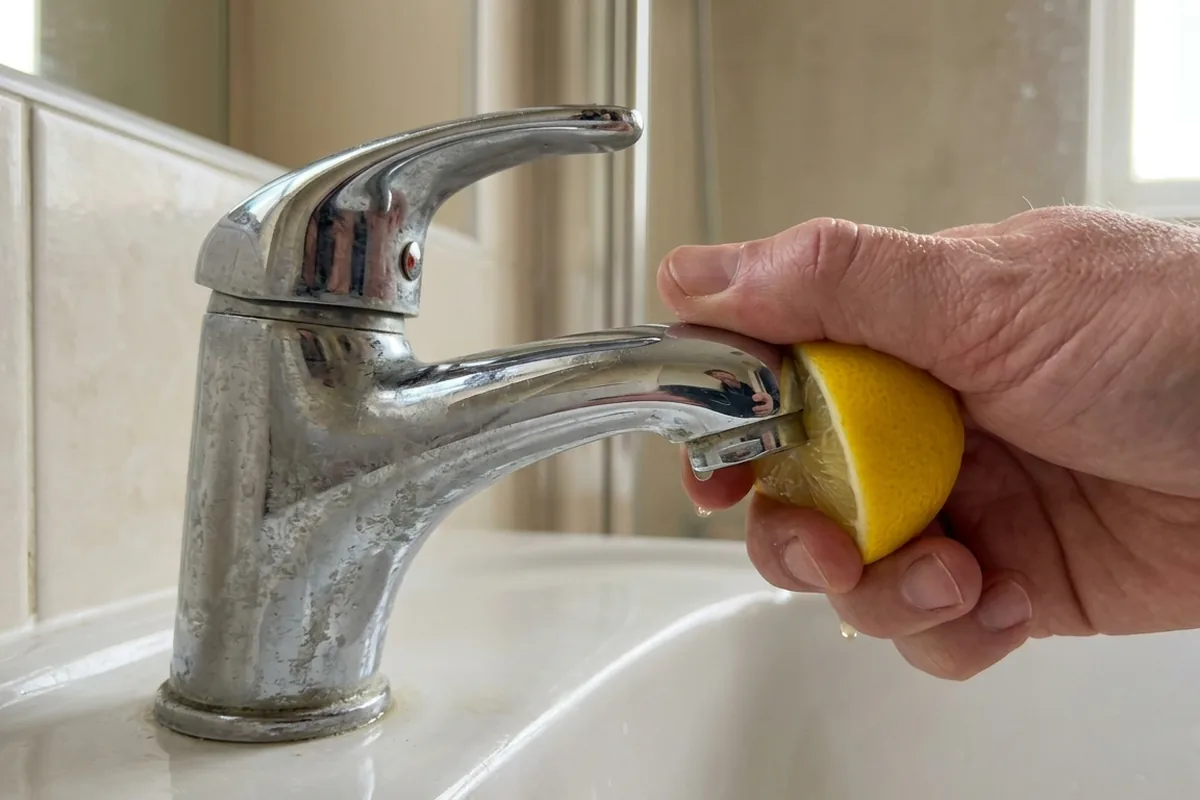
Press the lemon half directly onto the limescale ring around the base of the tap, or hold the soaked pad against the crusty area. You want good contact with the scale, not the whole tap body.
4. Limit the contact time
Leave it in place for around 5–10 minutes, checking halfway. Do not leave it on for an hour “for luck” – that’s how finishes get damaged.
5. Gently scrub, then rinse
Use a soft toothbrush or a non-scratch washing-up sponge to loosen the softened limescale. Rinse thoroughly with clean water and wipe with a microfibre cloth. If any lemon residue is left on the metal, it can carry on etching.
6. Dry and inspect
Dry the tap completely. If there’s still a bit of limescale, repeat once more with a shorter contact time rather than trying to force it in one go.
For stubborn build-up on older taps, it’s often safer to accept “much better” rather than “perfectly new”, because the scale may be protecting already thin plating underneath.
When lemon is a good idea – and when it isn’t
Lemon is a good low-fuss option if you’re dealing with light limescale on a fairly modern tap in a typical UK bathroom or cloakroom, especially where the water splashes and dries around the base.
It’s particularly useful when:
- The limescale is thin and patchy, not a thick crust.
- You’re cleaning polished chrome or stainless steel in decent condition.
- You prefer to avoid stronger bottled descalers for everyday use.
- You’re in a rented flat and want something gentle that’s unlikely to be questioned by a landlord.
There are times to be cautious or skip lemon altogether:
- Badly pitted or flaking taps: acid can get under the plating and make it peel faster.
- Coloured or special finishes (matte black, brushed gold, bronze): always test first and keep contact times very short. Some manufacturers say “no acids at all”.
- Natural stone worktops around the tap (like marble or limestone): keep lemon strictly on the metal and wipe up any drips straight away, as stone can etch very easily.
- Rubber and silicone: a quick wipe is fine, but don’t soak silicone sealant or rubber gaskets in acid for long periods.
If you’re unsure about the finish, start with a microfibre cloth and warm water with a tiny bit of washing-up liquid to remove soap scum first. Often the “limescale” at the base of a tap is partly dried soap, which lemon doesn’t need to touch.
Extra checks and small habits that keep limescale away
Once you’ve cleared the worst of the limescale, a few small habits will slow it coming back, especially in hard-water areas.
In a typical British bathroom with a small basin and no window, taps get splashed constantly and the water dries on the metal, leaving mineral deposits behind. Stopping the droplets drying in place is the easiest long-term fix.
Useful habits:
- Quick daily wipe
After brushing your teeth or washing your hands at night, give the tap a fast wipe with a dry microfibre cloth. It takes seconds and massively reduces build-up.
- Deal with the aerator
If the end of the spout (the little mesh insert) is furred up, the spray can go sideways and wet more of the tap body. On many taps you can unscrew the aerator by hand, soak it in lemon juice for 10 minutes, rinse well and screw it back. If it resists or you’re not sure, don’t force it.
- Ventilation in small bathrooms
Use the bathroom extractor fan or crack a window after showers. Less lingering moisture in the room means fewer water spots drying slowly on the taps and shower fittings.
- Alternate with a mild limescale cleaner
For heavier deposits or once-in-a-while deep cleans, a purpose-made limescale remover from somewhere like B&Q, used exactly as the label says, can be more efficient. Lemon is best as a light, regular option, not your only line of defence against years of build-up.
If you notice the finish looking cloudy or patchy even after gentle cleaning, stop using acids (including lemon) and switch to mild soapy water only. At that point the surface may already be worn, and no cleaning method will make it look brand new again.