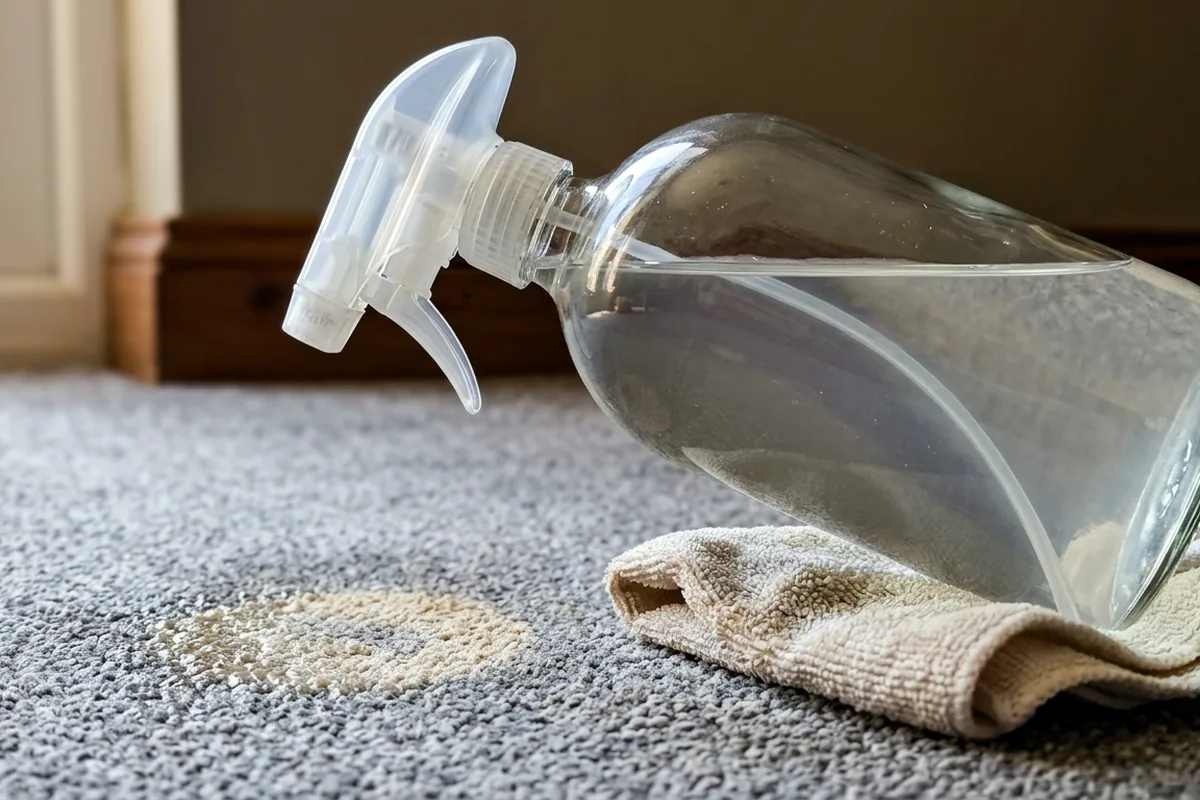
That brown ring on the carpet after you’ve “cleaned” a spill is what most people are trying to avoid. Vinegar can shift many everyday stains, but used the wrong way it can leave a watermark, a rough patch or a lingering smell. The key is very dilute vinegar, minimal moisture and fast blotting, not soaking the carpet. For most synthetic carpets, a mix of white vinegar, water and a drop of washing-up liquid, applied sparingly and blotted with kitchen roll, will lift the stain without leaving a mark.
The safest vinegar method for carpet stains
If you catch the stain while it’s fresh, you’re already halfway there. The aim is always to blot, not scrub, and to keep the backing and underlay as dry as possible so you do not create a tide mark.
Here is a simple method that works for most food, drink and muddy marks on synthetic carpets and many wool mixes:
- Blot the spill first. Use plain kitchen roll or a clean white cloth to soak up as much as you can. Press firmly, don’t rub, and keep changing to a dry section.
- Mix a gentle solution. In a jug, mix 1 tablespoon of white vinegar with 2 tablespoons of water and 1–2 small drops of washing-up liquid. This is deliberately weak to avoid damage or bleaching.
- Test in a hidden corner. Dab a little on carpet behind a door or under a piece of furniture. Blot and let it dry. If the colour changes, feels rough or fades, do not use vinegar on that carpet.
- Treat the stain lightly. Dip a clean white cloth into the solution, wring it out so it’s just damp, then dab the stained area from the outside edge towards the centre. You want the fibres damp, not wet through to the backing.
- Blot with dry kitchen roll. After a few passes, switch to dry kitchen roll and press down firmly to lift moisture and loosened dirt. Alternate between the damp cloth and dry roll until the stain fades.
- Rinse very lightly. Wipe the area with another cloth just dampened with plain water to remove any soapy residue, then blot dry again.
- Dry thoroughly. Lay a final layer of kitchen roll over the area, press it down, then leave it in place with something light on top (like an upturned baking tray and a book) for an hour or two. Good drying is what stops watermark rings.
If you can still see a faint outline when dry, you can repeat the process once more, but avoid over-wetting as that is usually what creates a new mark.
The check to make before using vinegar on your carpet
Vinegar is acidic, which is why it works well on some stains and badly on some materials. Not every carpet is happy with vinegar, especially some wool and delicate fibres.
Before you go near a visible patch, think about:
| Surface or material | Safe first option | Avoid if |
|---|---|---|
| Modern synthetic carpet (polypropylene, nylon) | Very dilute vinegar mix, tested first | Carpet has “no acid cleaners” warning |
| Wool or wool-mix carpet | Mild washing-up liquid and water | Test patch lightens or feels rough after vinegar |
| Natural fibre (sisal, seagrass, jute) | Dry methods only, such as vacuuming and specialist products | Any wet vinegar solution, which can cause swelling and staining |
| Old or sun-faded carpet | Spot test only, very dilute solution | Colours already look patchy or threadbare |
Always use white vinegar, not malt vinegar from the chip shop, which can stain on its own and leave a strong smell.
If your carpet is labelled “dry clean only” or is an expensive wool in a rented flat, it is often safer to try just a tiny amount of washing-up liquid in water first, or speak to a professional cleaner for anything large or very visible in a main room.
How to avoid watermarks, rings and damage
Most people who try vinegar on a carpet run into problems not because of the vinegar itself, but because of too much liquid, too much scrubbing, or no drying plan.
If you’re dealing with an old or set-in stain
A tea spill that has been there for weeks in a lounge or a muddy mark by a draughty door often needs a bit more patience.
Try this:
1. Lightly mist the area with plain water from a spray bottle, then blot. This softens the dried stain without flooding it.
2. Apply your dilute vinegar solution as above, in small sections, always working from the edge in.
3. Take your time with the dry blotting. Fold the kitchen roll into a thick pad and stand on it in socks to pull moisture up from the pile.
4. If a faint ring appears while it’s drying, lightly dampen just beyond the ring with plain water and blot again to blend the edges.
Mistakes that leave a mark
Watch out for these common issues:
- Scrubbing with a brush: this can roughen the pile and leave a permanent patch that catches the light, even if the stain is gone.
- Coloured cloths: dye can transfer, especially with vinegar. Use white cotton cloths or plain kitchen roll.
- Too strong vinegar: higher concentrations can dull dyes, especially on wool and darker carpets.
- Poor ventilation: if the room is cold and damp, like a small terraced house hallway, carpets dry slowly and watermarks are more likely. Open a window or run a fan to help.
If a sour vinegar smell lingers, it usually means you used too much. Once the area is fully dry, a light vacuum over the patch often freshens the fibres and helps the odour disperse.
For very large stains, pet accidents that have soaked into the underlay, or anything spreading towards skirting boards, vinegar on its own is unlikely to be enough and can just move the stain around. That is the point to consider a dedicated carpet cleaner solution or a professional clean rather than more home-mixed products.
A good result is simple: the carpet dries at the same colour and texture as the surrounding area, with no stiff patch and no visible ring when you look across it in daylight.