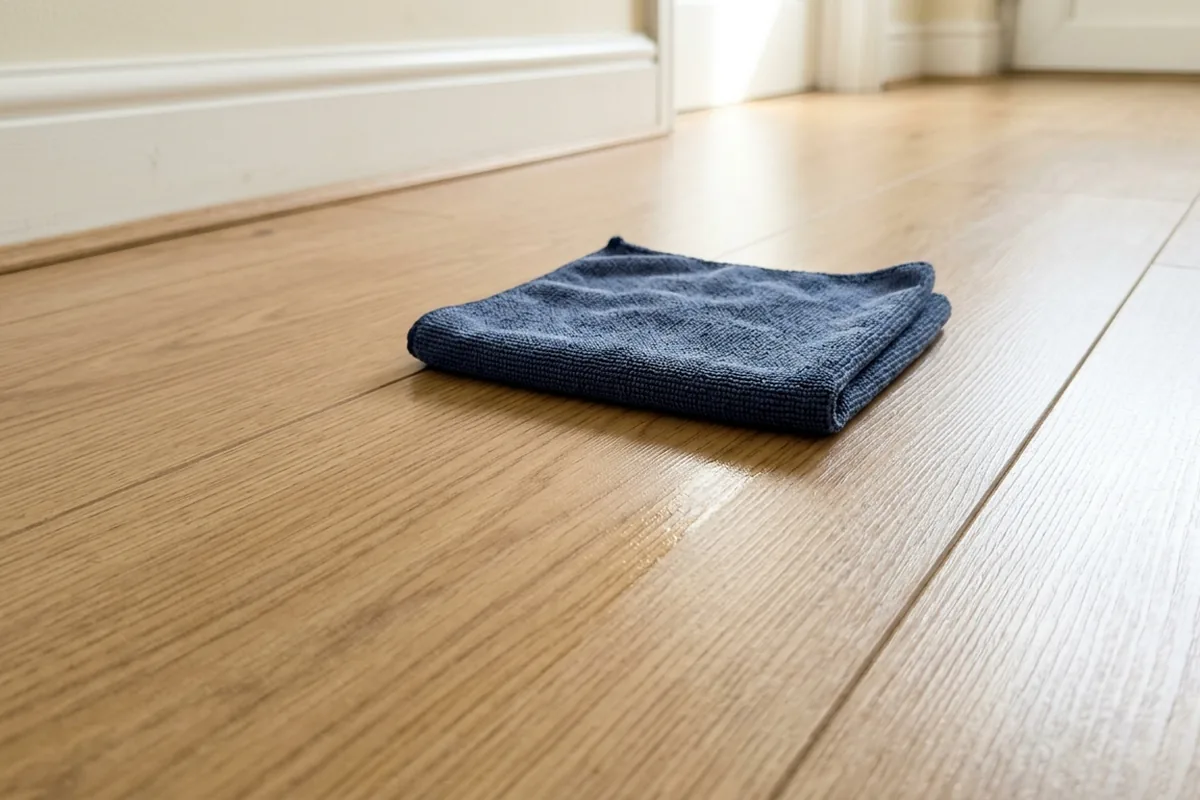
Smear marks, cloudy patches and planks that look a bit “bubbled” at the joints are the usual signs laminate has been cleaned the wrong way. The key is very simple: use as little liquid as possible and a cleaner that doesn’t leave residue. A barely damp microfibre mop, a tiny amount of mild detergent and good ventilation will usually give you a streak‑free floor without any risk of swelling.
The safe, streak‑free way to clean laminate
Laminate is basically a printed layer on top of board that hates standing water. Too much moisture seeps into the joints, causing edges to lift or swell, especially in hallways and kitchens where shoes bring in rainwater. So your whole routine needs to be “dry first, damp second”.
Here’s a compact method that works for most modern laminate:
1. Dry remove grit and dust
Use a soft‑bristle broom, microfibre dust mop or a vacuum on hard‑floor setting (brush bar off). Grit is what causes scratches and those dull, grey traffic lanes you see in rented flats.
2. Mix a weak cleaning solution
Fill a bucket with warm (not hot) water and add a small squirt of washing‑up liquid or a laminate‑safe floor cleaner. You want the water to look clean, not foamy. Too much product is a major cause of streaks.
3. Use a well‑wrung microfibre mop
Dip the mop, then wring it out hard so it’s just damp. If you can see beads of water dropping off, it’s too wet. Mop with the grain of the boards to avoid visible wipe marks.
4. Work in small areas and dry quickly
Open a window or door if you can. Any patches that look wetter than a light film should be gone in under a minute. If not, go over them with a dry microfibre cloth or mop head.
5. Tackle spots, not the whole floor, for small spills
For muddy paw prints or drips by the back door, spot‑clean with a damp cloth and a drop of detergent instead of soaking the whole room.
Done right, the floor should dry fast, look even and feel smooth underfoot, with no sticky patches.
Mistakes that cause streaks and swelling
Most problems come from a few habits that feel “extra clean” but are harsh on laminate.
Common streak‑causing mistakes:
- Using too much cleaner, especially concentrated floor liquid
- Mopping with dirty water that’s turned grey
- Letting product dry on the surface instead of wiping it off
- Using oil‑based polishes or “shine” sprays not designed for laminate
If you’re getting cloudy, greasy‑looking streaks, try this once:
- Fill a bucket with clean warm water and no cleaner at all.
- Lightly damp‑mop to rinse off old residue, wringing the mop out very thoroughly.
- Dry any stubborn wet patches with a clean towel or microfibre.
You should see the artificial shine disappear and a more natural, even finish return.
Swelling and damage usually come from:
- Steam mops held in one place or used on high setting
- Soaking the floor with a very wet string mop
- Leaving spills (especially around a fridge, washing machine or patio doors)
- Using buckets of very hot water that soften joints over time
Steam mops are heavily debated. Many laminate manufacturers say avoid steam altogether because moisture is forced into joints. If you still choose to use one, keep it on a low setting, constantly moving, and never hold it over one spot, but be aware it may void any warranty.
If you notice raised edges, soft patches or boards that look “blown”, stop wet cleaning that area and let it dry fully. If the shape doesn’t settle back after a few days of normal room conditions, those planks are likely permanently damaged and may need replacing.
Products, homemade options and what to avoid
You don’t need anything fancy. A mild detergent and the right tools are more important than a cupboard full of bottles.
Safe everyday options:
- A tiny squirt of washing‑up liquid in a bucket of warm water
- A shop‑bought laminate floor cleaner used as directed
- A spray bottle with heavily diluted cleaner, misted lightly in front of the mop
If you like DIY cleaners, a very dilute white vinegar solution (around 1 part vinegar to 20 parts water) can cut through light film, but:
- Test in a hidden corner first
- Avoid on any floor that isn’t confirmed as laminate (e.g. real wood or stone)
- Do not mix vinegar with bleach or any chlorine‑based product
For most UK homes, a bottle of laminate‑safe cleaner from somewhere like B&Q plus a flat microfibre mop is a good, low‑risk combination.
Things to avoid on laminate:
- Neat bleach or strong alkaline cleaners
- Abrasive powders like cream cleaner or scouring powders
- Wax, oil polish or furniture spray (they leave slippery, streaky films)
- Metal scouring pads or anything scratchy
If the floor still looks dull after a proper clean and rinse, the surface may simply be worn rather than dirty. No amount of scrubbing will bring back a factory finish; at that point, the realistic option is living with the patina or planning for replacement.
Once you’ve found a routine that leaves your floor dry within minutes, with no tacky feel and no new marks at the joints, that’s the level of cleaning to stick with. If you ever see standing water around skirting boards or under a dining table, cutting back the moisture straight away is the simplest way to protect the laminate you already have.