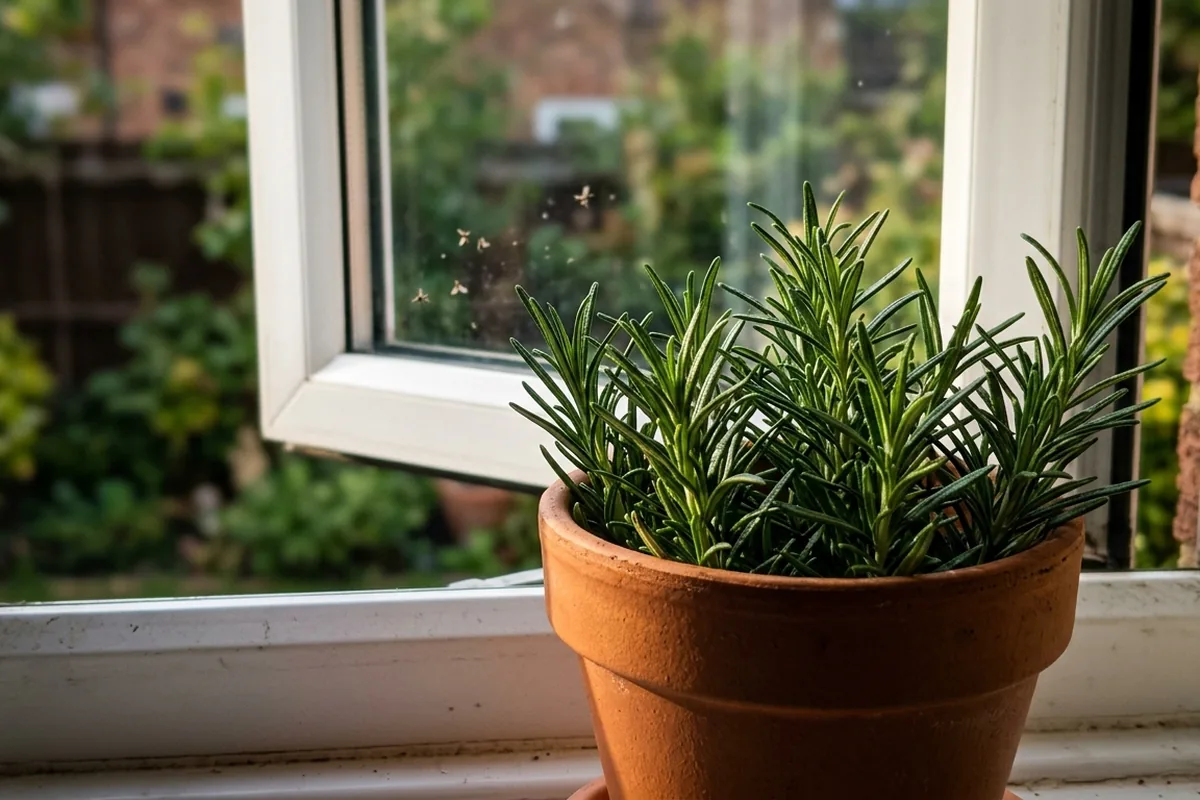
That pot of rosemary on the kitchen windowsill or by the back door is often sold as a quiet little hack: it’s meant to keep insects out, freshen the air and even “protect” the house. There is some truth in it, but it has clear limits. A rosemary plant or bundle near doors and windows can slightly deter some flying insects and add a fresh smell, but it will not stop a serious ant trail, a wasp nest, or fix damp, mould or musty odours on its own.
What the rosemary-by-the-door trick actually does
People usually place rosemary by a patio door, kitchen window or draughty front door for three reasons: to repel insects, to make the area smell nicer and sometimes as a natural “air freshener” for musty corners.
Rosemary contains aromatic oils that many insects dislike, especially when the plant is brushed or the leaves are crushed. So in a small, still area, rosemary can:
- Make the doorway smell fresher
- Slightly discourage some mosquitoes, midges and flies from hovering right there
- Help mask light cooking or pet smells close to the plant
It’s more realistic to see it as a minor nudge rather than a barrier. If your kitchen window is open on a still summer evening, rosemary might mean fewer midges coming straight for that spot, but it won’t keep every insect out of the room.
For odours, the effect is similar: rosemary adds its own scent but does not absorb smells or remove the cause. If there’s a musty smell from a damp windowsill or black mould on the silicone sealant, you need to tackle the moisture, not just perfume the air.
Where rosemary helps a bit – and where it doesn’t
The trick is most useful in very specific, low-pressure situations. Think of it as a gentle helper alongside proper cleaning, sealing and pest control.
Situations where rosemary can genuinely help
A rosemary plant, bundle or a few sprigs in a small dish can be worth trying if:
- You have a small kitchen window that you open in summer and want a fresher, herbal smell on the sill.
- You get the odd fly or midge by the back door in the evening, but not a full-on infestation.
- You’d like a natural-smelling boost near a shoe rack by the front door, where there’s no obvious damp, just a bit of stale air.
- You’re using it alongside other measures, such as a fly screen, clean surfaces and sealed gaps.
In these cases, keep the rosemary active: gently crush a few leaves now and then to release the scent, and keep the plant healthy. Dusty, dry, half-dead rosemary on a cold window board won’t do much for anything.
Where rosemary will not solve the problem
It’s important to be honest about the limits. Rosemary will not:
- Stop ants coming in through cracks in skirting boards or gaps under a draughty door
- Deal with mouldy window seals, damp skirting boards or condensation on bedroom windows
- Remove strong odours from blocked drains, bin areas or a wet under-sink cupboard
- Replace proper fly screens, wasp nest removal or professional pest control
If you’re seeing condensation running down the glass, black spots on the silicone, or the paint on the window board is bubbling, you’re looking at a moisture problem, not something a herb can touch. In those cases, you’re better off improving ventilation, using a dehumidifier in a damp room, and cleaning mould safely with an appropriate cleaner.
Safer, more effective steps alongside the rosemary trick
Rosemary works best as a finishing touch once the basics are sorted. If you’re putting it by a door or window, do a quick check of the area first.
Look out for:
- Visible mould around the frame or on the sealant
- Flaking paint or swollen timber on the sill or skirting board
- Persistent musty smell even after opening the window
- Obvious insect entry points, like gaps around the frame or under the door
If any of these show up, deal with them directly:
- Clean surfaces with warm water and a little washing-up liquid first. For mould, use a suitable mould remover and keep the room ventilated.
- Avoid spraying strong cleaners directly onto a live plant; move the rosemary aside while you clean.
- Seal small gaps with appropriate sealant or draught excluder, rather than relying on scent to keep insects out.
- For repeated damp or mould around windows, especially in a bedroom or small bathroom, consider using an extractor fan, a window squeegee after showers, or a small dehumidifier in winter.
Once the area is clean, dry and sealed, that pot or bundle of rosemary by the door makes more sense. It can give a pleasant, clean-smelling first impression and might mean a few fewer flies hanging around the opening, but it’s there to complement proper maintenance, not replace it.
If you find yourself adding more and more rosemary, candles or plug-ins just to cover a smell, take that as a sign that something underneath hasn’t been fixed yet.