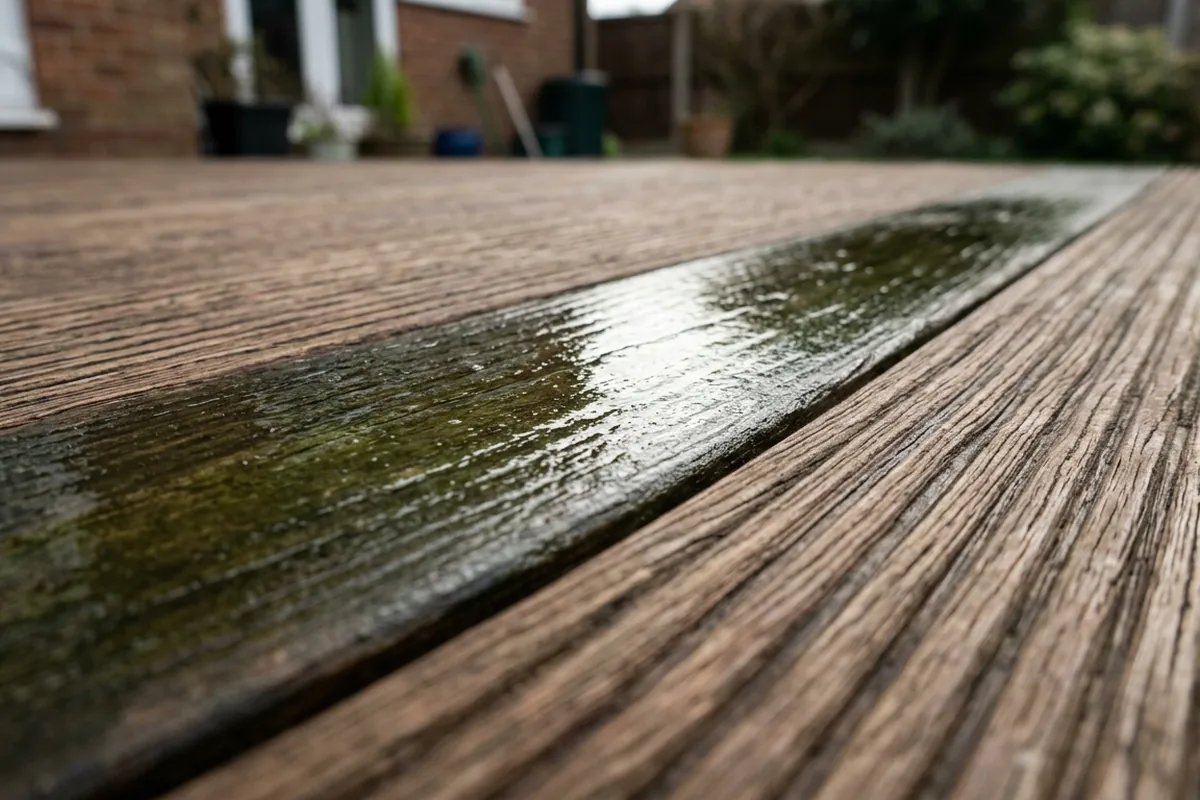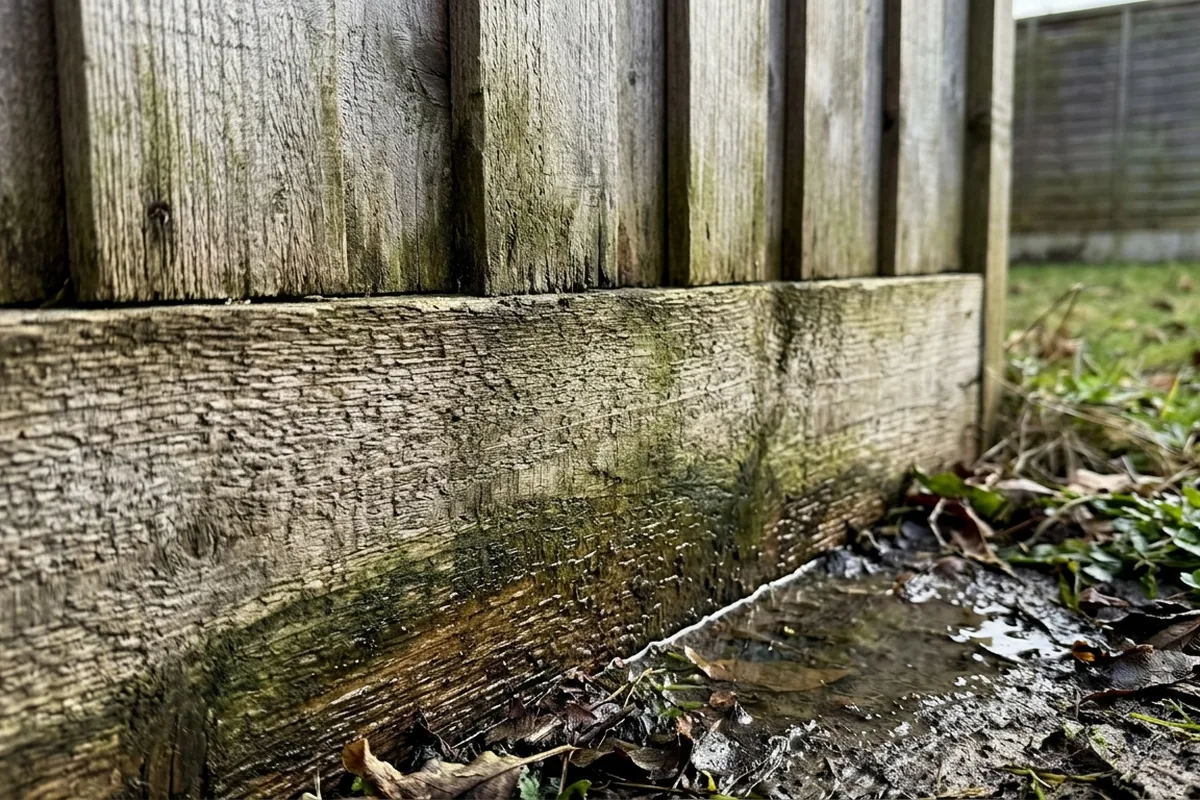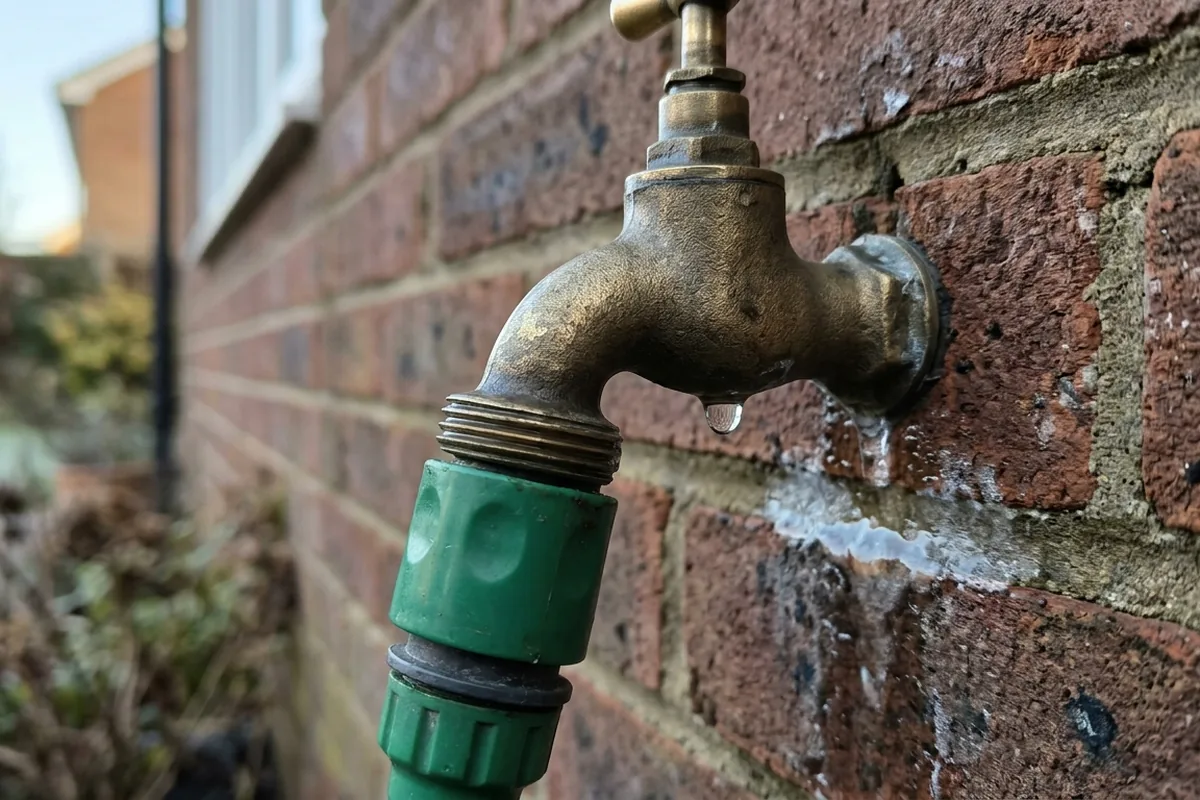
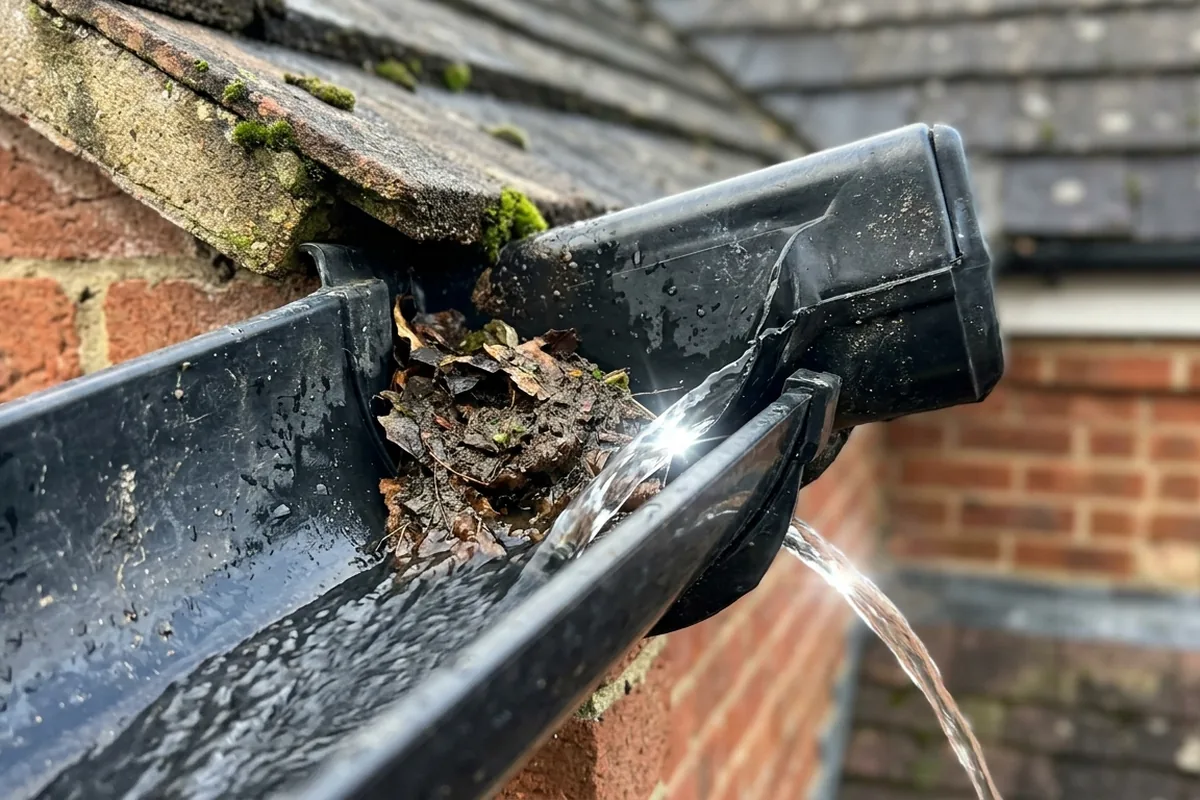
The first sign is usually a strip of green algae on the patio, a damp patch on the outside wall or rainwater spilling over the gutter every time there’s a downpour. You know the gutters need clearing, but blasting them with a hose can force water back towards your brickwork, into the eaves and even behind render. The safest answer is to clear debris by hand (or with a gutter cleaning tool) so water can flow naturally to the downpipe, and if you rinse at all, do it gently and away from the house.
How to clear gutters without driving water into the wall
The aim is simple: remove the blockage, don’t power-wash it into the nearest gap. Work in dry, calm weather and only from safe access: a stable ladder on level ground, a scaffold tower, or from the ground with an extending tool. If you are not confident at height, it is safer to hire a professional than to risk a fall.
Start by checking where your downpipes are and which way the gutter runs. Most UK roofs fall towards the front and back, with gutters sloping slightly towards a downpipe at one end. You want any loose debris and water to move that way, not towards the middle of the wall.
If you can work safely at gutter level:
- Use a gutter scoop, small trowel or even a cut-down plastic milk bottle to lift out leaves, moss and sludge.
- Drop the waste straight into a bucket hooked on the ladder rather than letting it fall over the patio or conservatory roof.
- Leave a thin film of silt rather than scraping hard at the gutter; you do not want to damage seals or protective coatings.
Once the bulk is out, you can test the flow with a small jug of water, poured gently near the middle of a run so it travels towards the downpipe. Avoid using a pressure washer or a powerful hose setting along the gutter line, as this can drive water up under the tiles or behind the fascia board.
If you are using a ground-based gutter cleaning attachment, keep the nozzle angled so it draws debris towards the downpipe, and use the lowest pressure that shifts the muck. Stop regularly and check from the ground that water is not spilling over the back of the gutter against the wall.
The mistake that sends water into your walls
The main risk when “cleaning” gutters is not the leaves, it is forcing water where it was never meant to go. Brickwork on a typical terraced house will shrug off normal rain, but a concentrated jet aimed at the top of the wall can push water into cracks, under tiles and into the loft.
There are three common mistakes:
- Using a pressure washer directly into the gutter from above.
- Spraying upwards from the ground at the bottom of the tiles.
- Trying to blast a blockage along the gutter instead of lifting it out.
If you hit a stubborn blockage, do not keep ramping up the pressure. Instead, clear from both sides if you can reach, and check the downpipe entry for a plastic leaf guard or a lump of moss acting as a plug. Sometimes you can ease this out with a piece of stiff wire from the top.
If you see water backing up and spilling over the rear edge of the gutter, stop using water immediately. This means the outlet is still restricted and you are now soaking the fascia and the top of the wall. Go back to dry clearing until the outlet is visibly clear.
Where gutters sit over a bay window or conservatory roof, avoid standing on the roof sheets. Use a tower or a long-reach tool instead, so you are not tempted to lean and blast with a hose because you cannot quite reach.
Checks to make after cleaning so rain drains safely
Once the gutter looks clear, you want to be sure the next heavy shower does not reveal a hidden problem. A few simple checks in normal British rain will tell you a lot.
During or just after the next downpour, step outside and look for:
- Even flow to the downpipe: water should run in a steady line, not in bursts.
- No drips from joints, especially over doorways or above bedroom windows.
- No water spilling over the back edge, which can lead to damp skirting boards inside over time.
If you can safely access the loft hatch, a quick look during wet weather can also help. Any dark, damp patches on rafters near the eaves may point to water getting in behind tiles or underfelt, sometimes made worse by aggressive washing. In that case, avoid more DIY washing and speak to a roofer.
It is also worth walking around the house the next dry day to see if any areas of brickwork under gutters look persistently darker than the rest. That can be a sign of long-term overflow rather than one bad storm.
If you live in a tree-lined street or have mossy roof tiles, schedule a light clean once or twice a year rather than waiting until water is pouring over the edge. A quick clear in early autumn and again after the worst of the winter weather usually keeps things moving without needing heavy hose work.
If, after a careful clean, water still overflows or joints keep dripping, the problem may be poor fall, sagging brackets or damaged seals rather than muck. That moves into repair work at height, which is usually better left to someone with the right equipment and insurance.